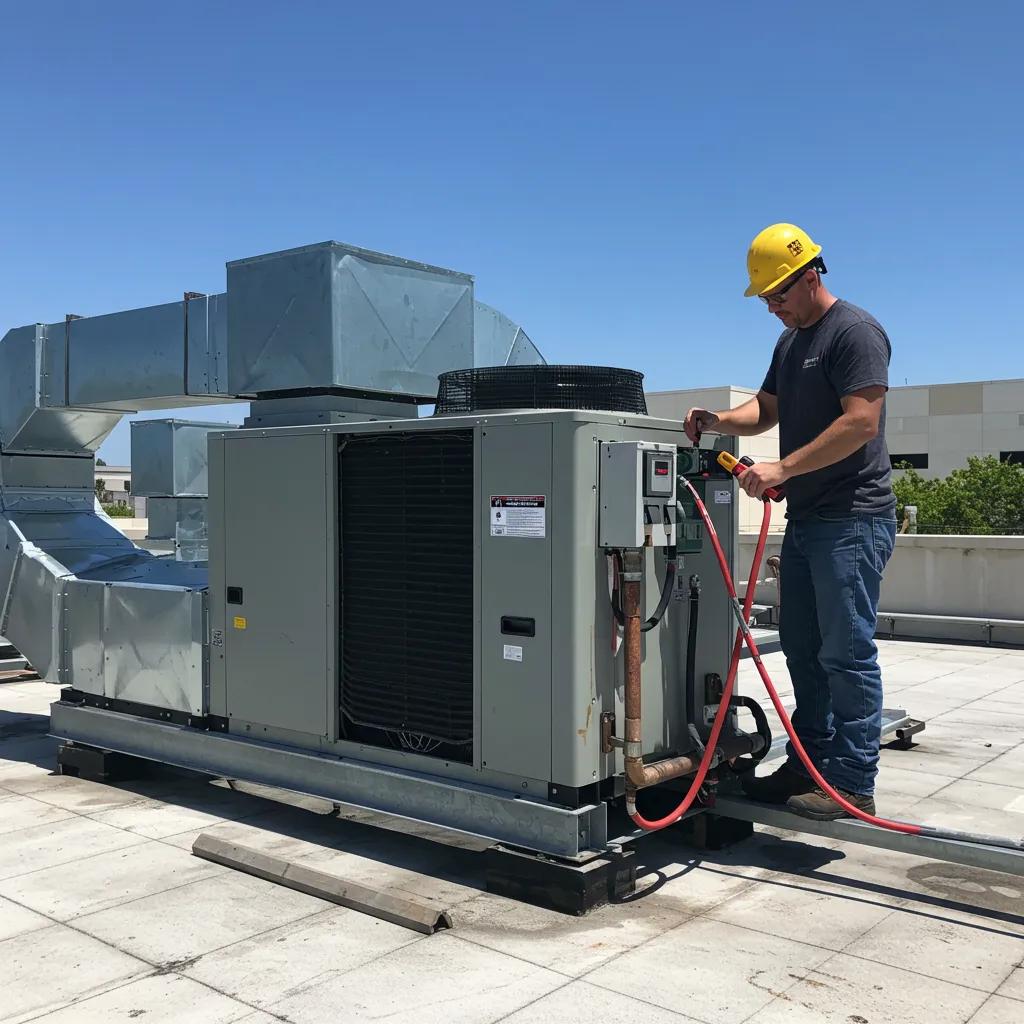
Commercial HVAC Decommissioning Services in Florida: Safe Removal, Refrigerant Recovery, and Equipment Disposal
Commercial HVAC decommissioning is the controlled retirement, dismantling, and disposal of rooftop units, chillers, air handlers, and ancillary systems when equipment reaches end-of-life, is scheduled for replacement, or must be removed for renovation. Decommissioning matters for safety, regulatory compliance, and long-term operating costs, with practical guidance for facility managers and engineering teams in Florida. Learn the technical steps of decommissioning, refrigerant recovery protocols, environmental best practices, and how to minimize downtime during replacement projects. We’ll also map facility-specific considerations for hospitals, schools, industrial sites, and commercial buildings, and it outlines career roles for HVAC technicians and system engineers who work on decommissioning projects. Finally, discover how , based in Ocala, Florida, integrates decommissioning with equipment replacement and specialized mechanical contracting to deliver turnkey outcomes for industrial and commercial clients.
What Is Commercial HVAC Decommissioning and Why Is It Important?
Commercial HVAC decommissioning is the formal process of retiring and removing mechanical cooling and ventilation equipment to protect people, property, and the environment while preparing for replacement or renovation. The procedure prevents uncontrolled refrigerant release, eliminates safety hazards from failing equipment, and clears site access for new installations. Understanding the scope and benefits of decommissioning helps stakeholders plan budgets, secure permits, and maintain regulatory compliance. We’ll define what the physical retirement involves, why Florida conditions influence timing, typical equipment lifespans, and the environmental and regulatory framework that governs responsible removal.
What Does HVAC System Retirement and Removal Involve?
HVAC system retirement and removal begin with a documented survey and asset inventory to capture equipment types, refrigerant charge, and site constraints. Certified technicians isolate electrical and mechanical services, tag and lock out systems, and then perform EPA-compliant refrigerant recovery before any mechanical dismantling occurs. After refrigerant and hazardous materials are removed, crews dismantle compressors, coils, and structural supports while staging components for recycling or disposal. This sequence ensures safety, preserves salvage value, and accelerates turnover to new equipment, which reduces overall project risk and cost.
Why Decommission Commercial HVAC Systems in Florida?
Florida’s coastal climates, high humidity, and heavy seasonal loads accelerate corrosion, metal fatigue, and refrigerant system stress, making timely decommissioning critical for long-term asset management. Storm preparedness and flood risk also require coordinated removal or reinforcement to protect systems during extreme weather events. Local disposal logistics, transportation routes, and recycling partner availability in Florida influence scheduling and cost, so planning must reflect regional constraints. Facility managers who factor Florida-specific drivers into lifecycle planning reduce emergency failures and improve replacement timing.
How Long Do Commercial HVAC Systems Typically Last Before Decommissioning?
Typical service life varies by equipment class: rooftop packaged units often run 12–20 years, chillers generally last 15–25 years, and air handlers or controls may outlive compressors if maintained. Indicators that retirement is warranted include frequent compressor failures, significant refrigerant leakage, rapidly rising energy use, and lack of replacement parts for phased-out refrigerants. A lifecycle cost analysis comparing continuing repairs versus planned replacement clarifies whether decommissioning now will lower total cost of ownership over the next decade.
What Are the Environmental and Regulatory Considerations?
Environmental and regulatory considerations center on EPA refrigerant recovery rules, hazardous materials handling, and proper documentation of disposal and recycling activities. Systems containing regulated refrigerants must have their charge recovered by certified technicians and recorded per EPA guidelines to avoid fines and environmental harm. Proper chain-of-custody documentation for refrigerant and hazardous components protects owners and ensures recyclers can reclaim materials safely. Keeping these compliance steps front of mind reduces liability and supports sustainability goals.
How Does the Commercial HVAC Decommissioning Process Work?
Commercial HVAC decommissioning follows a phased process that starts with planning and ends with documented disposal and handover for replacement — each phase reduces risk and keeps downtime predictable. Effective projects begin with site surveys, permitting, sequence-of-operations development, and stakeholder coordination to ensure phasing aligns with occupancy needs. Certified refrigerant recovery, mechanical isolation, dismantling, and transport come next, with safety protocols and recycling routes managed throughout. This section details the key steps, refrigerant recovery methods, safety protocols, and how recycling reduces environmental impact.
Introductory process checklist:
- Survey site and document equipment and access constraints.
- Secure permits, develop lift plans, and prepare safety protocols.
- Recover refrigerant, isolate utilities, perform dismantling, and haul materials.
- Recycle metals, reclaim refrigerant, and provide disposal certificates.
What Are the Key Steps in HVAC System Removal and Disposal?
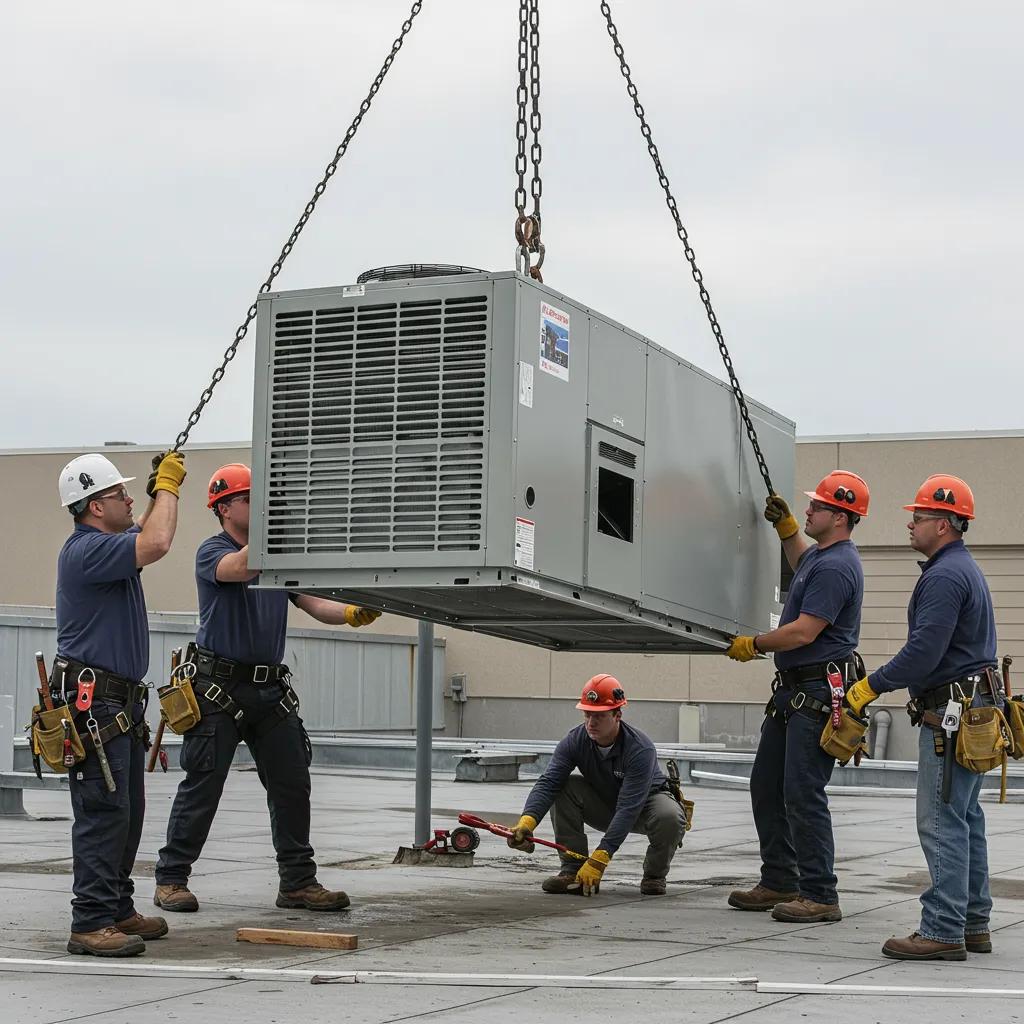
A successful removal begins with a comprehensive survey documenting system capacity, refrigerant type and quantity, electrical disconnect points, and structural access. Owners and contractors coordinate permitting, crane and rigging plans, and phasing schedules to maintain essential services during staged removals. During physical removal, crews execute lockout/tagout, disconnect ductwork and piping, and safely lower major assemblies for staging. Clear responsibility assignments — owner for permits, contractor for execution — and realistic duration estimates keep projects on schedule and under budget.
How Is Refrigerant Recovery and Recycling Performed Safely?
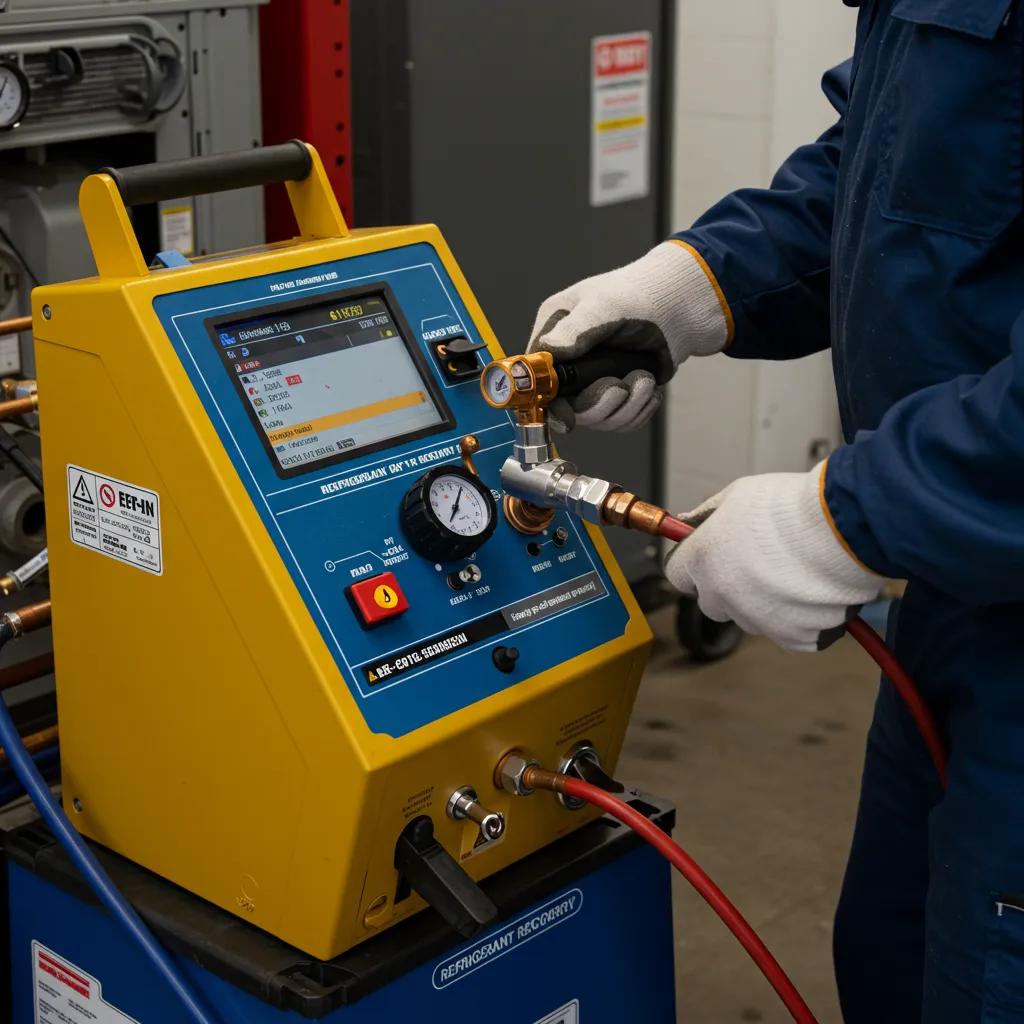
Refrigerant recovery uses EPA-compliant recovery machines operated by certified technicians who verify system isolation before extraction. After recovery, refrigerant is tested, labelled, and either reclaimed to specifications or sent to certified reclaimers for processing; leak checks and vacuum procedures verify system integrity post-recovery. Detailed recordkeeping tracks refrigerant quantities removed and disposal pathways to satisfy regulatory audits and sustainability metrics. Maintaining this chain of custody reduces greenhouse gas emissions and avoids regulatory penalties.
What Safety Protocols Are Followed During Decommissioning?
Decommissioning projects follow OSHA and industry best practices including lockout/tagout, PPE for chemical exposure and mechanical hazards, confined-space entry procedures, and crane/rigging safety checks. Pre-job briefings clarify roles, emergency plans, and interface points with building operations or occupants. Trained crews monitor air quality and use containment when exposed to hazardous dust, asbestos risk, or refrigerant residues. Robust safety oversight minimizes injury risk and prevents damage to adjacent systems during heavy-lift operations.
How Does Equipment Recycling Reduce Environmental Impact?
Recycling channels recovered metals, controls, and components back into manufacturing streams and diverts large volumes from landfills, reducing embodied carbon and resource extraction. Salvaged copper, aluminum, and steel yield measurable salvage credits that offset removal costs and demonstrate circular-economy outcomes. Reclaiming refrigerants prevents high-global-warming-potential gases from entering the atmosphere and supports regulatory compliance. Documentation and certificates of recycling provide owners with transparent environmental reporting for sustainability programs.
Here’s a concise mapping of process phases to typical responsible parties and duration.
What Are the Benefits of Professional Commercial HVAC Decommissioning Services?
Hiring professionals for commercial HVAC decommissioning mitigates legal and environmental risk, reduces downtime, and preserves salvage value through proper recycling and disposal. Expert teams bring coordinated mechanical contracting, equipment replacement planning, and in-house fabrication capabilities that shorten schedules and improve handover quality. Professional decommissioning also enables better ROI on new systems by facilitating accurate right-sizing and efficient installation sequencing. We’ll illustrate energy and cost benefits, refrigerant protection outcomes, compliance advantages, and renovation support.
How Does Decommissioning Improve Energy Efficiency and Reduce Costs?
Decommissioning enables replacement with modern, high-efficiency systems that lower energy consumption and maintenance demands. Removing oversized or leaking equipment creates an opportunity to right-size new systems using current load calculations and controls integration, which improves thermal comfort and reduces operating expenses. Planned retirement prevents emergency replacements that carry premium labor and expedited equipment costs, yielding smoother capital planning and measurable lifecycle savings. These improvements cumulatively reduce total cost of ownership over the life of the new system.
- Decommissioning supports precise right-sizing and HVAC controls upgrades.
- Modern replacements reduce energy consumption and maintenance frequency.
- Planned retirements avoid emergency costs and expedite ROI.
How Does Proper Refrigerant Recovery Protect the Environment?
Proper refrigerant recovery prevents release of high-global-warming-potential gases and complies with EPA regulations designed to limit emissions. Certified recovery and reclaim processes capture refrigerant for reuse or lawful destruction, which reduces atmospheric impact and aligns with corporate sustainability targets. Accurate records and certificates of disposal demonstrate compliance to auditors and stakeholders, avoiding fines and reputational risk. Responsible refrigerant management is therefore both an environmental obligation and a demonstrable corporate governance practice.
Consider typical equipment life expectancies and common failure impacts to inform replacement prioritization.
What Are the Safety and Compliance Advantages of Hiring Experts?
Trained contractors reduce liability through insured operations, correct permitting, and certified refrigerant handling that meets regulatory standards. Professional crews follow structured safety plans, use industry-standard lifting and rigging methods, and provide documentation that supports warranty and insurance claims. Avoiding unqualified removal prevents structural damage, refrigerant release, or improper disposal that could trigger regulatory enforcement. Bringing experienced teams into decommissioning projects thereby lowers risk exposure for owners and managers.
How Does Decommissioning Support Facility Renovations and Upgrades?
Decommissioning facilitates phased renovations by creating clear work windows, coordinating with general contractors, and staging equipment for rapid replacement. Turnkey removal-to-replace workflows reduce schedule conflicts, avoid change orders, and allow building automation integration to be planned alongside new equipment. Early removal planning helps sequencing for tenant moves, infection-control zones, or production downtimes, which preserves business continuity. Effective decommissioning ensures the site is ready for upgrade without surprise delays.
Which Commercial and Industrial Facilities Require HVAC Decommissioning Services?
Various facilities require decommissioning at different cadences depending on use, redundancy needs, and occupant risk; tailoring approach by segment reduces disruption and preserves critical services. Hospitals need staged removal and HEPA containment, schools often schedule work in off-term windows, industrial sites demand heavy-lift logistics and confined-space protocols, and commercial buildings balance tenant notifications with phased execution. We’ll unpack considerations for hospitals, schools, industrial plants, and commercial properties.
What Are the Unique Considerations for Hospitals and Healthcare Facilities?
Hospitals require phased decommissioning to maintain redundant HVAC that protects patient safety and critical spaces, with strict infection-control measures and HEPA containment during work. Projects coordinate with clinical operations to schedule removals in low-risk windows and ensure temporary HVAC maintains required airflow and pressure relationships. Controls integration is tested extensively before decommissioning to avoid unintended impacts on critical zones. This staged, highly controlled approach preserves clinical operations while enabling necessary system renewal.
How Is HVAC Decommissioning Tailored for Schools and Educational Buildings?
Schools typically schedule decommissioning during summer or holiday breaks to minimize disruption to students and staff and reduce exposure to noise and dust. Temporary HVAC solutions or partial phasing maintain acceptable comfort conditions when essential systems must be taken offline. Clear communication with administrators, parents, and occupants about timelines and safety measures reduces stakeholder concerns. These scheduling strategies reduce learning disruption and allow contractors to perform more work per shift.
What Are the Challenges in Industrial HVAC Dismantling Services?
Industrial sites present heavy-equipment challenges, hazardous material streams, and tight integration with production processes that demand specialized lift plans and confined-space protocols. Industrial decommissioning often requires coordination with plant maintenance windows, isolation of process utilities, and bespoke rigging to move oversized chillers or rooftop modules. Safety planning for hazardous substances and ensuring continuity of critical systems are central to maintaining production while executing removal activities. These complexities necessitate experienced mechanical contractors who can integrate with plant operations.
How Do Commercial Buildings Benefit from HVAC Equipment Disposal and Recycling?
Commercial buildings realize both environmental and financial benefits when decommissioning includes recycling and salvage programs that recover metal value and reduce landfill volume. Proper disposal of controls, coils, and refrigerants supports sustainability reporting and can generate salvage credits that offset removal expenses. Tenant-facing properties also leverage documented disposal certificates to demonstrate stewardship and compliance. This integration of recycling into decommissioning enhances corporate sustainability profiles and reduces net project cost.
How Does CCS Mechanical Inc. Deliver Expert Commercial HVAC Decommissioning in Florida?
CCS Mechanical Inc., based in Ocala, Florida, combines mechanical contracting capabilities, equipment replacement planning, and regulatory-aware refrigerant recovery to execute turnkey decommissioning and replacement projects. Their local presence supports responsive site surveys, phased scheduling for occupied facilities, and coordination with Florida recycling partners. CCS Mechanical’s offerings connect decommissioning to equipment replacement, building automation integration, and preventive maintenance programs to preserve long-term system performance. is actively seeking talented HVAC technicians and system engineers to join our team. Industrial facilities, we invite you to call us for a quote on our services.
What Specialized Mechanical Contracting Services Support HVAC Removal?
Supporting services include piping and ductwork modifications, in-house fabrication for custom mounts and transitions, CAD-integrated lift plans, and coordination with structural and roofing trades for rooftop removals. These capabilities reduce coordination friction and shorten total project duration by keeping fabrication and field fit-up under a single contract. Pre-fabrication of piping and duct segments mitigates rooftop labor hours and improves safety during lifts. This integrated approach speeds handover and reduces hidden change orders.
How Does CCS Mechanical Ensure EPA-Compliant Refrigerant Recovery Services?
CCS Mechanical follows EPA refrigerant handling protocols by employing certified technicians and recovery equipment, documenting recovered charge quantities, and ensuring chain-of-custody to authorized reclaimers. Their compliance workflow captures manifests and disposal records that owners need for audits and sustainability tracking. Partnering with certified reclaimers closes the loop on responsible refrigerant management and demonstrates accountability for environmental stewardship. Clear documentation is provided to confirm proper disposal and reclamation steps.
What Equipment Replacement and Upgrade Planning Does CCS Mechanical Offer?
CCS Mechanical connects decommissioning to replacement planning through site assessments, load calculations, ROI and energy-efficiency modeling, and turnkey installation coordination with controls and automation teams. This planning helps right-size new systems, integrate building automation, and align commissioning with tenant or production schedules. Bringing replacement design into the decommissioning phase reduces rework and ensures mechanical interface points are preserved during removal. The result is a faster, more cost-effective path to modern, efficient HVAC systems.
How Can Facility Managers Request Quotes for Commercial HVAC Removal?
Facility managers prepare accurate quotes by providing equipment lists, photos, site access details, and any constraints such as rooftop access or narrow service corridors to expedite remote estimates or site surveys. Options for site assessments and phased proposals help match contractor resources to facility needs and minimize operational impact. is actively seeking talented HVAC technicians and system engineers to join our team. Industrial facilities, we invite you to call us for a quote on our services. Contact us today to obtain a tailored proposal.
What Career Opportunities Exist in Commercial HVAC Decommissioning at CCS Mechanical?
Decommissioning projects create roles for hands-on technicians and engineering staff who design safe removal sequences, perform refrigerant recovery, and manage project interfaces across trades. Career pathways include field technician positions focused on recovery and dismantling, rigging specialists for heavy lifts, and system engineers who develop lift plans, load calculations, and replacement specifications. is actively seeking talented HVAC technicians and system engineers to join our team. Industrial facilities, we invite you to call us for a quote on our services. This section outlines how you can fit into our decommissioning teams and prepares candidates for application.
What Roles Do HVAC Technicians Play in Decommissioning Projects?
Technicians handle refrigerant recovery, disconnect electrical and mechanical services, dismantle compressors and coils, and assist rigging crews during removal operations. They follow strict safety protocols, perform leak checks, and stage equipment for recycling or transport, serving as the hands-on backbone of decommissioning. Technicians also document recovered refrigerant and condition of components to support salvage and disposal records. Their work directly influences project safety, schedule adherence, and environmental compliance.
How Do HVAC System Engineers Contribute to Safe Removal and Replacement?
System engineers lead site assessments, create replacement specifications, perform load and capacity calculations, and develop lift and sequencing plans to avoid structural or operational conflicts. Engineers coordinate with structural, electrical, and controls trades to protect interfaces and ensure new systems integrate seamlessly with building automation. They oversee commissioning plans and verify that removal steps preserve system integrity for final installation. This engineering oversight reduces rework and ensures performance targets are met after replacement.
What Training and Safety Protocols Support Career Growth in HVAC Decommissioning?
Training typically covers lockout/tagout, refrigerant handling practices, rigging and crane safety, confined-space entry, and PPE for hazardous materials, paired with on-the-job mentoring. Certifications and continued education in HVAC controls, refrigeration technology, and mechanical rigging expand career options and increase project leadership opportunities. Mentoring and cross-training across fabrication, CAD, and controls work enable technicians and engineers to move into supervisory or estimating roles. This training foundation positions team members for long-term career progression in mechanical contracting.
How Can Interested Candidates Apply for HVAC Decommissioning Jobs in Florida?
Candidates should prepare a resume emphasizing hands-on refrigeration experience, familiarity with safety procedures, and any relevant certifications; cover letters describing decommissioning or heavy-rigging experience are also useful. Applications are typically reviewed with attention to safety record, ability to work on phased projects, and readiness for travel to local Florida sites. is actively seeking talented HVAC technicians and system engineers to join our team. Industrial facilities, we invite you to call us for a quote on our services. Qualified applicants and facility managers are invited to follow up through our careers and contact pathways.
What Are Common Questions About Commercial HVAC Decommissioning Services?
Facility managers frequently ask about cost drivers, recycling practices, disposition of scrap, and project timelines. Concise answers help set expectations and prompt site surveys for firm quotes. This section provides short, direct responses that facilities can use to triage decisions and decide when to request an on-site assessment. We’ll address typical cost ranges, responsible recycling processes, scrap destinations, and representative project durations.
What Is the Cost of Commercial HVAC Removal and Disposal in Florida?
Costs vary based on equipment size, refrigerant quantity, access constraints, and permit requirements, with small rooftop units often being much less expensive than large chillers requiring crane lifts. Typical cost drivers include rigging complexity, hazardous material handling, and whether reclaim/recycling yields offset credits. A site survey delivers accurate pricing, while salvage value for metals can reduce net removal expense. Owners should budget for permit, recovery, rigging, and disposal line items and obtain phased quotes to compare options.
Note that the values in the cost table below are broad ranges and depend heavily on site specifics and market conditions.
How Is Commercial AC Unit Recycling Conducted Responsibly?
Responsible recycling separates refrigerant for reclamation, salvages copper and aluminum, strips reusable components, and recycles steel and mixed metals through certified scrap processors. Reclaimers test refrigerant purity to determine reuse potential, and recyclers provide certificates documenting tonnage diverted from landfill. These documented streams support sustainability reporting and may generate salvage credits to offset removal costs. Contractual clarity on recycling pathways ensures transparent environmental outcomes.
What Happens to HVAC Scrap and Components After Decommissioning?
Scrap metal typically goes to local scrap yards, while refrigerants are sent to certified reclaimers and controls or circuit boards may be remanufactured or processed through electronics recyclers. Components that retain functionality can be refurbished for secondary markets, and hazardous parts like oils or asbestos (if present) are handled by licensed vendors. Proper sorting and documentation ensure legal compliance and maximize salvage value while minimizing environmental impact.
How Long Does a Typical Commercial HVAC Decommissioning Project Take?
Project durations depend on equipment scale and site constraints: a single small rooftop replacement may be completed in one day, while chiller plant decommissioning with crane lifts and staged replacements can take several days to multiple weeks. Factors that extend timelines include permitting, complex lift plans, refrigerant recovery volumes, and phased occupant protections. Detailed scheduling and pre-planning shorten on-site time and reduces operational disruptions, so owners should expect a site survey to provide a tailored timeline.
Frequently Asked Questions
What are the potential risks of DIY HVAC decommissioning?
Attempting to decommission HVAC systems without professional help can lead to significant risks, including improper refrigerant handling, which may result in environmental harm and legal penalties. Additionally, DIY efforts can cause safety hazards, such as electrical shocks or injuries from heavy equipment. Without the right training and equipment, individuals may also overlook critical safety protocols, leading to accidents or damage to the building structure. Hiring certified professionals ensures compliance with regulations and minimizes risks associated with the decommissioning process.
How can facility managers ensure compliance with local regulations during decommissioning?
Facility managers can ensure compliance with local regulations by staying informed about state and federal laws regarding HVAC decommissioning, particularly those related to refrigerant recovery and hazardous waste disposal. Engaging licensed contractors who are familiar with these regulations is crucial. Additionally, maintaining thorough documentation of all processes, including permits, recovery records, and disposal certificates, helps demonstrate compliance during audits. Regular training and updates on regulatory changes for staff involved in decommissioning can further enhance compliance efforts.
What are the benefits of integrating decommissioning with equipment replacement?
Integrating decommissioning with equipment replacement offers several benefits, including reduced downtime and streamlined project management. This approach allows for better planning and coordination, ensuring that new systems are installed promptly after the old ones are removed. It also helps in optimizing the design and sizing of new equipment based on current operational needs, leading to improved energy efficiency. Furthermore, this integration can enhance cost-effectiveness by minimizing labor and logistical expenses associated with separate decommissioning and installation processes.
What types of training are essential for HVAC technicians involved in decommissioning?
HVAC technicians involved in decommissioning should undergo training in several key areas, including refrigerant recovery techniques, safety protocols such as lockout/tagout procedures, and handling hazardous materials. Familiarity with OSHA regulations and environmental compliance is also crucial. Additionally, training in rigging and heavy-lift operations is important for safely managing large equipment removals. Continuous education on the latest HVAC technologies and practices can further enhance their skills and ensure they are equipped to handle complex decommissioning projects effectively.
How does the decommissioning process differ for various facility types?
The decommissioning process varies significantly based on the facility type. For hospitals, it requires strict infection control measures and maintaining redundant systems to ensure patient safety. Schools often schedule work during breaks to minimize disruption, while industrial sites face unique challenges related to heavy equipment and hazardous materials. Commercial buildings may prioritize tenant communication and phased execution to maintain comfort. Each facility type necessitates tailored planning and execution strategies to address specific operational needs and regulatory requirements.
What role does documentation play in the decommissioning process?
Documentation is critical in the decommissioning process as it provides a clear record of compliance with environmental regulations and safety standards. It includes permits, refrigerant recovery logs, and disposal certificates, which are essential for audits and demonstrating responsible practices. Proper documentation also helps track the progress of the project, ensuring that all steps are completed as planned. Additionally, it serves as a reference for future projects, helping facility managers make informed decisions based on past experiences and outcomes.
How can facility managers prepare for a successful HVAC decommissioning project?
Facility managers can prepare for a successful HVAC decommissioning project by conducting thorough site assessments to identify equipment types, access constraints, and potential hazards. Developing a detailed project plan that includes timelines, budget estimates, and stakeholder communication strategies is essential. Engaging experienced contractors early in the process ensures compliance with regulations and safety protocols. Additionally, scheduling the decommissioning during off-peak hours can minimize disruptions to operations. Finally, maintaining clear documentation throughout the project will support accountability and facilitate future planning.
]]>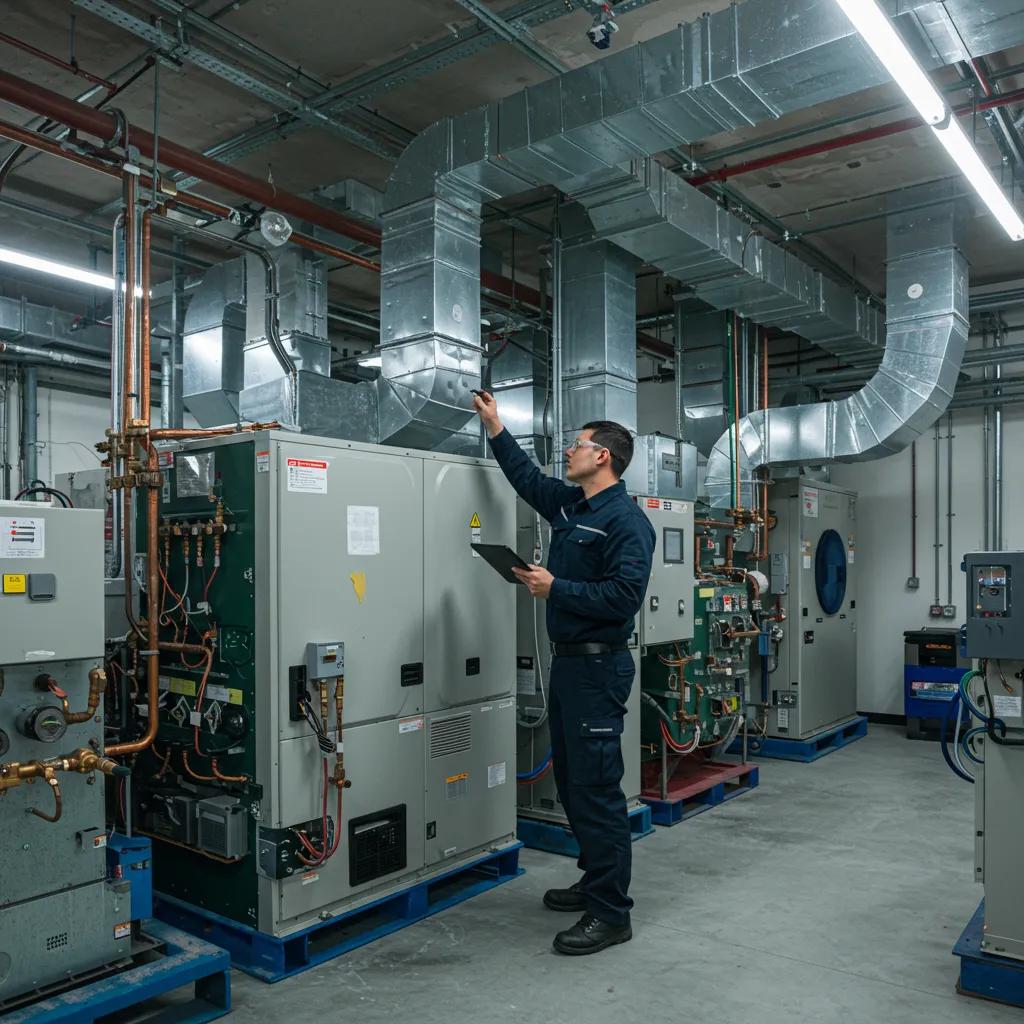
Commercial HVAC Commissioning Services: Optimize Your Facility’s HVAC System Performance and Energy Efficiency
Commercial HVAC commissioning is a structured quality-assurance process that verifies HVAC systems are designed, installed, and operating to meet the owner’s project requirements and performance goals. This article explains how commissioning reduces energy use, improves occupant comfort and indoor air quality, and reduces lifecycle costs by finding and fixing problems early and validating control sequencing and sensor accuracy. Facility managers, mechanical engineers, and prospective HVAC technicians will find practical guidance on commissioning phases, testing and balancing, documentation, and sector-specific priorities for industrial, healthcare, and educational facilities. Readers will also learn how monitoring-based commissioning and BAS integration support ongoing performance, when to select new-construction versus retro-commissioning, and what evidence-based outcomes to expect. Finally, the article includes concise steps to request a commissioning quote, and targeted career information for HVAC technicians and system engineers interested in commissioning roles at CCS Mechanical Inc., with local contact guidance for Ocala, Florida facilities.
What Is Commercial HVAC Commissioning and Why Is It Essential?
Commercial HVAC commissioning is a verification and validation practice that confirms HVAC systems deliver intended performance by exercising components, testing control sequences, and validating measurable outcomes. The process works by combining design review, installation inspection, functional performance testing, and post-occupancy monitoring to identify deviations from the owner’s project requirements, which then triggers corrective actions and re-testing. The measurable benefit is clear: commissioning reduces energy waste, improves temperature and humidity control, and establishes documented operational baselines for facility teams to maintain. Understanding these fundamentals empowers owners to prioritize commissioning during design and at periodic intervals to preserve system reliability and occupant health.
How commissioning ensures results depends on systematic tests and data-driven correction workflows, which are described below and mapped to measurable objectives in the EAV table that follows. These verification activities reference industry guidance such as ASHRAE and testing and balancing principles, and they directly translate into lower utility spend and fewer reactive service calls. For facility managers considering commissioning, the next section lists concrete functional entities and the values commissioning aims to achieve.
This table defines key commissioning entities, their attributes, and target measurable values used to validate commercial HVAC systems.
This EAV table clarifies how commissioning converts functional checks into measurable pass/fail criteria and a documented basis for corrective work. Understanding these entities sets the stage for practical steps in functional testing and controls verification.
How Does HVAC Commissioning Ensure System Optimization and Compliance?
Functional performance testing ensures system optimization by exercising equipment and control sequences under realistic loads and validating that outcomes meet design intent and regulatory checkpoints. Tests include start/stop cycling, economizer behavior, VAV box response, and sequencing of pumps and chilled-water loops while checking that control logic aligns with ASHRAE-recommended practices. When tests reveal deviations—such as incorrect damper operation or sensor drift—technicians implement adjustments, retest the sequence, and document results to confirm compliance. This iterative test-adjust-verify approach directly maps measured faults to corrective actions, closing the loop between detection and verification.
These compliance checks support regulatory and certification objectives while also creating a baseline for maintenance teams to track long-term performance trends. The next subsection quantifies the benefits commissioning delivers through before/after comparisons.
What Are the Key Benefits of HVAC Commissioning for Commercial Facilities?
Commissioning delivers significant, quantifiable benefits including energy reduction, improved occupant comfort, and extended equipment life, all documented through measurable before/after metrics. Typical energy savings from systematic commissioning and tuning range from 5% to 20% depending on building condition and controls maturity, while comfort complaints and complaint-driven service calls typically drop significantly after corrective tuning. Maintenance teams gain clearer O&M documentation and training that reduce unscheduled downtime and prolong equipment lifecycle by preventing stress conditions that accelerate wear. These improvements convert into a measurable return on investment when owners compare baseline operational costs to post-commissioning performance.
Below is a before/after comparison illustrating representative facility-level changes following a commissioning engagement.
This comparison demonstrates how commissioning converts diagnostic insights into operational improvements and cost savings; next, we examine how these activities improve indoor air quality and building performance.
How Does Commissioning Improve Indoor Air Quality and Building Performance?
Commissioning improves indoor air quality by verifying ventilation rates, filter selection and installation, and humidity control strategies, which together reduce contaminant concentrations and support occupant health. Practical checks include measuring outdoor air intake volumes against design cfm per occupant, confirming filter MERV ratings and installation integrity, and validating humidification/dehumidification control sequences to prevent mold or dry-air conditions. Monitoring-based commissioning further enhances IAQ by using BAS trend data and targeted sensors to detect ventilation drift and schedule corrective tuning. By combining field verification with documentation and training, commissioning hands facility teams a reproducible plan to sustain IAQ performance over time.
These IAQ-focused activities also tie into overall building performance by ensuring that ventilation and pressurization strategies are coordinated with energy management goals, which leads into the commissioning process we describe for project delivery.
What Is the Commercial HVAC Commissioning Process at CCS Mechanical Inc.?
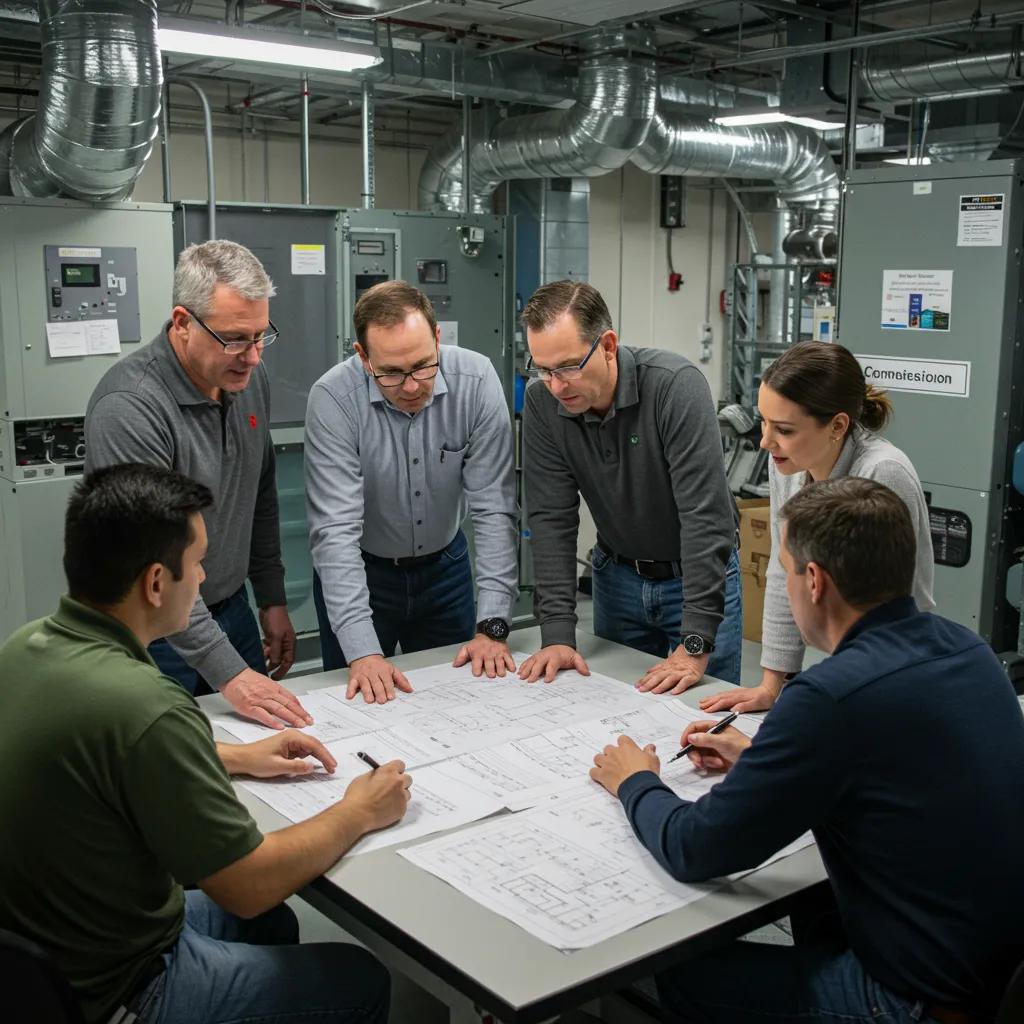
The commercial HVAC commissioning process typically follows phased activities: pre-design review, design coordination, installation verification during construction, functional performance testing at turnover, documentation and training, and post-occupancy verification. Each phase has distinct deliverables—design review comments, checklists, field test reports, control narratives, and training sessions—that translate commissioning into verifiable outcomes. This phase-based approach ensures defects are caught early, controls are tuned for real loads, and operators receive the guidance needed to maintain performance. Project schedules and scope are tailored to project size and system complexity, with milestones tied to design and construction schedules.
CCS Mechanical Inc. blends engineering-driven oversight with in-house capabilities—an estimating group for accurate budgeting, a CAD department for coordination, and fabrication facilities to accelerate corrective work—helping us reduce punch-list delays and shorten commissioning timelines. Industrial facility managers in Ocala and across Florida can connect with CCS Mechanical by phone at +(352)237-6272 to request a commissioning quote and site assessment. The next subsections break the process into actionable phases, describe TAB practices, and explain documentation and client training integration.
What Are the Step-by-Step Phases of Our Commissioning Process?
A typical commissioning engagement follows a clear sequence of phases that align stakeholders and define deliverables for each stage of delivery. The phases are: pre-design review to capture owner project requirements, design-phase coordination to ensure controllability, construction-phase installation verification to catch defects early, functional performance testing at system turnover, and post-occupancy monitoring to confirm sustained performance. Each phase features specific deliverables such as field test reports, punch-list tracking, control narratives, and a final commissioning report that documents achieved performance against targets. Clear role assignments—for owner, engineer, contractor, and commissioning team—help keep the project on schedule and provide traceable accountability.
This phased sequence reduces risk by preventing common failure modes that emerge during startup, and it informs the practical testing and balancing activities described next.
How Do We Perform Testing, Adjusting, and Balancing for Optimal HVAC Performance?
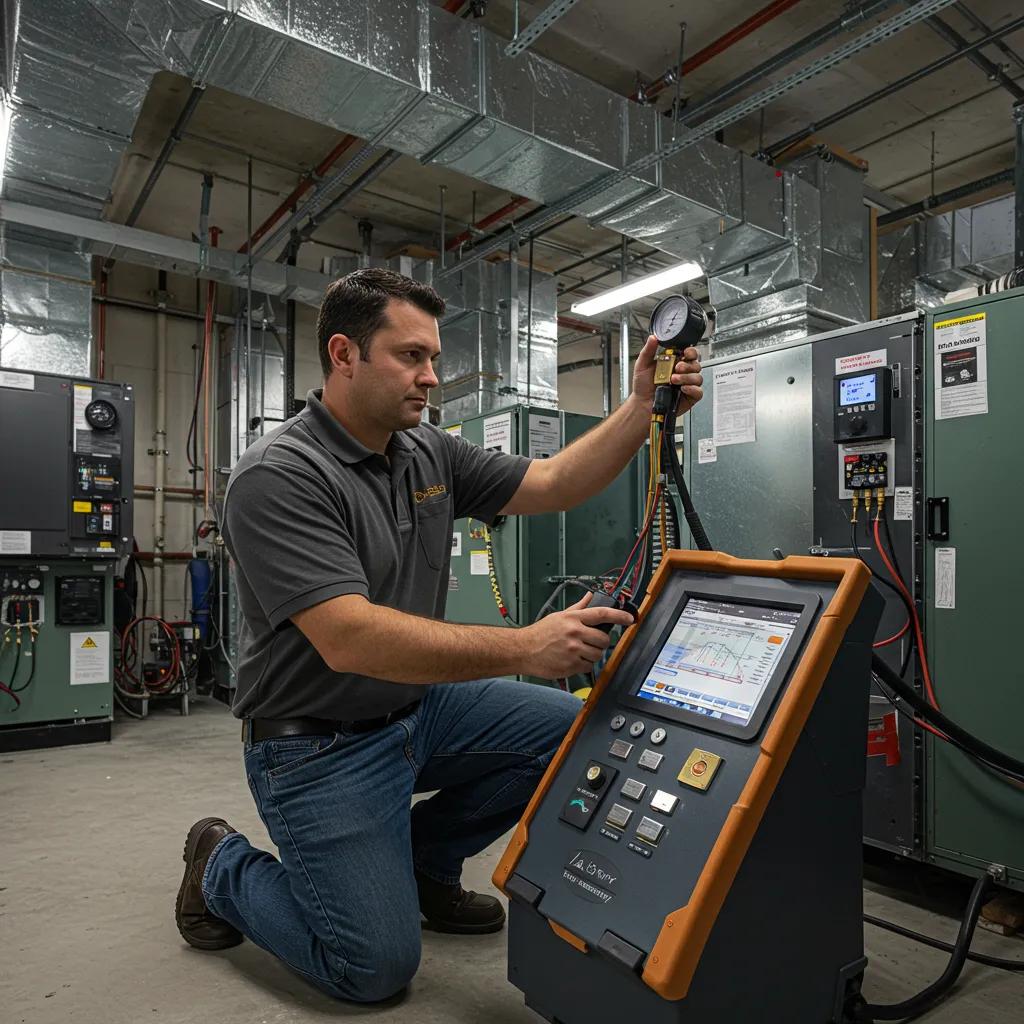
Testing, Adjusting, and Balancing (TAB) validates airflow, water flow, and pressure relationships using calibrated instruments and documented acceptance criteria to match design intent. Air measurements include supply and return CFM at diffusers and grilles, VAV flow verification, and static pressure checks; hydronic tests verify flow rates, pump curves, and temperature differentials. Acceptance criteria typically reference percentage tolerances around design values and require corrective action if readings fall outside those ranges, followed by re-measurement to demonstrate compliance. TAB reports include instrument logs, as-found/as-left readings, and recommended adjustments that feed directly into the commissioning punch list.
TAB establishes the physical baseline necessary for functional control sequencing to operate as intended, and the documented TAB results are incorporated into the project O&M package discussed in the next subsection.
How Is Documentation and Client Training Integrated into Our Process?
Documentation and client training are planned deliverables that transfer operational knowledge and sustain commissioning benefits over time by equipping facilities staff to maintain settings and detect drift. Deliverables include an O&M manual, control narratives, a commissioning report with test data, and prioritized action items; training sessions combine classroom review with hands-on walkthroughs of control points and BAS interactions. Training emphasizes routine verification steps, alarm responses, and log review to help in-house technicians identify early signs of performance decline. Clear documentation and tailored training reduce owner reliance on reactive contractor calls and support a sustainable maintenance strategy.
Well-delivered documentation closes the loop between technical verification and operational practice, enabling facility teams to preserve commissioning gains into the future.
Which Types of HVAC Commissioning Services Do We Offer?
Commercial commissioning spans several service types—new-construction commissioning, retro-commissioning of existing systems, and re-commissioning for drifted or repurposed systems—each tailored to the facility’s lifecycle stage and objectives. New-construction commissioning focuses on ensuring systems meet owner project requirements from the outset through design review and startup testing. Retro-commissioning evaluates aging systems to identify low- and no-cost energy savings and implement prioritized corrective work. Re-commissioning targets systems that once performed well but have drifted due to occupancy changes, deferred maintenance, or control logic creep. Choosing the right path depends on system age, performance baseline, and budget priorities.
Owners can use the comparative table below to assess which commissioning type aligns with their project goals and expected ROI.
This comparison helps facility managers decide which commissioning investment best matches their priorities and supports procurement decisions; the next subsections detail each service type and typical owner checklists.
What Is New Construction HVAC Commissioning and Its Benefits?
New-construction commissioning is embedded in the design and construction workflow to prevent startup defects and ensure systems meet the owner’s project requirements at turnover. Benefits include fewer punch-list items, better control sequence implementation, and a documented baseline that simplifies future troubleshooting and performance tracking. Design review during this phase reduces ambiguous control requirements, and early coordination with the CAD and fabrication teams helps avoid field-fit issues. For owners, the result is smoother occupancy turnover and lower risk of costly retrofit corrections after occupancy.
Embedding commissioning in new projects prevents common startup failures and shortens the timeline to stable operation.
How Does Retro-Commissioning Optimize Existing HVAC Systems?
Retro-commissioning evaluates an occupied facility’s systems to identify inefficiencies and low-cost/no-cost measures such as scheduling corrections, setpoint adjustments, and sensor recalibration that deliver measurable energy savings. The process typically starts with a facility walkdown, BAS trend analysis, and targeted functional tests to prioritize interventions with the highest energy or comfort impact. Examples include correcting economizer operation, repairing leaking actuators, and re-sequencing problematic controls; many measures pay back within months to a few years depending on utility costs. Monitoring-based commissioning can extend retro-commissioning benefits by continuously tracking key performance indicators and triggering maintenance actions.
Retro-commissioning is particularly effective in buildings where systems have drifted from design intent or controls have not been properly maintained.
Monitoring-Based HVAC Commissioning for Energy Efficiency
Monitoring-based commissioning is an ongoing commissioning process with focus on analyzing large amounts of data on a continuous basis. EMIS tools are used in the MBCx process to organize, present, visualize, and analyze the data.
Monitoring-based HVAC commissioning of an existing office building for energy efficiency, L Wang, 2013
What Is Re-Commissioning and When Is It Needed?
Re-commissioning is a targeted verification undertaken when systems that were previously commissioned no longer meet performance expectations due to occupancy changes, renovation, or gradual control drift. Triggers for re-commissioning include increased comfort complaints, rising energy use, renovation-driven system changes, or noticeable declines in reliability. The approach focuses on validating original setpoints and sequences, identifying deviations, and restoring system behavior to documented baselines. Scheduled periodic re-commissioning helps maintain long-term performance and prevents small issues from compounding into major failures.
Re-commissioning provides a cost-effective way to restore intended performance without a full retro-commissioning or major capital investment.
How Does HVAC Commissioning Benefit Different Commercial and Industrial Sectors?
Commissioning priorities vary by sector: industrial facilities prioritize process ventilation and uptime, hospitals require strict IAQ and redundancy, and schools or offices value comfort, controllability, and low operational costs. Understanding sector-specific risks helps tailor testing scope, acceptance criteria, and monitoring strategies to meet both safety and performance objectives. Commissioning checks may therefore emphasize hazardous-area controls in industrial settings, isolation room pressures and filtration in healthcare, or scheduling and economizer optimization in educational buildings. Aligning commissioning deliverables with sector compliance and operational priorities produces measurable gains in reliability and occupant wellbeing.
The following subsections explore sector-specific needs and practical commissioning considerations for industrial, healthcare, and educational/commercial facilities.
What Are the Unique Commissioning Needs of Industrial Facilities?
Industrial facilities demand commissioning that prioritizes ventilation tied to process loads, contamination control, and reliability to avoid costly production downtime. Commissioning here focuses on verifying that process ventilation rates match exhaust requirements, that hazardous-area controls and interlocks operate correctly, and that control strategies do not introduce process interruptions. Functional testing often coordinates with process engineers to schedule checks that minimize operational disruption while validating safety-critical sequences and redundancy systems. Effective commissioning in industrial contexts reduces production risk, improves worker safety, and minimizes unplanned outages.
By tying commissioning tests to process requirements, facility teams preserve uptime while improving environmental and safety performance.
How Does HVAC Commissioning Support Hospitals and Healthcare Environments?
Healthcare commissioning emphasizes critical IAQ parameters, pressure relationships for isolation rooms, HEPA filtration validation, and redundancy for life-safety systems to support infection control and patient safety. Tests verify that anteroom and isolation room differentials meet pressure targets, that filtered air delivery rates meet design cfm per patient area, and that emergency backup systems engage reliably. Commissioning also documents maintenance procedures and operator training to ensure staff can respond to alarms and maintain critical conditions. Robust documentation and post-occupancy verification help hospitals meet regulatory expectations and support accreditation processes.
These commissioning activities directly protect patient health and preserve critical facility operations.
Why Is Commissioning Important for Educational and Commercial Buildings?
In schools and office buildings, commissioning focuses on occupant comfort, ventilation to support healthy indoor environments, and flexible control strategies to match variable occupancy schedules. Typical priorities include verifying mixed-mode ventilation, economizer operation, VAV performance across classrooms or open-plan offices, and scheduling that reduces conditioning during unoccupied hours. Commissioning reduces thermal complaints that disrupt learning or productivity and aligns energy use with occupancy patterns to lower operating costs. Training facility staff on schedule management and BAS trend interpretation sustains the benefits long-term.
Commissioning thus improves occupant satisfaction and supports budgetary goals through smarter, data-driven control.
Why Choose CCS Mechanical Inc. for Your Commercial HVAC Commissioning?
CCS Mechanical Inc. delivers commissioning services with an engineering-driven, customer-focused approach that leverages in-house estimating, CAD coordination, and fabrication to streamline project delivery and quality assurance. Local to Ocala, Florida, CCS Mechanical brings regional responsiveness and practical knowledge of Florida-specific HVAC challenges, and we emphasize value engineering during estimating to align scope with owner budgets. These capabilities reduce turnaround time for corrective fabrication or coordination issues uncovered during commissioning, and they support consistent documentation and handover. Facility managers seeking commissioning and technical execution can connect with CCS Mechanical by phone at +(352)237-6272 for quote inquiries and initial consultations.
Below are concise proof points and calls to action that explain why owners and hiring candidates find CCS Mechanical an appealing partner.
- Engineering-driven oversight that aligns testing and control verification with owner requirements.
- In-house Estimation and CAD Departments that improve budgeting accuracy and coordination.
- Fabrication capabilities to accelerate fixes and reduce lead times during commissioning.
These differentiators combine to minimize schedule risk and support measurable commissioning outcomes for commercial and industrial facilities.
What Engineering Expertise and Certifications Do We Bring to Commissioning?
CCS Mechanical applies engineering-driven methodologies and aligns commissioning activities with industry guidance such as ASHRAE and common testing-and-balancing practices to validate system performance. The team focuses on functional performance testing, control-sequence validation, and producing actionable documentation that operators can use post-turnover. While specific third-party certifications are not claimed here, CCS Mechanical leverages technical staff, CAD coordination, and estimating support to translate engineering findings into implemented fixes and reliable operation. This technical integration improves first-run success during startup and reduces time spent on punch-list items.
This engineering emphasis feeds directly into faster turnover and clearer handover packages for facilities teams.
How Does Our Local Florida Presence Enhance Service Quality and Responsiveness?
A local Florida presence supports faster mobilization for field verification, repair, and post-occupancy follow-up, and gives CCS Mechanical practical experience with climate-specific issues like humidity control and high cooling loads. Rapid onsite response reduces the time between detecting an issue during testing and implementing corrective measures, which shortens commissioning schedules and limits disruption to facility operations. Familiarity with regional construction practices and codes helps the team propose practical, code-aligned adjustments during design review and startup. These regional advantages translate into fewer schedule setbacks and better-aligned performance outcomes.
Local knowledge therefore complements the technical commissioning approach to deliver reliable, timely results.
What Role Does Our In-House Fabrication and CAD Department Play in Commissioning?
Having in-house fabrication and a CAD department enables rapid fabrication of custom ductwork, sheet-metal modifications, or mounting brackets identified during commissioning, reducing external lead times and schedule risk. CAD-driven coordination reduces as-built surprises by allowing detailed prefabrication and clash detection prior to field installation, and fabrication resources permit immediate correction of small but critical installation defects found during functional testing. This integration improves installation quality, shortens corrective cycles, and increases the likelihood that functional performance testing passes on first re-test. The result is a tighter commissioning timeline and a cleaner turnover for owners.
These capabilities directly improve quality assurance and project predictability during commissioning engagements.
Ready to Start Your Commercial HVAC Commissioning Project? Get a Quote Today.
Getting a commissioning quote begins with a clear scoping conversation and providing core project information so estimates match the building’s complexity and objectives. Essential items to provide include facility type and size, system types and approximate age, available drawings or as-built plans, and BAS access for trend analysis; this enables accurate scoping of testing hours, TAB needs, and documentation deliverables. A preliminary site visit or virtual review often refines the scope and timeline and clarifies whether monitoring-based commissioning or phased implementation is recommended. Typical lead times vary with project scale, but early engagement during design or as soon as performance issues emerge yields the best outcomes.
To request a quote or discuss a potential commissioning project, industrial facility managers and owners can simply call +(352)237-6272 to arrange a site assessment and initial scope review.
Building Analytics and Monitoring-Based Commissioning for Energy Savings
As building energy and system-level monitoring becomes more common, facility teams are faced with an overwhelming amount of data. This data does not typically lead to insights, corrective actions, and energy savings unless it is stored, organized, analyzed, and prioritized in automated ways. The Smart Energy Analytics Campaign is a public-private sector partnership program focused on supporting commercially available energy management and information systems (EMIS) technology use and monitoring-based commissioning (MBCx) practices.
Building analytics and monitoring-based commissioning: industry practice, costs, and savings, G Lin, 2020
What Information Do You Need to Provide for an Accurate Commissioning Quote?
An accurate commissioning quote requires a set of baseline documents and site information to scope field testing and reporting effort correctly. Provide available drawings (mechanical plans, equipment schedules), an owner’s project requirements or performance goals, existing BAS access details for trend analysis, and a description of current issues or priorities such as IAQ, energy reduction, or reliability. If available, share equipment age and maintenance history to help prioritize high-risk systems. Supplying these items upfront results in a more accurate estimate and a focused commissioning plan ready for scheduling.
Providing comprehensive documentation accelerates quoting and enables a targeted, value-driven commissioning engagement.
How Do We Tailor Commissioning Solutions to Your Facility’s Specific Needs?
Commissioning scope is tailored by prioritizing high-risk or high-energy-impact systems and matching testing depth to owner goals—whether energy reduction, IAQ improvement, or reliability enhancement. For energy-focused projects, we emphasize economizer, sequence, and scheduling tests and propose monitoring-based follow-up; for healthcare, we prioritize pressure relationships and filtration validation; for industrial sites, process ventilation and redundancy testing take precedence. Phased commissioning and risk-based sampling allow owners to balance budget and impact by focusing effort where it yields the greatest ROI. Custom deliverables such as prioritized action lists and operator training sessions ensure the commissioning work supports long-term operational goals.
Tailoring commissioning to facility priorities ensures measurable outcomes aligned with the owner’s objectives.
Model-Based Continuous Commissioning for Office Buildings
This paper presents an overview of literature and procedures about real-life, state-of-the-art implementations of model-based (MB) Continuous Commissioning (CCx) in office buildings.
Model selection for continuous commissioning of HVAC-systems in office buildings: A review, D Saelens, 2017
Explore Career Opportunities in Commercial HVAC Commissioning at CCS Mechanical Inc.
CCS Mechanical invites HVAC technicians and HVAC system engineers to explore commissioning roles that combine hands-on work, controls troubleshooting, and measurable performance outcomes; these opportunities are particularly rewarding for professionals who enjoy technical variety and clear impact on energy and occupant health. Working in commissioning exposes technicians to advanced BAS integration, TAB procedures, and cross-sector projects in industrial, healthcare, and educational environments, accelerating skills development and professional growth. CCS Mechanical advertises a customer-focused, engineering-driven culture and encourages applicants who want to develop commissioning expertise and progress into advanced technical roles.
- Roles available: HVAC technicians involved in TAB and field testing; system engineers focused on controls and sequence verification.
- Skills developed: BAS troubleshooting, TAB measurement techniques, control sequencing analysis, and documentation practices.
- Why apply: Commissioning work offers measurable outcomes, cross-sector exposure, and technical progression toward advanced engineering roles.
These career opportunities align with the company goal to attract HVAC technicians and system engineers and to nurture technical growth through practical commissioning work.
What Skills and Certifications Are Valued for HVAC Commissioning Careers?
Valued skills include TAB measurement techniques, BAS programming and diagnostics, functional performance testing, and the ability to interpret mechanical drawings and control narratives. Certifications and training in TAB, control systems, and industry standards improve marketability, while experience with data logging and trend analysis strengthens candidate profiles. Employers also look for strong troubleshooting skills, clear written reporting, and the ability to lead operator training sessions. On-the-job projects at CCS Mechanical provide practical opportunities to develop these competencies across diverse facility types.
Candidates who bring a blend of field skills and analytical ability are well-positioned to grow in commissioning roles.
How Does CCS Mechanical Support Career Growth and Professional Development?
CCS Mechanical emphasizes mentorship, cross-disciplinary project exposure, and hands-on training opportunities that let technicians and engineers advance their commissioning capabilities while working on real projects across industrial, healthcare, and educational sectors. Team members gain supervised experience in TAB, BAS troubleshooting, and functional testing, supporting progression to senior technical roles or system engineering positions. The company’s CAD and fabrication resources also provide a broader view of project coordination and prefabrication practices. Employees are encouraged to develop specialized skills that align with commissioning trends such as monitoring-based strategies, strengthening career pathways within building performance work.
This supportive environment helps employees build lasting technical skills and advance into higher-responsibility commissioning roles.
Frequently Asked Questions
What is the difference between new-construction commissioning and retro-commissioning?
New-construction commissioning focuses on ensuring that HVAC systems are designed and installed correctly from the start, verifying that they meet the owner’s project requirements during the construction phase. In contrast, retro-commissioning is applied to existing systems that may not be performing optimally. It identifies inefficiencies and implements low-cost improvements to restore systems to their intended performance. Both processes aim to enhance energy efficiency and occupant comfort, but they target different stages in a facility’s lifecycle.
How often should re-commissioning be performed?
Re-commissioning should be performed periodically, typically every three to five years, or whenever significant changes occur in a facility, such as renovations, changes in occupancy, or noticeable declines in system performance. Regular re-commissioning helps maintain optimal HVAC performance, addresses any drift in control settings, and ensures that systems continue to meet the evolving needs of the building and its occupants. This proactive approach can prevent larger issues and costly repairs down the line.
What role does monitoring-based commissioning play in HVAC performance?
Monitoring-based commissioning (MBCx) involves the continuous analysis of HVAC system performance using data from building automation systems (BAS). This approach allows facility managers to identify trends, detect anomalies, and schedule maintenance proactively. MBCx enhances the commissioning process by providing real-time insights into system performance, enabling timely adjustments to optimize energy efficiency and indoor air quality. It supports ongoing performance verification and helps maintain the benefits achieved through initial commissioning efforts.
What are the key metrics to evaluate after commissioning?
After commissioning, key metrics to evaluate include energy consumption, occupant comfort levels, maintenance frequency, and system reliability. Specific indicators may include annual HVAC energy use reductions, the number of occupant complaints regarding temperature or air quality, and the frequency of reactive maintenance calls. Tracking these metrics over time helps facility managers assess the effectiveness of commissioning efforts and identify areas for further improvement, ensuring that the HVAC system continues to operate efficiently and effectively.
How can facility managers ensure long-term success after commissioning?
To ensure long-term success after commissioning, facility managers should prioritize ongoing training for staff, maintain comprehensive documentation, and implement regular performance monitoring. Establishing a routine for checking system performance against established baselines and addressing any deviations promptly is crucial. Additionally, fostering a culture of proactive maintenance and continuous improvement can help sustain the benefits of commissioning, ensuring that HVAC systems operate efficiently and meet the needs of occupants over time.
What are the common challenges faced during the commissioning process?
Common challenges during the commissioning process include communication gaps among stakeholders, unexpected system performance issues, and insufficient documentation. Coordination between design, construction, and operations teams is essential to address these challenges effectively. Additionally, the complexity of modern HVAC systems can lead to difficulties in verifying performance against design intent. To mitigate these issues, a structured commissioning plan with clear roles, responsibilities, and timelines can help streamline the process and ensure successful outcomes.
]]>
Frequently Asked Questions About HVAC: Commercial Maintenance, Common Problems, and Career Insights
Commercial and industrial HVAC systems are complex assemblies of mechanical, control, and air distribution subsystems that keep buildings safe, comfortable, and operational. This article answers core questions facility managers, HVAC technicians, and systems engineers ask about maintenance frequency, common industrial problems, hiring and certification expectations, energy-efficiency strategies, standards and refrigerant trends, emergency service workflows, and lifecycle decisions. Readers will gain clear maintenance schedules, troubleshooting checklists, candidate interview prompts, upgrade comparisons, and practical replacement heuristics that support decision-making for hospitals, schools, manufacturing plants, and other mission-critical facilities. The following sections cover service frequency and checklists, top industrial failure modes and Florida-specific humidity strategies, career skills and certifications, prioritized efficiency upgrades (including BAS and VRF), relevant ASHRAE and refrigerant guidance, emergency response and quoting practices, and lifespan/replacement strategies. Throughout, semantic relationships between entities—systems, components, standards, and outcomes—are made explicit so readers can act on monitoring, procurement, staffing, and budgeting decisions with confidence.
CCS Mechanical Inc. supports two parallel goals for readers of this FAQ: attract qualified HVAC technicians and system engineers to apply, and invite facility managers in Florida to request commercial quotes or emergency assistance. CCS Mechanical operates as an engineering-driven mechanical contractor serving Florida markets and offers career pathways, training opportunities, and a contact point for commercial quotes and emergency calls. Facility managers can prepare site details before requesting a quote, and applicants can review career openings and training descriptions on the company’s careers page or contact CCS Mechanical directly for hiring information. This FAQ emphasizes technical guidance first while offering clear next steps to engage the company for hiring or project estimates.
How Often Should Commercial HVAC Systems Be Serviced?
Commercial HVAC service intervals depend on system type, operating hours, facility criticality, and environmental factors; routine servicing reduces unplanned downtime and preserves efficiency. Preventive maintenance operates by inspecting components, replacing wear items, calibrating controls, and verifying performance so systems run closer to design conditions and consume less energy. The baseline recommendation for many commercial settings is scheduled seasonal checks—at minimum twice a year—combined with equipment-specific intervals for chillers, AHUs, rooftop units, and VRF systems. Tailored service frequency is essential for hospitals, laboratories, and process environments, where tighter intervals and documented service records support regulatory compliance and uptime.
What follows is a compact maintenance frequency table to guide planning for common commercial equipment and to support procurement of preventive maintenance contracts.
This table helps facility managers prioritize contracts and allocate budget toward the right service cadence; the next section lists a recommended maintenance checklist with actionable items to guide technicians and managers.
What Is the Recommended Commercial HVAC Maintenance Checklist?
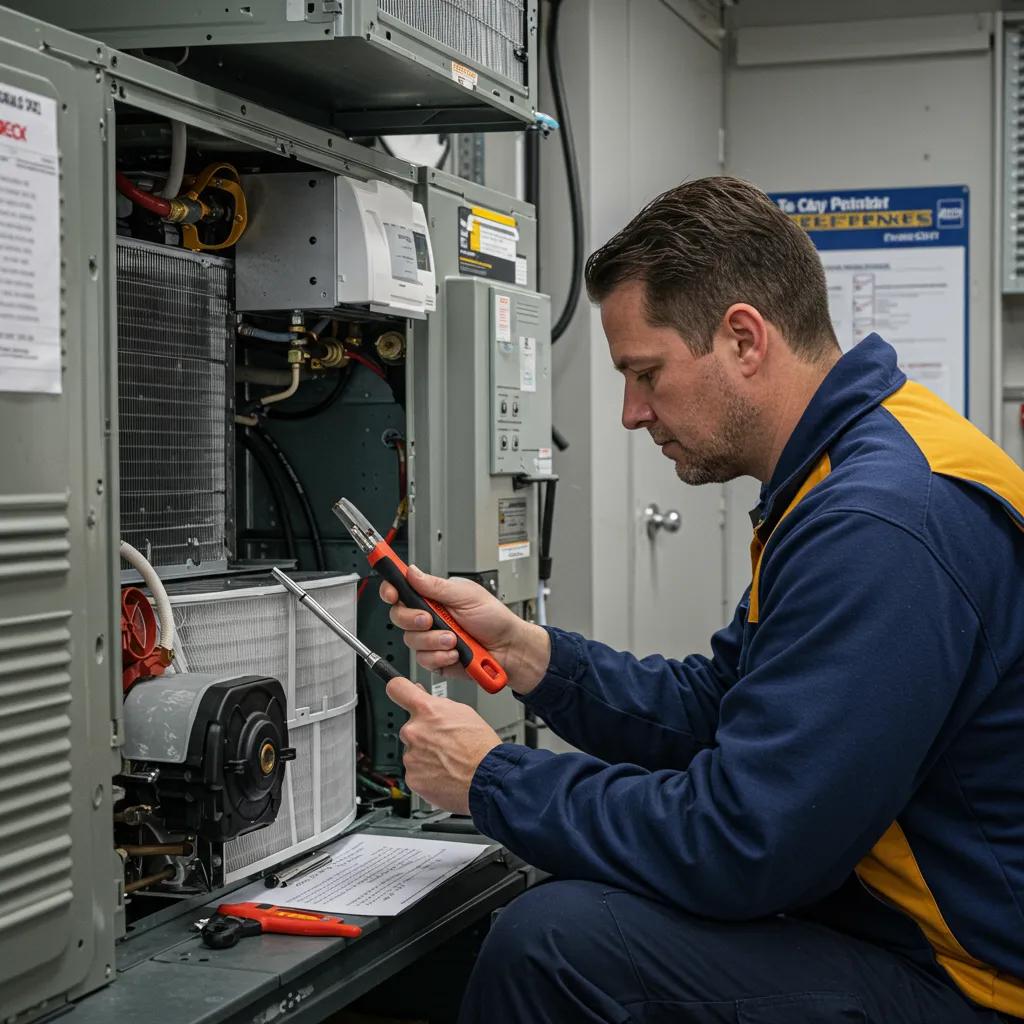
A clear checklist ensures consistent service delivery and captures the component-level tasks that preserve reliability and efficiency. Start with visual inspections and basic safety checks, then proceed to component maintenance: change filters, inspect belts and pulleys, clean coils, check refrigerant pressures, verify electrical connections, and exercise controls and safeties. Documentation practices—recording setpoints, measured temperatures, and corrective actions—create a historical record that reveals trends and supports data-driven replacement decisions. Keeping an accurate checklist supports warranty compliance and helps justify preventive maintenance contracts to stakeholders.
This checklist frames specific technician tasks that feed into energy and lifecycle analyses, which leads into how preventive maintenance directly reduces energy consumption and operational risk.
How Does Preventive Maintenance Improve HVAC System Energy Efficiency?
Preventive maintenance improves energy efficiency by restoring components to design performance and by eliminating conditions that increase load, such as dirty coils, clogged filters, and uncalibrated controls. Clean coils and filters reduce pressure drop and improve heat transfer, while calibrated controls ensure schedules and setpoints avoid simultaneous heating and cooling. Regular maintenance also enables early detection of failing motors or compressors that operate inefficiently and prevents emergency operation modes that spike energy use. Together, these actions preserve system part-load efficiency and reduce the likelihood of expensive, energy-intensive failures.
Understanding these mechanisms clarifies the diagnostics managers should watch for, which is the topic of the next subsection: signs indicating repair or replacement is needed.
What Are the Signs That a Commercial HVAC System Needs Repair or Replacement?
Recurring failures, steadily rising energy bills, inconsistent zone conditions, excessive noise, and persistent indoor air quality complaints signal the need for repair or potential replacement. Age thresholds (industry-cited baselines around 15–20 years for major equipment) combined with escalating repair frequency and declining efficiency suggest replacement is more cost-effective than continued repairs. Quick triage steps for facility managers include tracking energy use trends, logging mean time between failures, and requesting a professional audit that compares repair costs to expected savings from a modern replacement. Using simple ROI rules—repair if cost is a small fraction of remaining life, replace if payback from efficiency gains is short—helps prioritize capital decisions.
These signs and triage steps set the stage for addressing the most common industrial HVAC problems that cause the symptoms above.
What Are the Most Common Problems in Industrial HVAC Systems?
Industrial HVAC systems commonly suffer from five failure modes: control system faults, refrigerant leaks, airflow imbalance, corrosion/contamination, and mechanical wear; each mode affects process control, safety, and product quality. Control failures can decouple sensors and actuators, causing improper temperatures or humidity that disrupt production. Refrigerant leaks lower capacity and increase energy consumption while contamination and corrosion accelerate component failure, especially in corrosive environments. Addressing these common problems requires coordinated inspection, process-specific controls, and industrial ventilation strategies tailored to the plant’s emissions and load profiles.
The presence of faults in HVAC systems can significantly impact energy efficiency, thermal comfort, and indoor air quality, making fault detection and diagnostics crucial for facility managers.
HVAC Fault Modeling and Analysis for Commercial Buildings
Buildings consumed about 40% of primary energy and 70% of the electricity in the U.S. It is well known that most buildings lose a portion of their desired and designed energy efficiency in the years after they are commissioned or recommissioned. Majority of the Heating, Ventilation, and Air-Conditioning (HVAC) systems have multiple faults residing in the systems causing either energy, thermal comfort, or indoor air quality penalties. There are hundreds of fault detection and diagnostics (FDD) algorithms available, but there is lacking a common framework to assess and validate those FDD algorithms. Fault modeling is one of the key components of such a framework. In general, fault modeling has two purposes: testing and assessment of FDD algorithms, and fault impacts analysis in terms of building energy consumption and occupants’ thermal comfort. It is expected that fault ranking from the fault impact analysis can facilitate building facility managers to make decisions. This paper provides a detailed review of current state-of-the-art for the fault modeling of HVAC systems in buildings, including fault model, fault occurrence probability, and fault simulation platform. Fault simulations considering fault occurrence probability can generate realistic faulty data across a variety of faulty operating conditions, and facilitate testing and assessment of different FDD algorithms. They can also help the fault impact study. Three research gaps are identified through this critical literature review: (1) The number of available fault models of HVAC systems is still limited. A fault model library could be developed to cover all common HVAC faults for both traditional and non-traditional HVAC systems. (2) It is imperative to include the fault occurrence probability in fault simulations for a realistic fault impacts analysis such as fault ranking. (3) Fault simulation platforms need further improvements to better facilitate the fault impact analysis.
A critical review of fault modeling of HVAC systems in buildings, Y Li, 2018
Facility managers need practical diagnostic steps and monitoring metrics to quickly identify which failure mode is present and whether to escalate to specialist service.
How Can Facility Managers Identify and Troubleshoot Industrial HVAC Issues?
Facility managers can triage issues by monitoring three primary metrics: supply/return temperatures, differential pressures across filters and coils, and controller alarm logs. A rapid troubleshooting path is: verify power and safeties, check filters and dampers, inspect visible refrigerant lines for oil traces, and consult BAS trend logs for recent setpoint or sequence changes. Use portable sensors for spot checks when BAS data is unavailable, and escalate to maintenance or contractor support when mechanical or refrigerant faults are suspected. Early identification prevents production losses and reduces the scope of emergency repairs.
These troubleshooting steps highlight typical root causes, which we address next with prevention strategies.
What Are Typical Causes of HVAC System Failures in Industrial Settings?
Typical causes include deferred maintenance, exposure to corrosive gases or particulates, design mismatches between system capacity and process loads, and improper installation or commissioning. Corrosive atmospheres attack coils and electrical components, while high process loads exceed design margins and accelerate wear. Design mismatches often stem from underestimating simultaneous peak loads or neglecting ventilation needs for contaminants. Prevention requires proper specification, materials selection, and a preventive maintenance program tailored to the plant environment.
Preventing failures in Florida also requires attention to high ambient humidity, which is discussed in the following subsection with practical control approaches.
How Does Humidity Control Affect Industrial HVAC Performance in Florida?
High relative humidity in Florida increases corrosion risk, degrades indoor air quality, and can compromise product quality for hygroscopic materials; controlling humidity protects equipment and processes. Effective humidity control uses a mix of refrigeration dehumidification, desiccant systems for low dew-point needs, and BAS integration to coordinate ventilation rates with process schedules. Continuous monitoring of dew point and IAQ metrics allows proactive adjustments and fault detection for dehumidification equipment. Combining proper dehumidification with well-maintained drainage and corrosion-resistant materials reduces maintenance costs and protects sensitive operations.
This Florida-specific humidity strategy underscores the importance of technician skills and certifications, which facilities must prioritize when hiring.
What Skills and Certifications Are Required for HVAC Technicians and Engineers?
Commercial and industrial HVAC roles require a blend of mechanical aptitude, electrical troubleshooting, refrigerant handling, controls and BAS familiarity, and strong documentation skills; these core competencies enable technicians and engineers to service complex systems reliably. Employers commonly expect EPA refrigerant certification for anyone working with refrigerants, manufacturer-specific equipment certifications for specialized units, and proficiency with BAS protocols for integration and fault detection. Practical skills include vibration analysis, motor and compressor diagnostics, and the ability to interpret performance data to make repair vs. replace recommendations. Clear communication and safety practices are essential because technicians routinely coordinate with operations and contractors in critical facilities.
Below is a table mapping roles to typical certifications and skills to help applicants and hiring managers evaluate fit.
This table clarifies expectations and connects candidate preparation to employer needs; next we provide interview questions that probe these attributes.
What Are the Essential HVAC Technician Interview Questions?
Interview questions should probe troubleshooting process, safety, controls knowledge, and documentation practices; effective prompts reveal candidates’ problem-solving and procedural rigor. Sample questions include: describe a recent complex troubleshooting case and your diagnostic steps; how do you handle refrigerant leaks and leak testing; explain how you would calibrate a temperature sensor and verify BAS trends; and how do you document service activities for handover to operations. Strong answers demonstrate systematic diagnostics, adherence to safety and EPA regulations, clear written records, and familiarity with manufacturer procedures. These questions help differentiate candidates who can work independently in commercial or industrial environments.
As hiring managers evaluate candidates, CCS Mechanical presents specific growth opportunities that may appeal to technicians and engineers.
What Career Path and Growth Opportunities Does CCS Mechanical Offer HVAC Professionals?
CCS Mechanical provides HVAC professionals exposure to projects across industrial, healthcare, education, and commercial sectors, enabling broad hands-on experience that supports technical growth. The company’s engineering-driven approach and in-house fabrication capabilities offer technicians chances to work on complex installations and custom solutions as part of multidisciplinary teams. CCS Mechanical highlights professional growth through project-based learning, opportunities to train on building automation systems, and clear progression into advanced service or engineering roles. Interested applicants should consult CCS Mechanical’s careers page for current openings and training descriptions or contact the company to discuss role fit and advancement pathways.
This recruitment-oriented information aligns with the certifications employers value, summarized next.
Which Certifications and Training Are Most Valued in Commercial HVAC Careers?
Employers value EPA 608 refrigerant certification, manufacturer-specific equipment training, controls/BAS credentials, and formal technical education or apprenticeship completion; these credentials map directly to job tasks. EPA certification is required for handling refrigerants, while manufacturer programs validate competency on proprietary compressors, controls, or VRF systems. Controls training—covering BAS platforms, networked sensors, and fault detection—enables technicians to implement energy-saving sequences and support commissioning. Continuous education and documented training records demonstrate an applicant’s commitment to safe, code-compliant, and efficient work.
These career-ready skills feed back into operational strategies that improve energy performance across facilities.
How Can Commercial Facilities Improve HVAC System Energy Efficiency?
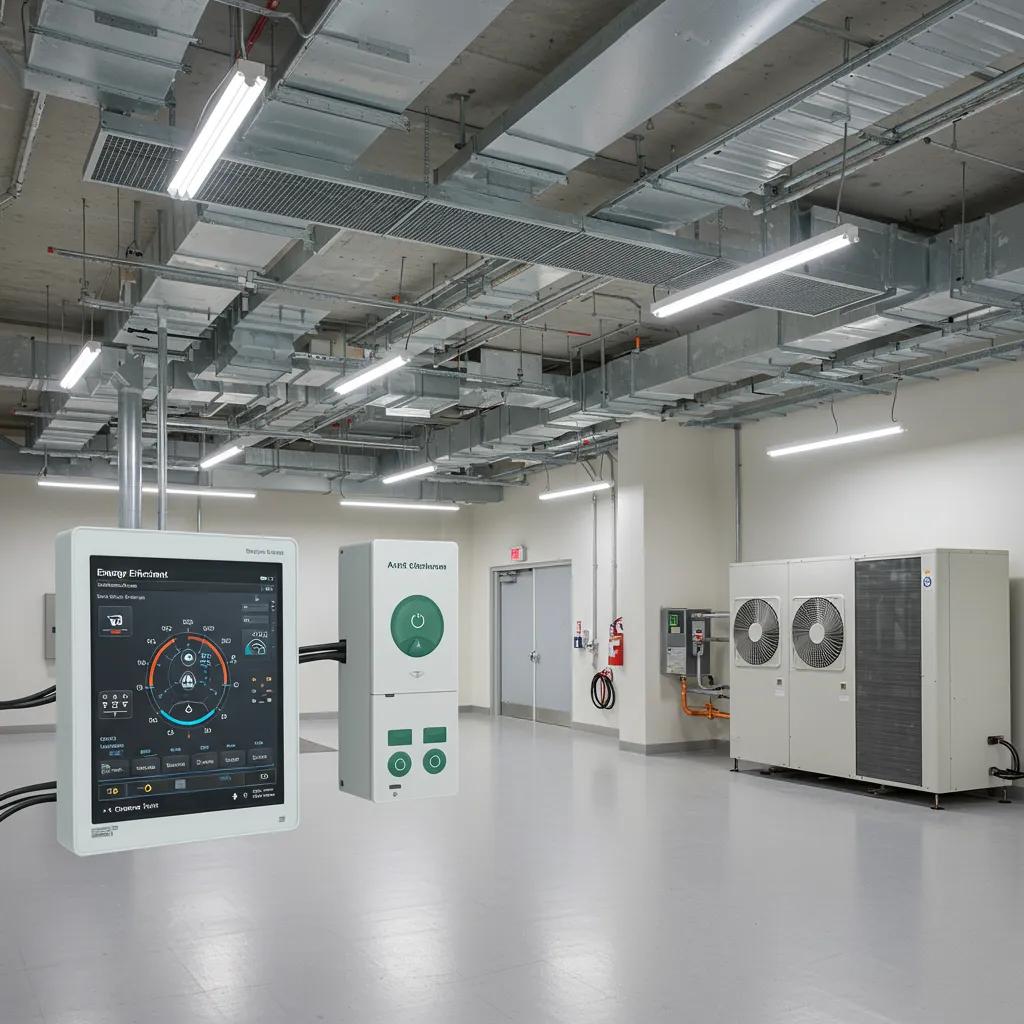
Facilities can cut HVAC energy use by combining preventive maintenance, controls optimization (BAS), targeted technology upgrades (VRF, variable-speed drives), and envelope improvements; prioritized implementation yields faster ROI and sustained savings. Preventive maintenance preserves part-load efficiency, BAS enables scheduling and fault detection that prevents wasted conditioning, and technology upgrades improve part-load performance important for today’s varied occupancy patterns. Zoning and setpoint optimization reduce simultaneous heating and cooling, while economizers and demand-controlled ventilation lower conditioned outdoor air volumes when occupancy is low. Together, these strategies form an actionable roadmap for energy managers seeking measurable results.
The table below compares common efficiency technologies with expected impacts to guide capital planning and justification.
This comparison helps prioritize investments; next we examine the role of BAS in more detail and how it drives those savings.
What Role Do Building Automation Systems Play in Enhancing HVAC Efficiency?
A Building Automation System (BAS) centralizes control, scheduling, and analytics to coordinate HVAC subsystems and respond to occupancy and environmental inputs; BAS reduces energy waste by enforcing schedules, optimizing sequences, and enabling fault detection. BAS platforms collect sensor data that enable automated setpoint adjustments, demand-controlled ventilation, and night setback strategies that reduce runtime without compromising comfort. Fault detection and diagnostics (FDD) highlight inefficiencies such as stuck dampers or dirty coils before they escalate into energy loss or equipment failure. Integrating humidity and zone controls through BAS further preserves indoor air quality and protects sensitive processes from Florida humidity swings.
BAS benefits are maximized when paired with zoning strategies that target conditioned air where it’s needed, which is covered next.
How Does Zone Temperature Control Optimize Energy Use in Large Facilities?
Zone temperature control segments a building into independently controlled areas, reducing unnecessary conditioning of unoccupied spaces and minimizing simultaneous heating and cooling. Implementations range from simple thermostatic zoning to advanced VRF with zone-level control and BAS scheduling; each reduces conditioned air volume and runtime for central plant equipment. Key tradeoffs are initial control complexity and commissioning effort versus long-term energy and comfort gains for varied occupancy. Integrating occupancy sensors and scheduling with zone control yields operational savings while maintaining occupant comfort in critical areas.
Zoning often leads decision-makers to consider VRF systems for targeted efficiency, which we summarize next.
What Are the Benefits of Upgrading to Variable Refrigerant Flow Systems?
VRF systems provide high part-load efficiency and flexible zoning by modulating refrigerant flow to individual indoor units, which reduces cycling losses and improves comfort control. VRF reduces ductwork needs in many applications, simplifying retrofits and reducing occupied space impact, while offering heat recovery options that shift energy between zones. Considerations include higher upfront cost, requirement for trained service expertise, and controls integration to realize full savings. For buildings with variable occupancy or many small zones, VRF often delivers strong lifecycle benefits and improved occupant satisfaction.
These efficiency strategies intersect with regulatory and standards frameworks that shape design and compliance decisions.
What Are the Key ASHRAE Standards and Compliance Requirements for Commercial HVAC?
ASHRAE standards guide ventilation rates, indoor air quality, energy modeling, and commissioning practices that influence equipment selection, system sizing, and operational protocols in commercial HVAC projects. Relevant standards inform design load calculations, recommended ventilation per occupant or per area, and methodologies for energy performance verification. Compliance often involves documented commissioning and performance testing to ensure systems meet modeled expectations and IAQ targets. Facility managers should plan projects assuming ASHRAE guidance will determine ventilation and energy targets and that refrigerant regulations will influence component selection.
Understanding how standards affect design choices helps inform retrofit and replacement strategies discussed in later sections.
How Do ASHRAE Standards Influence HVAC System Design and Installation?
ASHRAE standards influence key design choices including ventilation rates, filtration requirements, and energy modeling assumptions that shape equipment sizing and controls sequences. Designers use ASHRAE load calculation procedures to size HVAC components to meet peak and part-load demands while commissioning protocols ensure systems operate per design. ASHRAE guidance also informs IAQ and filtration decisions that affect selection of filters, coil face velocities, and outdoor air handling. Proper application of these standards reduces risk of oversizing, improves comfort, and supports measurable energy performance.
These standards operate alongside refrigerant regulations that are evolving rapidly, outlined next.
What Are the Latest Refrigerant Regulations Affecting Commercial HVAC Systems?
Regulatory trends favor lower-global-warming-potential refrigerants and the phased replacement of high-GWP blends; emerging A2L mildly flammable refrigerants are part of this transition and require updated safety practices and technician training. The shift to lower-GWP options impacts retrofit planning, equipment compatibility, and service protocols because some refrigerants need different materials, controls, or mitigation measures. Facility teams should include refrigerant transition planning in replacement projects to avoid unexpected retrofit costs and ensure service staff are trained for safe handling. Compliance planning reduces regulatory risk and aligns equipment choices with long-term sustainability goals.
Given these regulatory demands, CCS Mechanical frames its compliance approach as part of its project delivery model.
How Does CCS Mechanical Ensure Regulatory Compliance in Its Projects?
CCS Mechanical emphasizes an engineering-driven approach that incorporates standards adherence, value engineering, and accurate budgeting into project delivery to meet compliance needs. The company’s processes reference industry standards and incorporate coordination with design teams to address ASHRAE and SMACNA considerations during specification and installation phases. CCS Mechanical also offers streamlined processes and in-house fabrication capabilities that support on-time delivery and detailed compliance documentation for commercial and industrial projects. Facility managers seeking compliance-focused execution can contact CCS Mechanical to discuss project-specific requirements and how the company’s engineering approach supports regulatory outcomes.
This compliance orientation supports rapid response for emergent failures and accurate commercial quoting, which is described next.
How Does CCS Mechanical Support Emergency HVAC Services and Commercial HVAC Quotes?
CCS Mechanical structures emergency response around rapid triage, temporary stabilization, and transition to permanent repairs, while commercial quotes are informed by detailed site data and engineering review. In emergencies, initial steps prioritize facility safety and temporary solutions that restore critical HVAC functions; subsequent work scopes include in-house fabrication and value-engineered permanent fixes. For quotes, accurate budgeting depends on clear scope definition, equipment condition, uptime requirements, and regulatory compliance needs. CCS Mechanical’s positioning as an engineering-driven contractor with in-house capabilities allows it to provide structured emergency support and detailed proposals for commercial projects in Florida.
Facility managers can improve quote accuracy by preparing key system information and asking targeted questions, as listed below.
What Should Facility Managers Ask When Requesting a Commercial HVAC Quote?
Preparing specific site and system details accelerates accurate quoting and reduces scope-change risk; ask for asset lists, equipment ages, recent maintenance records, and critical uptime needs. Request proposed response times, clarify warranty and compliance responsibilities, and ask for references or relevant project examples in similar sectors. Ask potential contractors about value engineering options, in-house fabrication capabilities, and how they handle refrigerant transition planning or BAS integration. These questions reduce ambiguity and enable apples-to-apples comparisons between proposals.
A concise checklist like this leads directly into emergency workflow descriptions and the capabilities CCS Mechanical brings to rapid repairs.
How Does CCS Mechanical Handle Emergency HVAC Repairs for Businesses?
In emergency repairs, CCS Mechanical follows triage procedures: secure safety, stabilize affected systems with temporary measures, identify root causes, and implement permanent repairs coordinated with facility operations. The company’s in-house fabrication capability supports quicker turnaround for custom parts or sheet-metal components, reducing downtime compared with sourcing external vendors. Coordination with facility teams and contractors, documented temporary measures, and a clear transition plan to permanent solutions help minimize production impact. Facility managers should keep emergency contact information and site asset lists current to facilitate rapid response and efficient restoration.
These emergency procedures reflect benefits facility clients can expect; the next subsection summarizes the advantages of selecting CCS Mechanical for industrial contracting.
What Are the Benefits of Choosing CCS Mechanical for Industrial HVAC Contracting?
CCS Mechanical offers an engineering-driven, customer-focused approach combined with in-house fabrication and streamlined processes that support complex projects across industrial, healthcare, education, and commercial sectors. Accurate budgeting and value engineering practices aim to align scope with operational priorities while meeting compliance and schedule targets. The company’s ability to deliver coordinated mechanical contracting and fabrication services reduces coordination overhead and can accelerate project timelines. Facility teams seeking a single-point mechanical contractor for design, fabrication, installation, and service can evaluate CCS Mechanical’s approach against their project requirements.
These contracting benefits tie into lifecycle planning and replacement decisions, which are covered in the final section.
What Are the Typical Lifespan and Replacement Strategies for Commercial HVAC Systems?
Typical commercial HVAC equipment lifespans vary by component, with industry-cited ranges around 15–20 years for major units when properly maintained; replacement strategies consider age, efficiency, repair history, and criticality of service. Decision frameworks weigh repair costs against remaining useful life and anticipated energy savings from newer equipment; a common rule-of-thumb is to replace when repair costs approach 40–50% of replacement cost and remaining life is limited. Preventive maintenance extends useful life by reducing wear and preventing catastrophic failures, while energy-efficiency upgrades can justify replacement through reduced operating costs and shorter payback periods. Lifecycle strategies balance capital budgeting with operational risk tolerance.
Below are practical replacement heuristics and a maintenance-to-replacement decision table to support facility planning.
How Long Do Commercial HVAC Systems Usually Last with Proper Maintenance?
With regular preventive maintenance, many commercial HVAC systems reach industry-expected lifespans—commonly 15–20 years—depending on duty cycle, environment, and component quality. High-use systems or corrosive environments shorten lifespans, while rigorous maintenance, water treatment, and control optimization preserve performance longer. Components such as compressors and motors may require mid-life overhauls to sustain capacity, and records of maintenance history are strong predictors of remaining life. Managers should track failure trends and efficiency metrics to refine replacement timing beyond simple calendar age.
These lifespan considerations feed directly into replace-vs-repair economics described next.
When Is It Cost-Effective to Replace Rather Than Repair HVAC Equipment?
Replace rather than repair when repair costs are large relative to replacement cost, when energy savings from a new unit shorten payback to an acceptable period, or when reliability is mission-critical and downtime risk is high. Use a simple financial heuristic: if cumulative repair costs over projected remaining life exceed half the cost of a new system, replacement is often warranted. Consider energy savings (industry ranges of 20–40% for older unit replacements) as additional value in payback calculations. Also factor in compliance and refrigerant transition costs that may be deferred if replacement is postponed.
Understanding how preventive programs extend life and reduce total cost of ownership clarifies the final subsection.
How Can Preventive Maintenance Extend HVAC System Lifespan?
Preventive maintenance extends system lifespan by addressing component wear before failure, preserving heat transfer efficiency through coil and filter care, and ensuring controls operate per design to avoid stress on mechanical components. Scheduled lubrication, alignment, water treatment, and timely replacement of wear items prevent cascading failures that shorten equipment life. Documentation of service actions and trending of performance metrics enable targeted interventions that preserve remaining life and optimize replacement timing. Integrating preventive maintenance with energy and performance monitoring yields the most durable and cost-effective lifecycle outcomes.
This completes the structured, semantically rich FAQ designed to support facility managers, technicians, and engineers in making informed HVAC decisions across maintenance, troubleshooting, hiring, energy upgrades, compliance, emergency response, and lifecycle planning.
]]>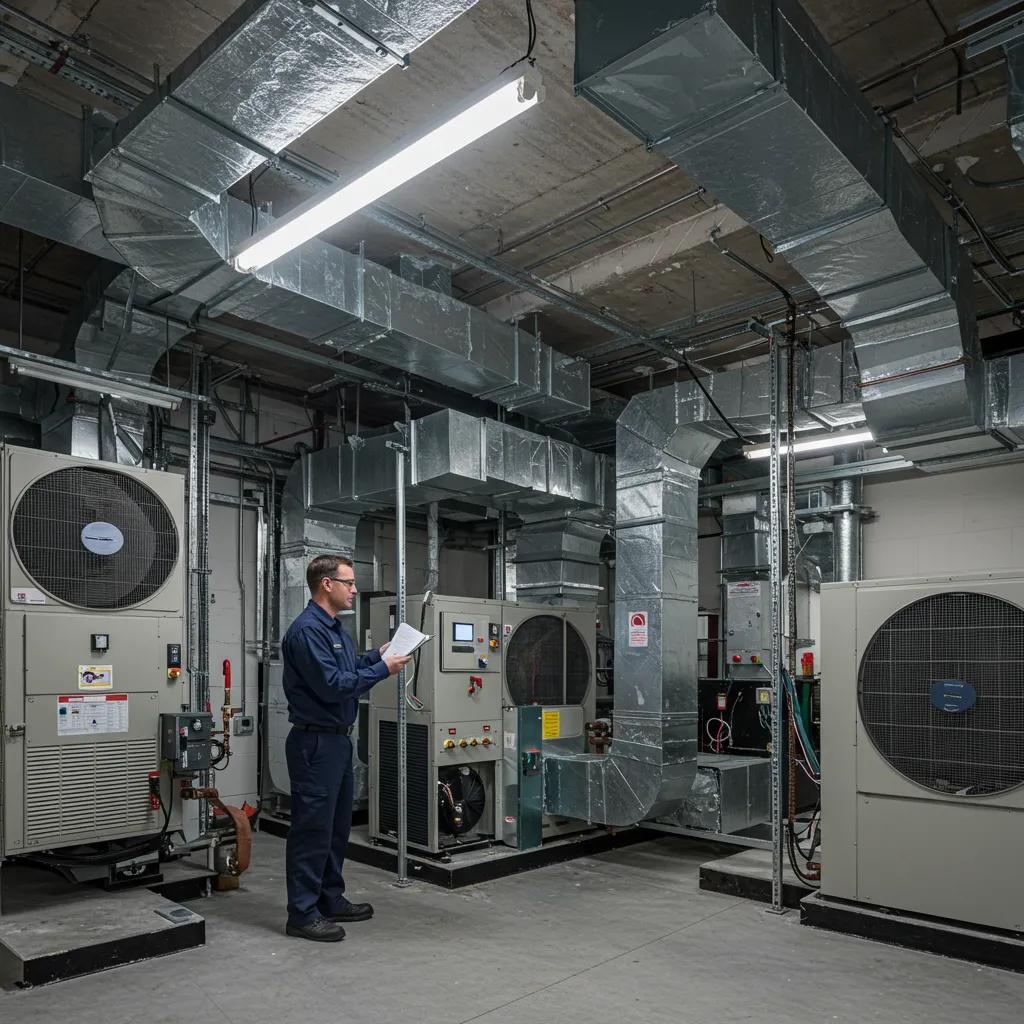
Driving Efficiency and Comfort Across Commercial, Industrial, and Healthcare Facilities
Our HVAC project case studies showcase real-world success, detailing how we enhance energy performance, indoor air quality, and operational reliability for commercial, industrial, and healthcare facilities. These narratives clearly outline the challenges, our innovative technical solutions, and the measurable results achieved. They serve as invaluable resources for facility managers, engineers, and procurement teams, guiding decisions on chiller optimization, BAS integration, and ventilation upgrades. Discover how our projects deliver verified reductions in kWh and peak demand, how specialized engineering and in-house fabrication minimize risks, and how advanced building automation streamlines ongoing operations. This article provides practical examples across key sectors, explains our metric-driven measurement and verification (M&V) approaches, highlights the benefits of BAS integration, and demonstrates how project involvement fosters career growth for our technicians and engineers. Explore these HVAC case studies, including commercial HVAC case studies, chiller optimization case studies, and building automation HVAC integration examples, to gain actionable insights for your facility.
Driving Energy Efficiency and Comfort
Our commercial HVAC case studies highlight strategic interventions in office buildings, retail spaces, hospitality venues, and mixed-use facilities. We focus on reducing energy consumption and elevating occupant comfort through advanced controls, equipment upgrades, and precise operational tuning. Each study meticulously documents baseline conditions, the expert engineering measures implemented, and the post-project performance, quantifying significant kWh and demand reductions alongside enhanced setpoint stability. These narratives empower facility professionals to confidently select retrofit strategies—such as chiller plant sequencing, AHU optimization, and economizer tuning—and accurately estimate payback periods. Our clear case study format enables your team to prioritize capital and operational improvements based on verified outcomes and a strong, measurable ROI.
Commercial HVAC projects are designed to elevate your building’s performance through intelligent controls, precise zoning, and strategic equipment replacement. These interventions directly enhance system efficiency and occupant comfort. By upgrading controls and implementing effective zoning, we eliminate wasteful simultaneous heating and cooling. Replacing outdated chillers or air handling units (AHUs) significantly boosts Coefficient of Performance (COP) and minimizes runtime. Our rigorous commissioning and recommissioning processes stabilize setpoints, refine control algorithms, and rectify air balancing issues, ensuring sustained energy savings. Together, these integrated mechanisms drastically reduce energy waste and deliver predictable building performance that can be replicated across your portfolio.
The commercial sectors that experience the most significant benefits from our HVAC expertise include office campuses, retail centers, and hospitality venues—environments where energy consumption, occupant comfort, and managing peak loads are critical to operating costs. Office complexes consistently achieve substantial energy cost reductions and superior thermal comfort following HVAC upgrades that lower kWh usage and stabilize indoor conditions. Retail spaces benefit from extended equipment lifespan and fewer thermal complaints by expertly addressing make-up air and load diversity. Hospitality and mixed-use properties thrive with our peak-load management and IAQ improvements, which significantly enhance guest satisfaction and reduce utility peaks during high-occupancy periods.
Our commercial HVAC case studies frequently feature advanced technologies such as variable-speed drives, economizers, VRF systems, state-of-the-art chillers, and comprehensive Building Automation System (BAS) integration. These solutions are designed to coordinate devices for optimal performance. VRF and modern heat-pump systems provide efficient, zoned conditioning with minimal distribution losses, while upgraded chillers and AHUs dramatically improve central plant efficiency. Integrating these sophisticated systems into a BAS delivers automated schedules, robust demand response capabilities, and proactive fault detection, ensuring sustained savings and optimized maintenance cycles. The ideal combination of technologies is always tailored to your building’s unique load profile, existing infrastructure, and specific measurable objectives, whether it’s a percentage reduction in energy or precise IAQ targets.
Commercial Building Energy Optimization: Multi-Chiller Plant Case Studies
Energy optimization methodology of multi-chiller plant in commercial buildings through optimized operation of a multi-chiller plant. The case studies result confirmed the energy savings achieved through optimized operations is up to 40% for moderate size chiller.
Energy optimization methodology of multi-chiller plant in commercial buildings, SR Thangavelu, 2017
Engineering Success Stories in Action
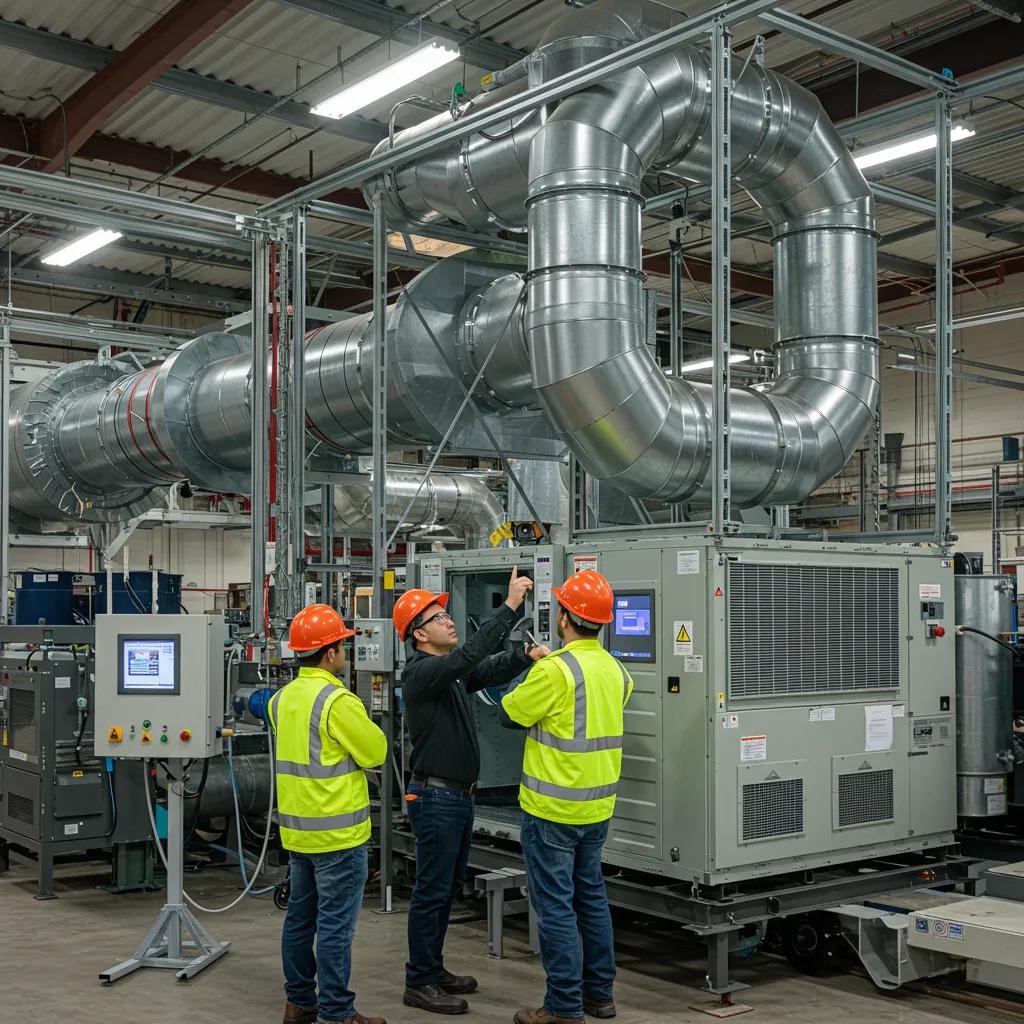
Our industrial HVAC project examples delve into process-driven environments where superior ventilation, precise humidity control, and stringent contamination management are paramount for safety and product quality. These detailed case studies illuminate the engineering considerations, advanced control strategies, and custom fabrication solutions we employ. Our engineers expertly tackle challenges such as high outdoor air volumes, demanding humidity setpoints, and specialized process exhaust requirements, utilizing custom Air Handling Units (AHUs), desiccant or chilled-water dehumidification, and robust control schemes. By meticulously measuring environmental parameters before and after implementation, we demonstrate tangible improvements in product yield, significant reductions in spoilage, and the creation of safer workplaces. These case studies are invaluable decision-making tools for discerning plant managers. Below, the following table showcases specific engineering challenges, our tailored solutions, and the impressive outcomes achieved across representative industrial projects.
The engineering examples presented in this table powerfully illustrate how our tailored mechanical contracting and advanced in-house fabrication capabilities overcome site-specific constraints, consistently delivering measurable improvements in both quality and energy performance. These essential case study components—challenge, solution, and outcome—offer compelling evidence for adopting similar proven approaches in other industrial settings, providing robust engineering rationale to support your procurement decisions.
Demonstrating Measurable Energy Savings
Our HVAC system efficiency case studies meticulously demonstrate measurable energy savings by rigorously comparing baseline consumption against post-upgrade usage. We utilize clearly defined metrics such as kilowatt-hours (kWh), peak kilowatts (kW), and percentage savings, all while thoroughly documenting our Measurement and Verification (M&V) methodology. These studies typically employ short-term verification (pre/post metering), normalized performance models, or IPMVP-aligned M&V to ensure precise, ‘apples-to-apples’ comparisons that accurately account for variations in weather and occupancy. Our robust case studies detail data collection protocols, precise sensor placement guidance, and statistical adjustments, ensuring that all stated savings are both defensible and replicable. By presenting both raw metrics and normalized outcomes, we empower facility managers to fully grasp the expected operational benefits and projected paybacks.
Key metrics that unequivocally prove efficiency improvements include total energy consumption (kWh), peak demand (kW), significant energy cost reductions, and percentage savings, all meticulously normalized for factors like degree days or production throughput. Achieving accurate measurement necessitates precise submetering at central plants, comprehensive trend logging from Building Automation System (BAS) points, and the careful selection of a baseline period that truly reflects typical operations. The following concise table provides a clear before-and-after example, illustrating how kWh and percentage savings are effectively presented in our case studies.
This direct comparison powerfully demonstrates how straightforward before-and-after metrics, when properly normalized and thoroughly documented with M&V steps, transform savings claims into transparent and actionable insights for your budgeting and reinvestment decisions.
Preventive maintenance is crucial for sustaining HVAC efficiency. It ensures that filters, coils, and refrigerant systems consistently operate at their optimal design conditions, while also detecting potential faults early through meticulous trend analysis. Routine activities—such as filter replacement, precise refrigerant charge checks, belt alignment, and compressor tune-ups—collectively reduce runtime, significantly improve Coefficient of Performance (COP), and extend the overall lifespan of your equipment. When preventive maintenance is combined with BAS-driven fault detection, the benefits are multiplied, enabling predictive repairs and drastically reducing emergency service calls. Regular Measurement and Verification (M&V) and trending establish a vital feedback loop that not only preserves initial project savings but also continuously guides ongoing improvements.
Our case studies frequently highlight remarkable success in heat pump and chiller optimization. These examples often showcase advanced staged chiller sequencing, precisely optimized setpoints, and fully integrated BAS control, all designed to significantly reduce peak demand and enhance part-load efficiency. Measures such as variable primary flow, optimized condenser water setpoints, and intelligent heat-pump reverse-cycle staging consistently yield verifiable kWh and demand reductions. Our detailed case narratives combine clear control logic descriptions with comprehensive commissioning checklists and performance curves, providing engineers with the precise information needed to replicate these successful strategies in similar plant configurations.
Optimal Hybrid Chiller Plant Design and Operation: Cairo Hotel Case Study
The optimal design option and operating sequencing for hybrid chillers plant which can use Al-Zamalek island in Cairo, Egypt, as a case study in current research. Special attention is paid to the optimal design configuration and operating sequencing of hybrid chiller plant.
Optimal design configuration and operating sequencing of hybrid chiller plant: A case study of hotel building in Cairo, Egypt, TA Mouneer, 2021
Elevating Facility Management
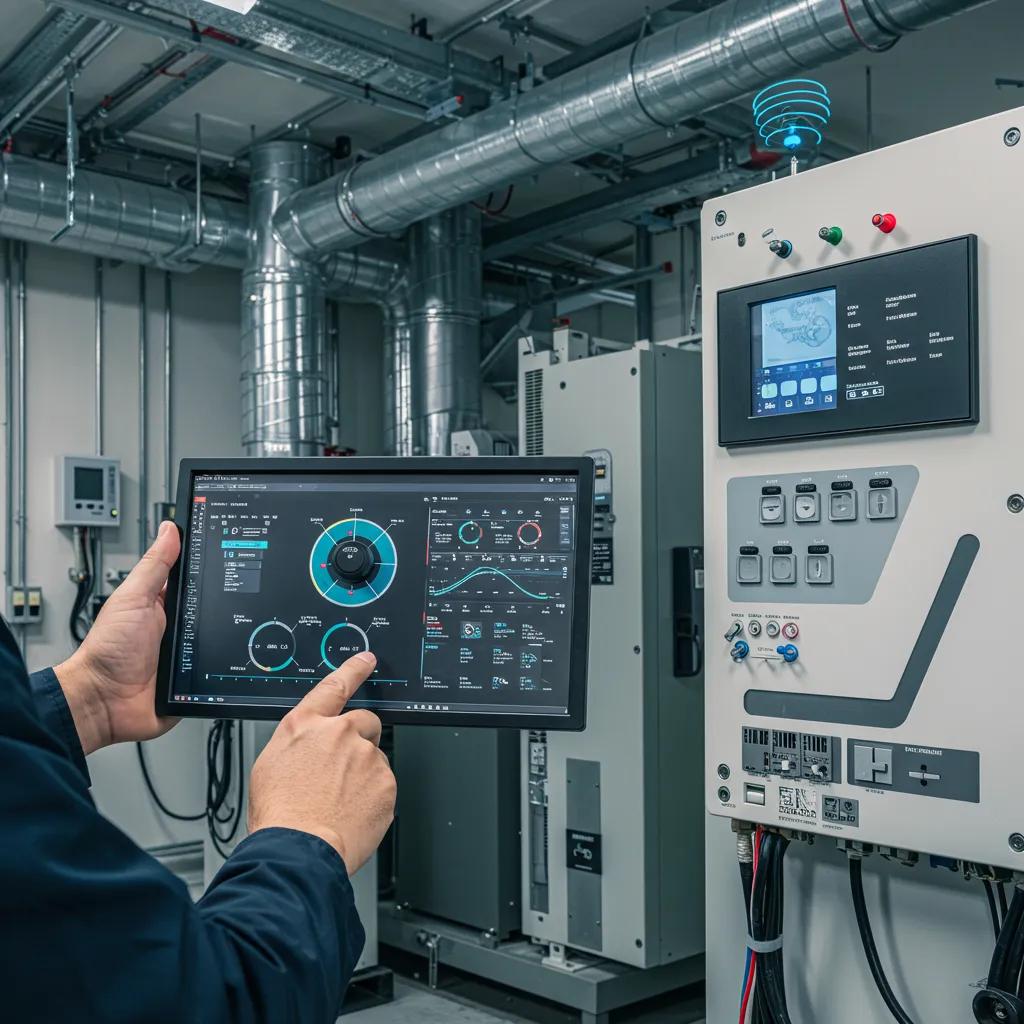
Building Automation System (BAS) integration seamlessly connects your HVAC equipment, sensors, and advanced analytics to automate schedules, proactively detect faults, and centralize control. This powerful synergy delivers significant energy savings, dramatically reduced maintenance costs, and superior occupant comfort. A robust BAS expertly coordinates setpoints, sequences operations, and manages demand response, all while meticulously logging performance data for in-depth trend analysis and Measurement & Verification (M&V). For facility managers, centralized dashboards simplify complex multi-zone oversight and enable convenient remote adjustments, eliminating the need for frequent on-site visits. Integrating HVAC with a BAS is, therefore, a foundational strategy for achieving modern facility management excellence and unparalleled operational resilience.
The profound benefits of integrating your HVAC systems with a BAS encompass automated scheduling, intelligent demand control, and sophisticated automated fault detection. This transforms raw sensor data into immediate, actionable insights. A BAS intelligently reduces unnecessary runtime by precisely aligning equipment operation with occupancy patterns, empowers demand-limiting strategies to significantly lower peak charges, and instantly triggers alerts when performance deviates from established baselines. These advanced capabilities not only enhance energy outcomes but also drastically reduce maintenance response times, thereby lowering lifecycle costs and boosting uptime for your most critical systems.
- Achieve significant energy savings through precisely optimized schedules and setpoints, drastically reducing unnecessary equipment runtime.
- Minimize service calls with automated fault detection and prioritized alerts, enabling swift, targeted interventions.
- Elevate occupant comfort with advanced zone-level control, continuous trending, and automated setpoint adjustments.
- Benefit from centralized reporting that empowers managers to track Key Performance Indicators (KPIs), benchmark sites effectively, and strategically plan capital replacements.
These enumerated benefits clearly summarize how advanced BAS features translate directly into tangible operational improvements, offering a transparent framework for evaluating your integration investments. Organizations that embrace BAS-driven workflows consistently experience measurable reductions in both energy consumption and unplanned maintenance costs, all while gaining superior data for strategic, long-term asset planning.
For multi-site facilities, optimization is achieved through central dashboards that expertly aggregate telemetry, enable seamless remote commissioning, and apply powerful fleet-level analytics to pinpoint underperforming assets. This centralized approach standardizes control strategies across all your facilities, streamlines benchmarking efforts, and allows for remote firmware or schedule updates, saving valuable travel time and minimizing operational disruption. Aggregated analytics reveal critical patterns—such as recurring setpoint drift or inefficient staging—that individual sites might miss, enabling coordinated upgrades or targeted training programs for your technicians.
Smart HVAC controls are powered by cutting-edge technologies, including IoT sensors, robust edge controllers supporting open protocols like BACnet and Modbus, and advanced cloud analytics platforms that provide sophisticated fault detection and predictive maintenance capabilities. The typical data flow progresses seamlessly from sensor to edge controller, then to the BAS, onward to cloud analytics, and finally to automated or operator-driven actions, forming a highly efficient closed-loop optimization system. By combining superior hardware compatibility with powerful analytics and disciplined commissioning, we unlock the full operational value of automation for both single-site and extensive multi-site portfolios.
Automated M&V for Energy Savings in Commercial Buildings
Accuracy of automated measurement and verification (M&V) techniques for energy savings in commercial buildings. Automated measurement and verification (M&V) of energy savings constitute a significant portion of the total costs of efficiency projects. However, advances in technology and data analytics, to quantifying savings, has opened the door to conducting M&V more efficiently and cost-effectively.
Accuracy of automated measurement and verification (M&V) techniques for energy savings in commercial buildings, J Granderson, 2016
HVAC Engineering Success Stories
Our HVAC engineering success stories in healthcare and education are built upon enhancing Indoor Air Quality (IAQ), ensuring stringent regulatory compliance, and delivering unwavering reliability for critical spaces. Our case studies meticulously detail advanced filtration upgrades, precise pressurization strategies, and robust redundancy measures designed to protect both patients and students. These projects expertly combine ASHRAE guidance with bespoke, site-specific designs to significantly improve ventilation rates, drastically lower particulate counts, and guarantee reliable temperature and humidity control. Documented outcomes consistently include superior IAQ metrics, a reduced risk of cross-contamination in surgical zones, and elevated classroom comfort that directly supports enhanced learning outcomes. Presenting these impactful stories with clear metrics and comprehensive commissioning steps empowers administrators to confidently justify funding for essential upgrades.
Hospital HVAC upgrades are vital for improving indoor air quality and patient comfort. We achieve this through high-efficiency filtration, precise room pressurization, and robust redundant systems that guarantee continuous operation for critical areas. Our projects typically incorporate HEPA or MERV upgrades, dedicated exhaust systems for isolation rooms, and meticulously monitored pressure differentials to maintain the required negative or positive pressurization. Redundancy in plant systems and sophisticated staged failover strategies are implemented to protect critical care and surgical suites from any downtime. These advanced engineering controls directly bolster infection prevention, accelerate patient recovery, and ensure unwavering clinical workflow reliability.
Our school HVAC solutions are designed to significantly enhance classroom climate control and Indoor Air Quality (IAQ). We achieve this by implementing intelligent demand-controlled ventilation, continuous CO2 monitoring, and precise zoned conditioning, all meticulously tailored to occupancy patterns and budgetary considerations. Practical measures include Energy Recovery Ventilators (ERVs) to efficiently balance fresh air needs with energy efficiency, advanced filtration upgrades that drastically reduce airborne particulates, and intuitive BAS schedules that perfectly match ventilation to class times. Administrators can confidently prioritize cost-effective retrofits and phased upgrades that deliver immediate IAQ improvements while seamlessly aligning with longer-term capital replacement plans.
Complex healthcare HVAC projects, while challenging, are consistently overcome through our strategic phased implementation, meticulous coordination with clinical teams, and rigorous infection-control practices throughout construction. Our phased approaches effectively limit operational disruption by carefully isolating work areas and scheduling high-impact activities during low-occupancy windows. Close collaboration with clinicians ensures that temporary changes in airflow or pressure never compromise patient safety, and redundant systems are expertly commissioned to seamlessly cover critical loads. These integrated engineering and project-management strategies are paramount to maintaining essential services while successfully executing major infrastructure upgrades.
This table clearly illustrates the typical healthcare and education metrics we utilize to validate project success, emphasizing the quantifiable improvements that empower facility leaders to benchmark performance and confidently justify future investments.
How HVAC Projects Empower Technicians and Engineers
Our HVAC project case studies are instrumental in fostering career growth, meticulously documenting hands-on experiences where our technicians and engineers cultivate specialized skills through real-world commissioning, advanced troubleshooting, and precise design coordination. These compelling narratives highlight the intricate tasks performed, the sophisticated control logic implemented, and the detailed fabrication challenges overcome, providing a clear roadmap of competencies that translate directly into significant career milestones. These stories offer invaluable insights for both employers and prospective hires, showcasing the extensive technical breadth and diverse career pathways available—from mastering preventive maintenance to advanced BAS programming and impactful project leadership. For technicians and engineers committed to growth, our project-based learning approach rapidly accelerates capability building, positioning individuals for roles that demand deeper engineering judgment and expertise.
On our projects, technicians develop critical, highly transferable skills, including expert commissioning practices, systematic troubleshooting methodologies, precise sensor calibration, and effective client communication—all of which prepare them for higher-responsibility roles. Hands-on learning—from interpreting complex CAD layouts and meticulously aligning fabricated ductwork to rigorously following commissioning checklists—builds invaluable practical expertise that perfectly complements formal training. Technicians who master BAS fault diagnostics and control sequencing become indispensable resources for remote monitoring and sophisticated fleet-level troubleshooting. These advanced skills not only strengthen individual resumes but also significantly enhance our team’s capacity for executing complex installations with excellence.
Our engineers are at the forefront of innovative HVAC system designs, leading critical activities such as precise load calculations, optimal equipment selection, advanced modeling, and sophisticated control-strategy development. They expertly link ambitious performance objectives to detailed technical specifications. Project case studies frequently highlight how our engineers meticulously selected heat-pump arrays, accurately sized chilled-water plants, or specified cutting-edge energy recovery systems after rigorous iterative modeling. Furthermore, our engineers seamlessly coordinate with fabrication teams to translate complex CAD layouts into perfectly constructible components, ensuring that the original design intent is flawlessly preserved throughout installation. These invaluable contributions foster robust cross-disciplinary collaboration and significantly expand our engineers’ practical portfolio of high-impact deliverables.
At CCS Mechanical, we are dedicated to attracting top-tier HVAC technicians and HVAC system engineers to join our dynamic team, while also inviting industrial facilities to contact us for a service quote. With this dual objective in mind, the employee success stories below powerfully connect project outcomes with the competencies developed, clearly demonstrating how extensive technical exposure supports both recruitment and retention. These narratives showcase compelling career pathway examples—such as a technician mastering advanced chiller commissioning or an engineer leading complex BAS integration projects—providing prospective applicants and hiring managers with concrete evidence of progression directly tied to invaluable project experience.
- Technicians gain invaluable skills through project work, including hands-on commissioning expertise, advanced control troubleshooting, precise sensor calibration, and effective client-facing communication, all of which build technical confidence and enhance career mobility.
- Engineers develop critical areas such as sophisticated load modeling, innovative control strategy design, seamless CAD coordination, and decisive commissioning leadership, enabling the creation of truly innovative and constructible system solutions.
- Our structured mentorship and phased responsibility during projects are designed to translate on-site experience into formal, advanced roles like Lead Technician or Project Engineer over time, fostering continuous professional growth.
Skills Developed Through Project Involvement
Through direct project involvement, our technicians acquire invaluable practical commissioning skills, cultivate rigorous preventive maintenance discipline, and gain extensive controls troubleshooting experience. This hands-on foundation prepares them for higher-level responsibilities. On every project, they master systematic checklists, precise performance testing, and meticulous documentation practices—all essential for ensuring repeatable quality and robust Measurement & Verification (M&V). Exposure to advanced BAS diagnostics and sensor calibration empowers technicians to swiftly identify root causes and confidently recommend effective corrective actions. These comprehensive competencies make our technicians integral to sustaining energy savings and consistently improving overall project outcomes.
Contributions to Advanced HVAC Designs
Our engineers spearhead critical design activities, including precise load calculations, optimal equipment selection, and sophisticated control strategy development. They expertly apply advanced simulation and seasoned engineering judgment to meticulously balance capital and operational tradeoffs. They translate ambitious performance goals into detailed specifications, seamlessly coordinate with our CAD and fabrication teams, and rigorously oversee commissioning to ensure that all systems flawlessly meet the design intent. By meticulously documenting design decisions in our case studies, engineers create reproducible templates that can be adapted for future projects, significantly enhancing organizational knowledge. Their pivotal role bridges theoretical design with constructible reality, consistently yielding measurable improvements in efficiency and reliability.
Employee Success Stories from CCS Mechanical Projects
At CCS Mechanical, we are committed to attracting exceptional HVAC technicians and HVAC system engineers to join our team, while also encouraging industrial facilities to contact us for a comprehensive service quote. One compelling, anonymized success story highlights a technician who advanced to lead commissioning by mastering intricate chiller plant tuning and sophisticated BAS fault diagnostics, resulting in fewer client callbacks and significantly improved plant performance. Another account showcases an engineer who expertly guided a complex ventilation retrofit, leveraging CAD-driven fabrication to dramatically shorten installation time and enhance commissioning outcomes. These real-project narratives powerfully illustrate how structured project exposure not only supports our recruitment efforts but also demonstrates a measurable and profound impact on career progression.
Your Premier Choice for HVAC Projects
Innovative HVAC System Design and Installation Solutions
CCS Mechanical leverages advanced CAD-driven layouts and state-of-the-art in-house fabrication to produce custom ductwork and specialized skids. This ensures a perfect fit for even the most constrained sites and significantly accelerates installation. Our engineering-driven design process is meticulously paired with detailed estimating, creating realistic budgets and strategic phased execution plans that virtually eliminate surprises during construction. Furthermore, our integrated commissioning and rigorous project management guarantee that all performance targets are thoroughly tested and successfully achieved during project turnover.
Ensuring Accurate Budgeting and Flawless Project Execution
Our firm’s dedicated estimation department conducts detailed takeoffs and rigorous cost verification. We implement phased budgets and milestone-based tracking to precisely align cash flow with construction progress. Our comprehensive quality control encompasses thorough commissioning checks and verified acceptance tests, meticulously documenting system performance against all contracted metrics. This disciplined workflow empowers our clients to effectively manage risk and safeguards project schedules and budgets through transparent reporting and clearly defined, structured milestones.
Showcasing CCS Mechanical’s Expertise
Below, you’ll find concise project snapshots that vividly illustrate measurable outcomes and our innovative technical approaches. These examples powerfully demonstrate CCS Mechanical’s proven capacity to deliver significant energy savings, superior Indoor Air Quality (IAQ), and enhanced operational improvements for a diverse range of clients.
- CCS Mechanical’s advanced in-house fabrication and CAD workflows significantly reduce on-site coordination and dramatically shorten lead times for even the most complex duct and skid work.
- Our meticulous detailed estimation practices minimize the likelihood of cost overruns and facilitate strategic phased budgeting that perfectly aligns with construction milestones.
- Our integrated commissioning and deep Building Automation System (BAS) expertise guarantee that all energy and Indoor Air Quality (IAQ) targets are rigorously validated before project turnover.
These comprehensive lists and the detailed capability table collectively underscore why our unique combination of engineering rigor, advanced in-house fabrication, and precise estimation consistently delivers superior project outcomes and a lower total cost of ownership for facility owners. We encourage prospective clients seeking quotes for commercial or industrial HVAC projects to thoroughly evaluate these unparalleled capabilities when comparing providers.
What are the primary benefits of upgrading HVAC systems in commercial buildings?
Upgrading HVAC systems in commercial buildings delivers substantial benefits, including dramatically improved energy efficiency, enhanced indoor air quality (IAQ), and superior occupant comfort. These essential upgrades typically involve modernizing controls, replacing outdated equipment, and meticulously optimizing overall system performance. Consequently, businesses achieve reduced energy costs, lower maintenance expenses, and a more comfortable, productive environment for both employees and customers. Furthermore, these improvements extend equipment lifespans and ensure compliance with evolving energy regulations, making them a strategic and wise investment for any facility manager.
How do Building Automation Systems (BAS) elevate HVAC performance?
Building Automation Systems (BAS) significantly elevate HVAC performance by automating control processes, precisely optimizing energy use, and enhancing occupant comfort. A BAS seamlessly integrates various HVAC components, enabling real-time monitoring and dynamic adjustments based on occupancy and environmental conditions. This intelligent approach leads to substantial reductions in energy consumption, as systems operate with peak efficiency, eliminating unnecessary heating or cooling. Moreover, BAS provides invaluable data analytics, empowering facility managers to identify trends, detect faults proactively, and make informed decisions regarding maintenance and upgrades, ultimately bolstering overall system reliability.
What is the role of HVAC case studies in strategic decision-making for facility managers?
HVAC case studies are indispensable resources for facility managers, offering real-world examples of successful interventions and their tangible outcomes. These comprehensive studies meticulously document the challenges encountered, the innovative solutions implemented, and the measurable results achieved. This allows managers to thoroughly evaluate potential strategies for their own facilities. By analyzing these case studies, facility managers can identify industry best practices, accurately estimate payback periods, and confidently prioritize investments based on proven effectiveness. This data-driven approach is crucial for making informed decisions that align perfectly with organizational goals for energy efficiency and operational reliability.
What common challenges arise during HVAC system upgrades?
Common challenges encountered during HVAC system upgrades typically involve budget constraints, potential operational disruptions, and the critical need for specialized skills. Facility managers frequently face hurdles in securing adequate funding for upgrades, particularly when immediate returns on investment are not readily apparent. Furthermore, upgrading systems can introduce temporary operational disruptions, potentially impacting productivity. Ensuring access to the right expertise for precise installation and thorough commissioning is paramount, as improper implementation can lead to inefficiencies and escalating costs. Effectively addressing these challenges demands meticulous planning and robust stakeholder engagement.
How do HVAC projects contribute to an organization’s sustainability goals?
HVAC projects make a substantial contribution to sustainability goals by significantly reducing energy consumption, lowering greenhouse gas emissions, and enhancing indoor air quality. By implementing cutting-edge energy-efficient technologies and meticulously optimizing system performance, organizations can effectively minimize their environmental footprint. Moreover, many HVAC upgrades align seamlessly with prestigious green building certifications, such as LEED, which can elevate a company’s reputation and marketability. Sustainable HVAC practices not only bolster corporate social responsibility initiatives but also generate long-term cost savings, establishing them as an essential cornerstone of any organization’s comprehensive sustainability strategy.
What key metrics are used to evaluate the success of HVAC projects?
Key success metrics for HVAC projects typically encompass energy consumption (kWh), peak demand (kW), substantial cost savings, and measurable improvements in indoor air quality (IAQ). Facility managers frequently evaluate the percentage reduction in energy use and the robust return on investment (ROI) achieved through strategic upgrades. Other vital metrics may include elevated occupant comfort levels, reduced maintenance costs, and enhanced system reliability. By establishing clear, quantifiable performance indicators both before and after project implementation, organizations can effectively measure the profound impact of HVAC improvements and make data-driven decisions for all future investments.
]]>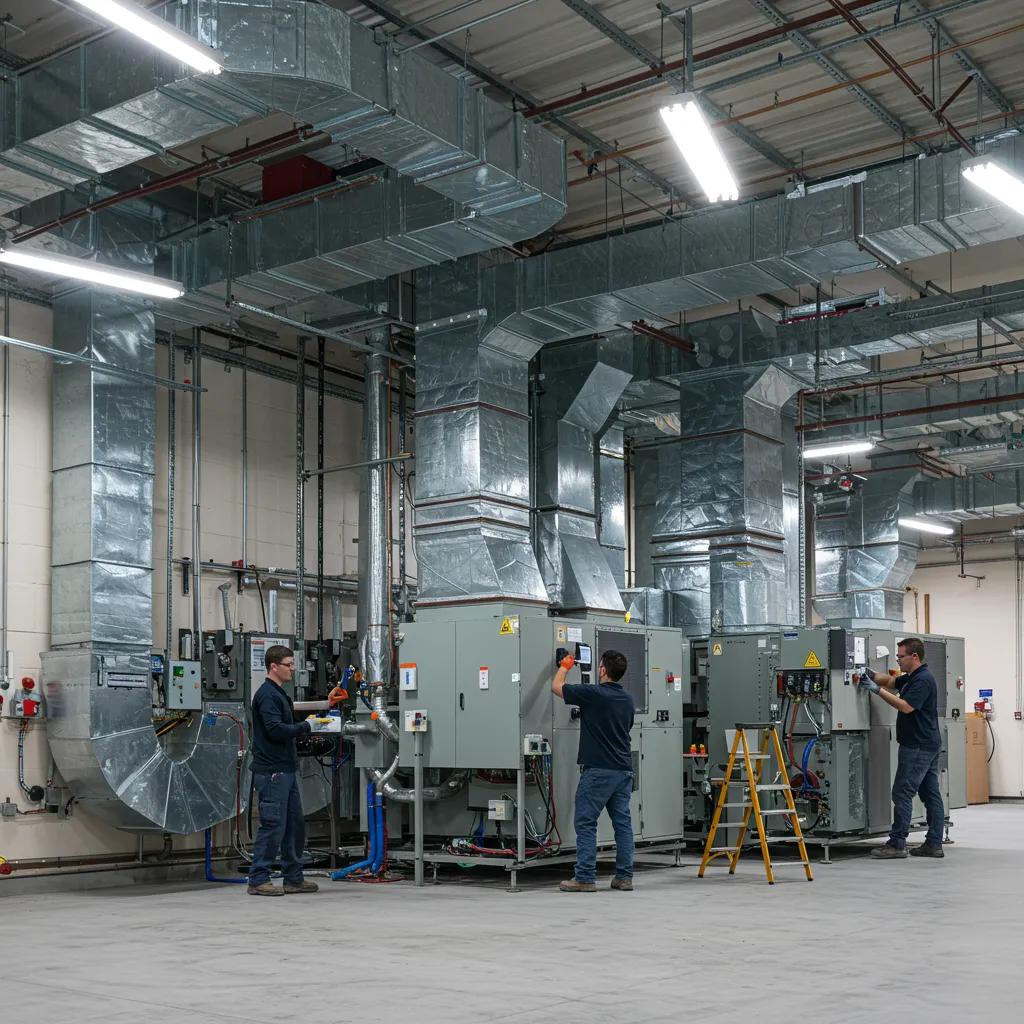
Skip to main content Skip to footer
Mastering Commercial HVAC Design-Build in Florida: Your Essential Guide for Facility Leaders
Commercial HVAC design-build seamlessly integrates system design, engineering, fabrication, and installation under one comprehensive contract. This streamlined approach accelerates project delivery, mitigates risks, and ensures performance goals align perfectly with construction realities. This guide delves into the design-build model for commercial and industrial HVAC projects across Florida, highlighting its significance for facility managers and contractors. Discover how our integrated practices enhance energy efficiency, elevate indoor air quality, and optimize lifecycle costs. Facility leaders often grapple with regulatory compliance, budget constraints, and Florida’s unique climate challenges; a coordinated design-build strategy effectively addresses these by minimizing change orders, leveraging prefabrication, and focusing on quantifiable results. We’ll map the entire process, from initial assessment and CAD design through our in-house fabrication, commissioning, and ongoing preventive maintenance. Explore its diverse applications in industrial facilities, healthcare, education, and commercial buildings. Finally, gain practical insights for securing accurate quotes and uncover rewarding career paths for HVAC technicians and system engineers passionate about integrated project delivery. Throughout, key terms like HVAC design-build, commercial design build, building automation HVAC Florida, and HVAC system engineering Florida are woven into the content to enhance discoverability and support informed decision-making.
Unveiling the Commercial HVAC Design-Build Process
Commercial HVAC design-build represents a unified delivery method, meticulously coordinating design and construction from a project’s inception. This ensures superior system performance, schedule predictability, and stringent cost control. The power lies in early integration: our expert engineers, CAD modelers, fabricators, and installers collaborate seamlessly on system selection, clash detection, and constructability. This proactive approach significantly reduces rework and accelerates project timelines. The paramount advantage is single-point accountability for both schedule and performance, leading to transparent milestones and fewer disputes compared to traditional handoffs. Below, we outline the core steps typically followed to transform your performance requirements into precisely engineered systems.
Design-Build Process: Owner Contracts Single Entity for Design and Construction
Design-Build DB is defined as a project delivery system in which the owner contracts with, and holds responsible, one single entity for both design and construction of a project. This method differs from the traditional design-bid-build DBB approach in which the owner contracts with an architect to design the project prepare drawings and specifications under a design contract and then competitively bids the project among construction contractors to build the facility. With NAVFACs mandate, that by the end of Fiscal Year FY 07, 75 of capital improvement projects above 750,000 will be accomplished by design-build acquisition, it is imperative that we look into utilizing non-DoD design-build processespractices to allow flexibility, creativity and innovativeness in design approach take advantage of time-savings and complete projects within cost.
Analysis of design-build processes, best practices, and applications to the Department of Defense, 2006
- Initial scoping and comprehensive needs assessment, meticulously defining loads, code requirements, and target performance metrics.
- Detailed engineering and advanced CAD modeling, precisely specifying equipment and proactively detecting clashes with other trades.
- Strategic prefabrication of ductwork and piping spools, where appropriate, to significantly shorten on-site installation time.
- Efficient site installation, rigorously followed by testing, adjusting, and balancing (TAB), and comprehensive commissioning to validate optimal performance.
- Dedicated post-installation preventive maintenance and continuous performance monitoring to consistently sustain energy efficiency and IAQ targets.
These meticulously planned steps ensure a predictable progression from initial specification to verified, high-performance outcomes, seamlessly transitioning into the detailed activities of our initial consultation and needs assessment.
Our Initial Consultation and Needs Assessment: A Detailed Approach
Our initial consultation commences with a thorough site-level survey, meticulously documenting architectural constraints, existing mechanical systems, utility capacities, and occupancy schedules. This often includes in-depth stakeholder interviews to precisely align project objectives. We conduct rigorous load calculations and process-load assessments to establish baseline thermal and ventilation requirements, alongside a comprehensive code review to identify local and state compliance mandates that inform system zoning and redundancy. Deliverables from this crucial phase typically encompass a preliminary scope, an accurate order-of-magnitude budget, and a strategic staging plan for site access and phasing. This early alignment on performance targets and budget expectations is vital, significantly reducing scope changes in later stages and establishing a measurable baseline for all subsequent engineering and procurement decisions.
The Pivotal Role of Engineering and CAD Design in Our HVAC Projects
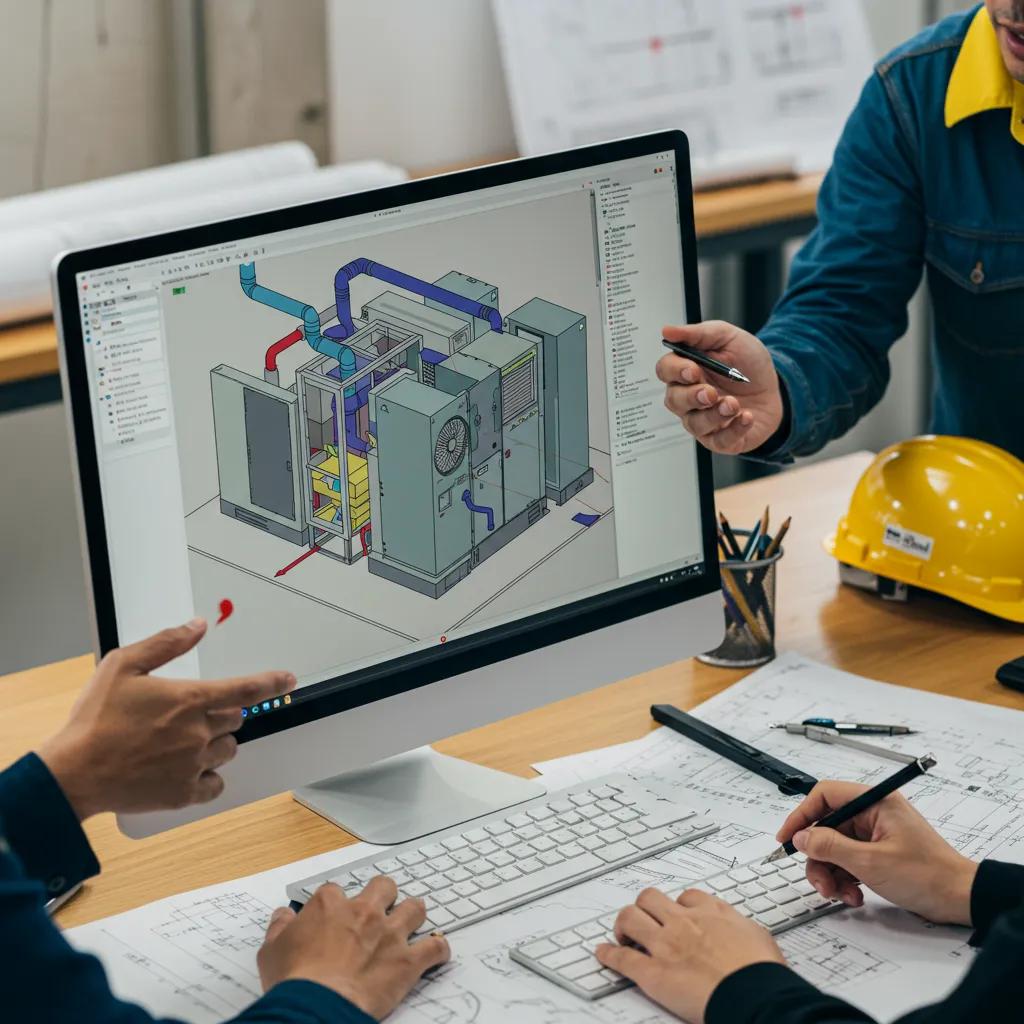
Our engineering and CAD design teams meticulously translate the needs assessment into precise, executable drawings and specifications. This encompasses expert system sizing, optimized duct and piping layouts, comprehensive equipment schedules, and intelligent control sequences. Our advanced 3D CAD models are instrumental in enabling proactive clash detection with structural and electrical trades, thereby minimizing on-site coordination challenges and streamlining prefabrication planning. Furthermore, our design documents incorporate sophisticated control logic for building automation, detailing sensor points, sequences of operation, and critical integration requirements that drive superior energy optimization. This precise engineering significantly reduces procurement errors and establishes clear commissioning criteria, ultimately enhancing first-cost predictability and ensuring exceptional long-term operational performance.
Seamless Integration: Our In-House Fabrication within the Design-Build Approach
Our state-of-the-art in-house fabrication facility precisely aligns CAD output with our advanced shop capabilities. This allows us to expertly prefabricate ductwork, supports, and piping spools, significantly enhancing quality control and substantially reducing on-site labor hours. Prefabrication dramatically shortens project schedules by relocating repetitive assembly tasks to a controlled environment, enabling concurrent fabrication and site preparation. Our rigorous quality assurance processes within the shop minimize field rework and guarantee precise tolerances, facilitating faster installation and ensuring superior system performance. This inherent quality control advantage consistently translates into lower installed costs and fewer schedule delays often caused by weather or site access limitations, proving invaluable for complex retrofit and occupied-building projects.
Our Meticulous Process for Installation and Commissioning
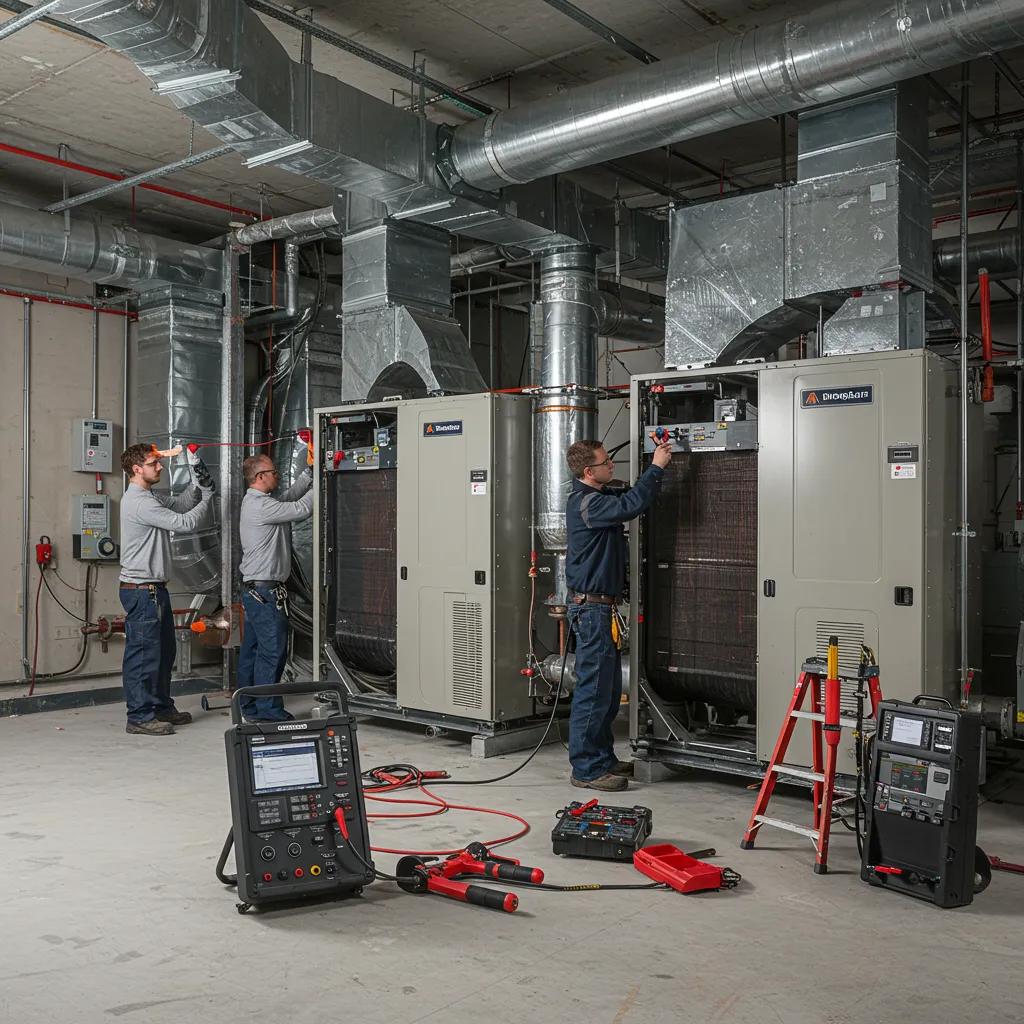
Our installation process adheres to a meticulously coordinated sequence: beginning with thorough site preparation and strategic staging, followed by mechanical rough-in, precise equipment setting and connection, and progressive system testing culminating in final commissioning. Our expert Testing, Adjusting, and Balancing (TAB) verifies airflow and hydronic flows against stringent design baselines, while comprehensive functional testing ensures all controls and sequences meet exact operational requirements. Commissioning involves rigorous final acceptance tests and detailed documentation, confirming critical performance metrics such as precise temperature control, optimal ventilation rates, and targeted energy consumption. This clear assignment of responsibilities—with our contractor overseeing installation, our engineers verifying performance, and a dedicated commissioning agent ensuring final acceptance—guarantees accountability and significantly reduces potential disputes during project turnover.
Maximizing Longevity: Our Post-Installation Support and Preventive Maintenance Benefits
Our comprehensive post-installation support establishes robust preventive maintenance schedules, strategic spare-part strategies, and rapid response protocols, all designed to preserve optimal system uptime and efficiency throughout its entire lifecycle. Regular PM tasks—including essential filter changes, meticulous coil cleaning, precise lubrication, accurate sensor calibration, and critical control updates—proactively prevent performance degradation and detect potential faults before they can impact your operations. Continuous performance tracking and periodic re-commissioning are vital in sustaining significant energy savings and superior indoor environmental quality. Furthermore, our well-defined service agreements offer owners predictable budgeting and peace of mind. A truly proactive maintenance strategy dramatically reduces emergency downtime and substantially extends equipment life, effectively closing the loop from initial design intent to exceptional long-term operational results.
Unlock the Core Benefits of Our Commercial HVAC Design-Build Services
Our design-build approach consistently delivers measurable benefits by precisely aligning engineering, procurement, fabrication, and installation around shared, high-performance goals. This integrated strategy significantly reduces lifecycle costs, dramatically improves indoor air quality, and provides unparalleled single-point responsibility for all project outcomes. The fundamental mechanism for these substantial savings is early, collaborative value engineering that meticulously optimizes equipment selection, advanced controls, and strategic prefabrication opportunities. Below, we present concise, actionable benefits and a compelling comparison illustrating why discerning facility managers increasingly prefer our integrated delivery model.
Our commercial HVAC design-build model provides several distinct primary advantages:
- Energy Efficiency: Our integrated system design and advanced controls dramatically reduce energy consumption through optimized equipment sizing and intelligent sequencing.
- Single-Point Accountability: A single, comprehensive contract seamlessly ties design intent to construction outcomes, significantly limiting disputes and simplifying the entire procurement process.
- Faster Delivery: Strategic prefabrication and meticulously coordinated scheduling substantially compress project timelines and minimize on-site disruption.
- Improved IAQ and Comfort: Our design-driven ventilation, high-efficiency filtration, and precise humidity control significantly enhance occupant health and satisfaction.
These distinct advantages consistently yield tangible, superior outcomes for owners and facility teams, setting the stage for how our integrated approaches specifically elevate energy performance and optimize cost outcomes.
Measurable Impacts of Our Design-Build Solutions: Typical Performance Ranges
Our Design-Build Approach: Driving Energy Efficiency and Cost Reduction
Our design-build methodology significantly enhances energy efficiency by seamlessly integrating value engineering, advanced controls strategies, and optimal equipment selection during the initial design phase. This proactive approach meticulously avoids oversizing and substantially reduces parasitic losses. Our sophisticated controls and building automation systems enable precisely optimized operation—including intelligent scheduling, effective setback strategies, and efficient economizer operation—which dramatically cuts runtime while consistently maintaining superior comfort. Furthermore, strategic prefabrication minimizes on-site rework and accelerates commissioning, thereby lowering labor costs and expediting the realization of significant energy savings. Collectively, these integrated mechanisms reduce both capital and operating costs throughout the system’s entire lifecycle, providing clear and compelling financial justifications for all upgrades.
Optimizing Indoor Air Quality and Comfort Through Our Design-Build Expertise
Our design-build delivery model inherently integrates critical IAQ objectives—such as optimal ventilation rates, superior filtration efficiency, and precise humidity control—directly into system selection and control logic from the project’s inception. This proactive approach guarantees that indoor air quality is never an afterthought. We implement high-efficiency filtration, dedicated outdoor air systems, and advanced humidity control strategies to comprehensively address occupant health. Concurrently, our Building Automation System (BAS) monitoring provides continuous verification and establishes intelligent alarm thresholds for prompt, proactive maintenance. By combining expert IAQ design with rigorous commissioning, we verify delivered ventilation and filtration performance, consistently producing exceptional comfort and fostering healthier indoor environments for all occupants.
Streamlining Project Management and Accountability with Our Design-Build Model
Leveraging a single, comprehensive contract and our fully integrated team, our design-build approach significantly reduces Requests for Information (RFIs) and dramatically accelerates decision-making. This is achieved because our contractors and designers collaborate continuously and concurrently, rather than sequentially. This strategic consolidation minimizes the incidence of scope gaps and costly change orders, while clearly defining project milestones and acceptance criteria. Our project managers can meticulously track progress utilizing coordinated CAD models and precise prefabrication schedules, thereby enhancing transparency for owners and substantially reducing administrative overhead. The result is faster, more predictable project delivery, which elevates stakeholder satisfaction and empowers facility teams to plan operations with unparalleled certainty.
The Imperative of Customization in Premier Commercial HVAC Solutions
Customization is paramount, meticulously tailoring HVAC systems to your facility’s unique process loads, occupancy patterns, and stringent compliance needs. This ensures the delivered system perfectly aligns with your operational realities, rather than relying on generic assumptions. Industrial facilities, for instance, frequently demand process-specific ventilation and advanced odor control. Healthcare environments necessitate critical redundancy and rigorous infection-control measures. Schools, conversely, must balance optimal comfort with strict budgetary constraints. Our customized design-build solutions precisely match equipment, controls, and maintenance strategies to these specific constraints, guaranteeing that your performance, cost, and reliability targets are not just met, but exceeded.
Our Commercial HVAC Design-Build Services: Tailored Applications Across Florida Industries
Florida’s unique climate and dynamic regulatory environment profoundly influence HVAC solutions across all sectors. Our expert designers meticulously consider high cooling loads, precise humidity management, and local energy incentive programs when specifying every system. The design-build pathway is exceptionally adaptable to industry-specific constraints, seamlessly embedding deep industry knowledge into early design and prefabrication decisions. Below, we outline key industry-focused considerations and provide compelling examples of how our design-build approach effectively addresses common challenges within industrial, healthcare, educational, and commercial settings.
Our key industry applications encompass specialized industrial process ventilation, critical healthcare redundancy and IAQ management, essential school ventilation upgrades, and fully integrated systems for commercial office buildings that expertly combine advanced energy management with superior occupant comfort. These compelling examples vividly illustrate how our design-build approach precisely tailors systems to meet distinct operational and stringent regulatory goals, leading us to explore the particular needs of industrial facilities where complex process demands are paramount.
Addressing the Unique HVAC Demands of Industrial Facilities
Industrial facilities frequently present significant challenges, including substantial process heat, highly variable loads, and specialized filtration requirements for contaminants or particulate matter. These conditions necessitate robust ventilation and sophisticated control strategies. Our expert design-build teams meticulously coordinate mechanical engineering with process piping and advanced controls to ensure safe exhaust, precisely appropriate make-up air, and secure hazardous-material handling where applicable. Strategic prefabrication of piping spools and modular duct sections dramatically accelerates installation in active plants, thereby minimizing downtime while consistently maintaining superior quality. These precisely tailored strategies are crucial for protecting process continuity, ensuring worker safety, and upholding stringent regulatory compliance.
Our HVAC Design-Build: Essential Support for Hospitals and Healthcare Facilities
Hospitals and healthcare facilities demand highly redundant systems, precise zoned pressurization, and superior high-efficiency filtration to rigorously meet stringent infection control and life-safety standards. This is paramount while ensuring continuous, uninterrupted operation for all critical spaces. Our design-build methodology empowers engineers to strategically plan redundant chiller loops, seamless backup power integration, and intelligent zoned control logic much earlier in the project lifecycle, thereby guaranteeing unparalleled reliability and full regulatory compliance. Our comprehensive commissioning process meticulously verifies pressurization and filtration performance in vital areas such as operating rooms, isolation rooms, and critical-care units, providing documented assurance that all systems meet exacting clinical requirements. This expertly coordinated approach significantly lowers operational risks and profoundly enhances patient safety.
Navigating HVAC Challenges: Solutions for Schools and Educational Institutions
Schools and educational institutions face the critical challenge of balancing often-limited capital budgets with the imperative for improved ventilation and enhanced comfort, both vital for supporting optimal learning outcomes. Our design-build approach expertly supports strategic phased upgrades, targeted retrofits, and highly cost-effective measures. These include advanced filtration, intelligent demand-controlled ventilation, and energy-efficient unit replacements, all designed to deliver measurable IAQ and comfort improvements without significant upfront disruption. Phased implementation is key, allowing schools to maintain continuous classroom operations while incremental improvements are meticulously completed. This strategy is absolutely critical for ensuring academic continuity and responsible budgetary planning.
The Advantages of Integrated HVAC System Installation for Commercial Buildings
Commercial buildings realize substantial gains from our integrated HVAC installations, primarily through centralized energy management, intelligent BAS-driven scheduling, and meticulously coordinated equipment selection. This approach prioritizes optimizing lifecycle value over merely achieving the lowest upfront cost. Our integrated systems significantly enhance occupant comfort through precise zoned controls and personalized scheduling, while simultaneously enabling robust portfolio-level energy tracking for owners. These combined, powerful benefits consistently reduce operational costs over time and strategically support informed asset management decisions, making our integrated installations exceptionally attractive to owners focused on superior long-term performance and return on investment.
What Sets CCS Mechanical Inc. Apart: Premier Commercial HVAC Design-Build in Ocala, Florida
CCS Mechanical Inc. proudly offers a robust local presence combined with unparalleled integrated capabilities. This encompasses expert engineering, advanced in-house CAD, precision fabrication, seamless installation, rigorous commissioning, and proactive preventive maintenance—all designed to significantly shorten lead times and elevate quality control for your Florida projects. Our company’s cutting-edge fabrication and CAD-driven workflows dramatically reduce field time through strategic prefabrication and proactive clash detection, proving exceptionally valuable in climate-sensitive retrofit projects. CCS Mechanical’s deep local knowledge of Florida’s unique operating conditions and critical energy considerations enables us to precisely tailor equipment and controls for optimal humidity management, efficient handling of high cooling loads, and alignment with state-specific incentive programs. Below, we present a clear capability-to-benefit mapping, illustrating how our in-house strengths directly translate into tangible client impact.
The following table clearly links CCS Mechanical’s core capabilities to direct, measurable business benefits for discerning facility owners.
For recruitment and outreach: CCS Mechanical is actively seeking talented HVAC technicians and skilled HVAC system engineers to join our growing team. We also invite industrial facilities to contact CCS Mechanical for a comprehensive quote on our premier services. Our company champions integrated projects by seamlessly combining expert engineering and precision fabrication with dedicated field teams, creating an exceptionally appealing environment for technicians and engineers eager for hands-on design-build work in the vibrant Ocala area.
Our In-House Capabilities: Elevating CCS Mechanical’s Design-Build Projects
CCS Mechanical’s advanced in-house CAD design and sophisticated 3D modeling capabilities facilitate thorough coordination with structural and electrical trades, significantly reducing potential field conflicts and robustly supporting strategic prefabrication. Our state-of-the-art fabrication shop meticulously produces ductwork, supports, and piping components to exacting precise tolerances, which dramatically accelerates installation and consistently elevates quality. Our dedicated internal commissioning and proactive preventive maintenance teams ensure seamless continuity from project turnover to long-term service, rigorously preserving the original design intent throughout operational life. Collectively, these integrated capabilities substantially reduce total installed cost and guarantee dependable project handoffs for discerning owners.
CCS Mechanical’s Approach to Florida’s Energy Efficiency and Sustainability Standards
Given Florida’s demanding climate, CCS Mechanical places paramount emphasis on superior high-efficiency equipment selection, advanced humidity control strategies, and seamless building automation integration. This comprehensive approach is designed to precisely optimize system operation, even under the heaviest cooling loads. Our expert control system programming and robust BAS integration enable intelligent scheduling, efficient economizer utilization, and proactive fault detection, ensuring systems consistently operate at peak design efficiency. CCS Mechanical’s unparalleled local knowledge is instrumental in aligning projects with applicable energy programs and incentive opportunities, guaranteeing that our technical solutions are highly responsive to both stringent regulatory mandates and critical operational drivers. These integrated measures not only significantly reduce operating costs but also substantially enhance occupant comfort.
Showcasing Our Expertise: Client Success Stories and Case Studies
Our concise, impactful case studies present clear problem-solution-result narratives, highlighting measurable outcomes. For an industrial facility, our strategic prefabrication and meticulously coordinated shutdown windows dramatically reduced downtime. For a healthcare client, our robust redundant systems and rigorously verified pressurization consistently met stringent clinical requirements. For a school retrofit, our expertly phased ventilation upgrades delivered significantly improved IAQ, all while adhering strictly to budget. These compelling narratives vividly illustrate how our integrated design-build decisions consistently lead to substantial, quantifiable energy savings, significant uptime improvements, and accelerated project completion. This powerful, practical evidence unequivocally underscores the immense value of our integrated delivery team for addressing your most complex facility needs.
The Unrivaled Choice: CCS Mechanical for Your Commercial HVAC Design-Build Needs
Discerning owners consistently choose firms that seamlessly combine deep local knowledge, integrated engineering expertise, precision in-house fabrication, and dependable maintenance support to deliver truly predictable outcomes. CCS Mechanical’s unparalleled in-house capabilities and single-point responsibility significantly mitigate schedule risk and elevate quality control throughout every phase of installation and commissioning. For facility managers seeking streamlined procurement and rigorously documented performance, these inherent attributes make our design-build projects exceptionally predictable and highly cost-effective. Your facility teams can anticipate clear milestones, meticulously coordinated documentation, and comprehensive ongoing service offerings that consistently sustain optimal system performance long after turnover.
Forge Your Future: Career Opportunities in Commercial HVAC Design-Build at CCS Mechanical
CCS Mechanical is actively seeking highly skilled technicians and innovative system engineers eager to thrive in an environment that seamlessly integrates design, fabrication, and field installation. We offer unparalleled hands-on experience across the entire project lifecycle. Our dynamic work roles emphasize robust collaboration across advanced CAD, precision shop fabrication, and dedicated field teams, providing extensive exposure to cutting-edge HVAC system engineering and installation practices. Exciting career pathways include field technician progression into specialized commissioning roles and engineering tracks that expertly combine vital site support with sophisticated control programming responsibilities. CCS Mechanical is committed to attracting top-tier HVAC technicians and system engineers to join our exceptional team, and we also invite industrial facilities to contact us for a comprehensive quote on our premier services.
Below, we present a clear table outlining common roles, key responsibilities, and robust growth opportunities for prospective applicants.
The Vital Roles and Responsibilities of Our HVAC Technicians in Design-Build Projects
Our highly skilled HVAC technicians expertly perform critical installation, rigorous testing, and precise commissioning tasks. They coordinate seamlessly with our in-house fabrication and engineering teams to ensure all prefabricated components fit perfectly and perform exactly as designed. Their day-to-day responsibilities encompass precise equipment setting, meticulous duct and piping installation, accurate sensor calibration, and comprehensive TAB activities. Possessing strong documentation skills and unwavering adherence to stringent safety and quality protocols are absolutely essential, as our technicians serve as the vital link between initial design intent and superior installed performance. This invaluable hands-on exposure significantly accelerates skill development and thoroughly prepares our technicians for advanced roles in commissioning or shop leadership.
The Essential Contributions of Our HVAC System Engineers to Design and Installation
Our expert system engineers are pivotal in producing precise load calculations, optimal equipment selection, sophisticated control strategies, and comprehensive CAD deliverables. These outputs meticulously define project performance metrics and stringent installation requirements. Our engineers skillfully program advanced BAS sequences of operation and provide invaluable support to field teams during commissioning, rigorously validating control logic and proactive fault detection. Their meticulous work ensures that all systems consistently meet ambitious energy and IAQ targets, while seamlessly coordinating with other disciplines to proactively minimize potential clashes. Engineers who actively engage with our field teams gain invaluable practical insight into constructability, which profoundly enhances the quality of future designs.
Unlocking Potential: Growth and Development Opportunities at CCS Mechanical
At CCS Mechanical, our dedicated employees gain access to comprehensive on-the-job training, invaluable mentorship from our experienced engineers and team leads, and exciting opportunities to develop specialized expertise in commissioning or advanced fabrication processes. Our robust training pathways include clear progression from field roles into specialized commissioning or shop leadership positions. Engineers, too, can significantly expand their expertise into sophisticated BAS programming and strategic project management. We emphasize competitive compensation, comprehensive benefits, and a vibrant culture of continuous professional growth, all designed to attract and retain highly skilled staff and foster long-term career advancement within our company.
Ready to Join Us? Apply for HVAC Careers at CCS Mechanical
Interested candidates are encouraged to prepare a comprehensive resume, meticulously highlighting all relevant experience, essential licenses or certifications, and professional references pertinent to field or engineering roles. Our typical application process includes an initial screening, a thorough technical interview, and a site visit or practical skills assessment to confirm your competencies. Candidates will receive detailed information about specific role requirements and next steps throughout the interview process. Those seeking unparalleled hands-on design-build experience will discover rewarding opportunities across our dynamic installation, precision fabrication, and expert commissioning teams.
Your Questions Answered: Commercial HVAC Design-Build in Florida
Facility managers and contractors frequently inquire about the distinctions between design-build and traditional delivery, the potential for time and cost savings, the necessary credentials for technicians and engineers in Florida, our approach to IAQ management, and how building automation significantly enhances HVAC performance. Our concise, direct answers are designed to facilitate quick decision-making and support informed initial procurement choices. The following brief Q&A section offers clear, practical guidance for these common inquiries.
Design-Build vs. Traditional HVAC Project Delivery: Key Distinctions
Our design-build approach seamlessly integrates both design and construction responsibilities under a single, comprehensive contract. In contrast, traditional delivery models separate the roles of designer and contractor, often leading to sequential handoffs and extended project timelines. Our design-build method significantly reduces potential disputes by establishing clear single-point accountability and fostering early, robust collaboration that proactively minimizes change orders. Discerning owners consistently experience faster project delivery and more transparent risk allocation with our design-build model compared to the conventional design-bid-build approach. This unified, single-team model inherently supports tighter schedule control and superior integrated value engineering.
Maximizing Value: How Our Design-Build Saves Money and Time on HVAC Projects
Significant cost and time savings are inherent to our design-build process, stemming from proactive early coordination, strategic prefabrication, and substantially reduced rework. By meticulously selecting right-sized equipment and expertly optimizing controls during the design phase, we effectively lower lifecycle costs. Strategic prefabrication and concurrent site activities dramatically shorten field schedules, while a reduction in RFIs and change orders minimizes administrative delays. Our typical projects consistently realize both significant upfront schedule compression and substantial longer-term operational savings, achieved through enhanced commissioning and advanced controls. These integrated efficiencies directly translate into faster project payback and a lower total cost of ownership for your facility.
Essential Qualifications for HVAC Technicians and Engineers in Florida
For HVAC technicians, typical credentials include a robust technical education or comprehensive apprenticeship experience. For system engineers, an accredited engineering degree or equivalent professional experience is required. Industry-recognized certifications are highly preferred for both roles. Practical, hands-on experience with Testing, Adjusting, and Balancing (TAB), advanced controls, and rigorous commissioning is exceptionally valuable for our design-build teams. We strongly encourage continuous professional development and specialized certifications in Building Automation Systems (BAS) and commissioning, as these significantly strengthen candidate profiles for our project-based responsibilities.
Our Approach to Indoor Air Quality Management in Commercial HVAC Systems
At CCS Mechanical, Indoor Air Quality (IAQ) is meticulously managed through expert ventilation rate design, optimal filtration efficiency selection, precise humidity control, and continuous monitoring seamlessly integrated with our Building Automation Systems (BAS) for real-time alerts and comprehensive analytics. Our strategic approaches include implementing higher MERV-rated filters, intelligent demand-controlled ventilation to precisely match occupancy, and dedicated outdoor air systems where critically necessary. Rigorous commissioning verifies the effective delivery of IAQ, while ongoing BAS monitoring ensures sustained performance and facilitates timely, proactive maintenance interventions.
Elevating HVAC Performance Through Building Automation Integration
Our advanced Building Automation Systems (BAS) deliver sophisticated sequencing, intelligent scheduling, comprehensive remote monitoring, proactive fault detection, and optimized routines. These capabilities collectively reduce energy consumption while consistently maintaining superior comfort levels. Key BAS features, including detailed trend logging, customizable alarms, and automated setback functions, significantly improve system responsiveness and enable highly effective predictive maintenance. Seamless integration with HVAC control logic facilitates adaptive strategies that intelligently respond to dynamic occupancy patterns and external environmental conditions, consistently yielding measurable energy savings and enhanced comfort benefits for your facility.
Ready for a Quote? How Facility Managers and Contractors Can Engage CCS Mechanical
To secure precise design-build quotes, we encourage owners to provide comprehensive site drawings, detailed utility data, accurate occupancy and process schedules, and a clear description of all performance goals, including specific IAQ and redundancy requirements. Meticulous documentation of process loads and any preferred phasing or shutdown windows is crucial, as it enables us to produce realistic schedules and accurate budgets. CCS Mechanical meticulously customizes each quote by thoroughly assessing your unique process needs, required redundancy levels, and whether the project involves a retrofit or new construction. We then precisely align our fabrication and installation plans accordingly. The following checklist and contact guidance will explain exactly what to prepare and what to expect from our process.
To initiate a precise quote request, please provide the following essential items:
- Comprehensive architectural and MEP as-built drawings or current floor plans.
- Detailed utility capacity information and electrical service specifications.
- Accurate occupancy schedules, precise process load descriptions, and any critical space requirements.
- All applicable regulatory requirements or your desired energy/IAQ performance targets.
- Meticulously prepare the aforementioned documents and identify your primary site contacts for seamless access.
- Contact our local office by phone to schedule your comprehensive site visit.
- Anticipate a thorough initial assessment and an accurate order-of-magnitude estimate, which will be followed by detailed design and a comprehensive formal proposal.
These meticulously outlined steps establish a predictable timeline and ensure our proposals precisely reflect both your operational constraints and ambitious performance goals.
Essential Information for a Precise HVAC Design-Build Quote
Comprehensive plans, precise utility data, detailed occupancy and process information, and any specific site constraints are absolutely essential for generating accurate estimates. A thorough site visit is typically required to meticulously verify all existing conditions. Providing clear target performance metrics for energy and IAQ significantly enhances scope alignment and proactively minimizes costly change orders later in the project. Meticulous documentation and consistent stakeholder availability during our discovery phase accelerate estimate generation and yield more reliable, transparent pricing. Preparing this critical information upfront substantially reduces ambiguity and significantly shortens the overall proposal timeline.
Our Tailored Approach: Customizing Quotes for Industrial and Commercial Facilities
Our customization process is meticulously tailored, depending on comprehensive process load assessments, your specific required redundancy, and the inherent complexity of any retrofit. CCS Mechanical rigorously evaluates these critical factors and presents precisely scoped options, ranging from complete turnkey design-build solutions to strategic phased upgrades with clearly targeted ROI metrics. For our industrial clients, intricate process integration and specialized filtration requirements significantly influence the project scope, whereas healthcare clients prioritize robust redundancy and stringent verification testing. Any variability in quotes directly reflects these technical distinctions and is thoroughly clarified during our collaborative discovery and design phases.
Project Timeline: From Quote to Successful Completion
Our typical project milestones include a thorough initial assessment and precise quote generation (1–3 weeks, contingent on document readiness), comprehensive detailed design (2–8 weeks), efficient fabrication (2–6 weeks), and expert installation and commissioning (2–12 weeks, varying with project scale). Variables such as permitting and specific site constraints may influence overall schedules. Simpler upgrades proceed more rapidly, whereas complex retrofits in occupied facilities necessitate meticulously phased execution, which can extend timelines. Strategic staging and proactive prefabrication planning are instrumental in minimizing on-site duration and mitigating operational disruption.
Connect with Us: Consultation and Support for Facility Managers
Facility managers are invited to connect with CCS Mechanical by phone at +1 (352) 237-6272 or visit our local office at to arrange personalized consultations and comprehensive site assessments. Following your initial contact, you can anticipate a scheduled site visit, a detailed assessment report, and a clear proposal timeline meticulously outlining all deliverables and milestones. Providing preliminary documents prior to the visit significantly accelerates estimate generation and ensures the development of highly accurate proposals.
- Compile all available plans and essential process data.
- Contact our office to schedule your comprehensive site visit.
- Ensure all key stakeholders are prepared for our on-site assessment and subsequent proposal review.
This streamlined contact process guarantees that CCS Mechanical can provide precisely tailored design-build quotes, meticulously reflecting both your ambitious performance targets and unique operational realities.
Frequently Asked Questions
What are the key advantages of choosing our design-build approach for HVAC projects?
Our design-build approach delivers numerous advantages, notably streamlined communication and enhanced collaboration between our expert design and construction teams. This synergy consistently leads to significantly faster project completion. This integrated method substantially reduces the likelihood of disputes and costly change orders, as all parties operate under a single, comprehensive contract. Furthermore, it facilitates the early integration of highly energy-efficient solutions and precisely customized designs that perfectly align with your specific facility needs, ultimately resulting in optimized lifecycle costs and superior indoor air quality.
How does our design-build process optimize project timelines?
Our design-build process profoundly optimizes project timelines by enabling concurrent activities, such as design and construction, rather than rigid sequential phases. This strategic overlap substantially reduces the overall project duration, as precision prefabrication can proceed efficiently while site preparation is underway. Moreover, proactive early collaboration among our integrated team members effectively minimizes delays often caused by miscommunication or unforeseen design changes, consistently leading to a highly predictable schedule and significantly quicker project delivery.
What is the pivotal role of building automation in our HVAC design-build projects?
Building Automation Systems (BAS) play an absolutely crucial role in our HVAC design-build projects, significantly enhancing system efficiency and elevating occupant comfort. Our advanced BAS enables real-time monitoring and precise control of all HVAC operations, facilitating intelligent adjustments based on dynamic occupancy and environmental conditions. This seamless integration is instrumental in optimizing energy use, rigorously maintaining superior indoor air quality, and providing invaluable data for proactive predictive maintenance. Ultimately, this leads to substantially lower operational costs and consistently improved system performance throughout its lifecycle.
How can facility managers ensure stringent compliance with local HVAC regulations?
Facility managers can ensure stringent compliance with local HVAC regulations by diligently staying informed about all applicable state and local codes, which meticulously dictate system design, installation, and maintenance standards. Engaging with experienced design-build contractors, like CCS Mechanical, who possess a deep understanding of these complex regulations, is absolutely essential. Furthermore, conducting regular, comprehensive audits and inspections can proactively help identify potential compliance issues at an early stage, thereby allowing for timely adjustments to rigorously meet regulatory requirements and effectively avoid costly penalties.
What critical factors should be considered when selecting an HVAC design-build contractor?
When selecting a premier HVAC design-build contractor, facility managers must meticulously consider the contractor’s extensive experience, impeccable reputation, and proven expertise within your specific industry. It is paramount to rigorously review past projects and compelling client testimonials to accurately gauge their performance and unwavering reliability. Additionally, thoroughly evaluating the contractor’s robust in-house capabilities—such as expert engineering, precision fabrication, and comprehensive maintenance support—will provide invaluable insights into their capacity to deliver a truly comprehensive solution precisely tailored to your facility’s unique needs.
What are the common challenges encountered during HVAC design-build projects?
Common challenges encountered in HVAC design-build projects typically include adeptly managing diverse stakeholder expectations, meticulously coordinating between various trades, and proactively addressing unforeseen site conditions. Highly effective communication and seamless collaboration among all integrated team members are absolutely essential to mitigate these potential issues. Furthermore, ensuring that all parties are precisely aligned on clear project goals and stringent timelines is crucial, as this helps prevent costly delays and budget overruns, ultimately leading to a consistently successful project outcome.
How does proactive preventive maintenance contribute to the longevity of HVAC systems?
Proactive preventive maintenance is absolutely vital for significantly extending the longevity of your HVAC systems. It encompasses regular, meticulous inspections, thorough cleaning, and precise adjustments, all designed to ensure optimal, peak performance. By strategically addressing minor issues before they can escalate into major, costly problems, our preventive maintenance programs substantially reduce emergency downtime and minimize repair costs. Furthermore, it profoundly enhances energy efficiency, significantly prolongs equipment life, and rigorously maintains superior indoor air quality, thereby ensuring that your HVAC system consistently meets your facility’s operational needs with unparalleled effectiveness.
]]>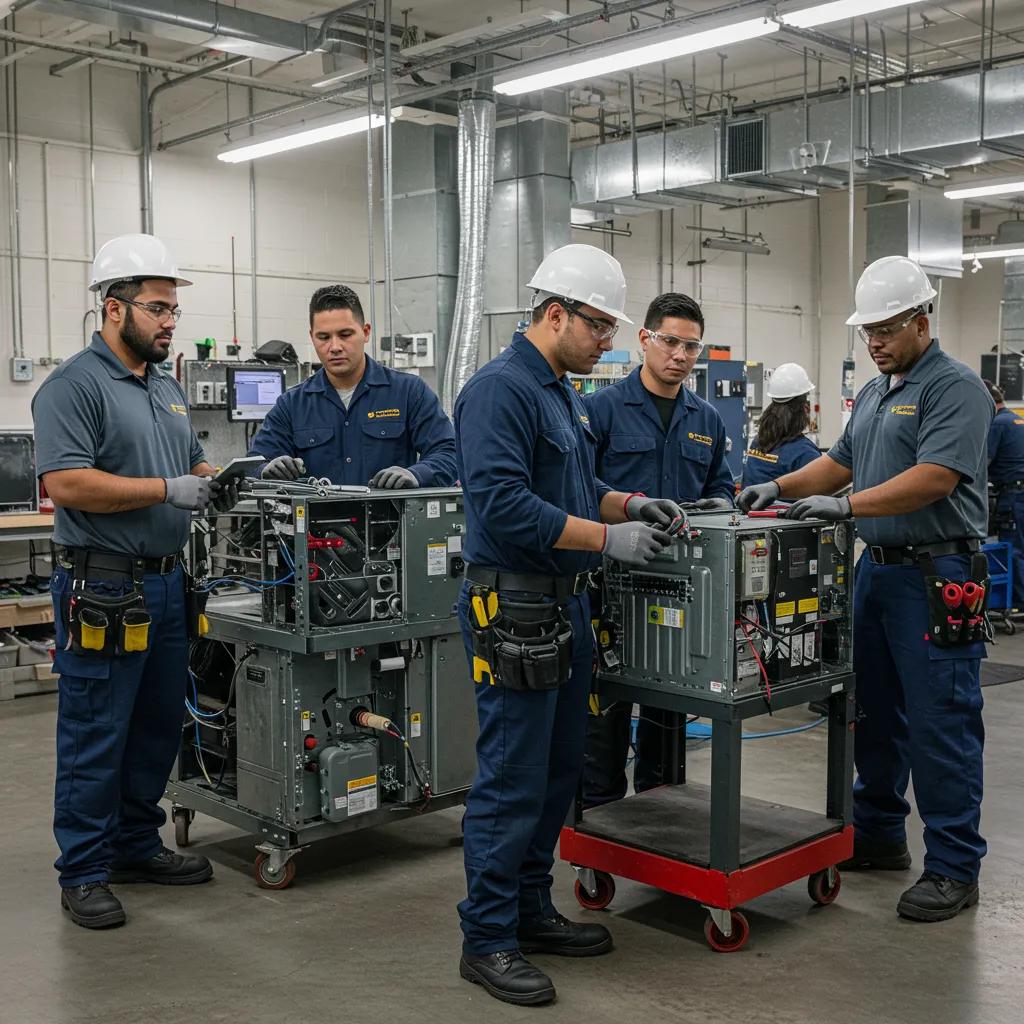
Skip to main content Skip to footer
Build Your HVAC Career with CCS Mechanical: Technician & Mechanical Contractor Opportunities in Ocala, Florida
Ocala’s growing demand for skilled mechanical professionals creates exciting opportunities. This guide offers a comprehensive look into HVAC and mechanical contracting careers at CCS Mechanical, detailing daily responsibilities, growth pathways into leadership, and the essential skills and certifications needed. We also highlight how our commercial and industrial HVAC services support local facilities, providing valuable insights for both aspiring technicians and facility managers evaluating service providers. Discover concrete role descriptions, clear training pathways, and our extensive service capabilities. We’ll explore available technician roles, compare industrial vs. commercial HVAC work, outline our facility services, describe engineering opportunities, and guide you through application and advancement steps. Our focus on real-world responsibilities, certifications, and service impact empowers both job seekers and facility managers to make informed decisions about their careers and their trusted contractors.
Explore HVAC Technician Opportunities at CCS Mechanical in Ocala
HVAC technician roles at CCS Mechanical span a wide spectrum of specializations, from entry-level installers to seasoned service technicians adept in controls and refrigeration. These positions demand hands-on expertise in installation, commissioning, preventive maintenance, and diagnostics, all crucial for ensuring the operational reliability of commercial and industrial systems. Our job descriptions consistently highlight strong mechanical trades knowledge, unwavering commitment to safety, and proficiency with building automation and control systems to keep facilities running smoothly. The following sections detail required certifications, typical daily responsibilities, and clear pathways for career progression within our dynamic mechanical contractor environment, helping you understand where you fit and what to expect in the field.
Essential Skills & Certifications for HVAC Technicians
To work safely and effectively on modern HVAC systems, technician roles at CCS Mechanical typically require certifications in refrigerant handling, electrical troubleshooting, and fundamental controls knowledge. Key credentials include EPA Section 608 for refrigerants and other industry-recognized certifications that confirm diagnostic and service proficiency. Essential technical skills encompass a deep understanding of the refrigeration cycle, electrical wiring, control logic, and familiarity with building automation systems. Beyond technical prowess, strong communication and meticulous documentation for service reports are highly valued. For candidates without specific credentials, we encourage pursuing entry-level certification and supervised field experience to build the necessary competency for advanced roles.
HVAC Technician Training: Optimizing Performance and Career Paths
While an HVAC technician may understand the basics of how a heat pump operates using the refrigeration cycle, they may not be aware of the advanced control strategies that can optimize its performance. This gap in knowledge can lead to inefficient operation and increased energy consumption. To address this, training programs should incorporate modules on advanced control strategies, enabling technicians to better understand and implement them. Furthermore, providing technicians with an established career path can encourage them to pursue continuous learning and professional development, ultimately leading to a more skilled and competent workforce.
Training the Workforce for High-Performance Buildings: Enhancing Skills for Operations and Maintenance, R Srivastava, 2020
Daily Responsibilities of a CCS Mechanical HVAC Technician
A typical day for a CCS Mechanical service or maintenance technician involves diagnosing equipment faults, executing preventive maintenance tasks, replacing worn components, and meticulously calibrating control systems to restore optimal design performance. Our technicians expertly balance scheduled preventive visits with urgent emergency service calls, always prioritizing stringent safety protocols. They meticulously maintain accurate work orders and parts inventories for every job. Field work demands the skilled use of diagnostic tools, multimeters, refrigerant gauges, and BAS interfaces to precisely isolate and rectify issues impacting facility operations and occupant comfort. Consistent daily documentation and clear customer communication ensure seamless continuity of care and smooth transitions to project teams or engineers when complex challenges necessitate design modifications.
How does CCS Mechanical support career growth for HVAC technicians?
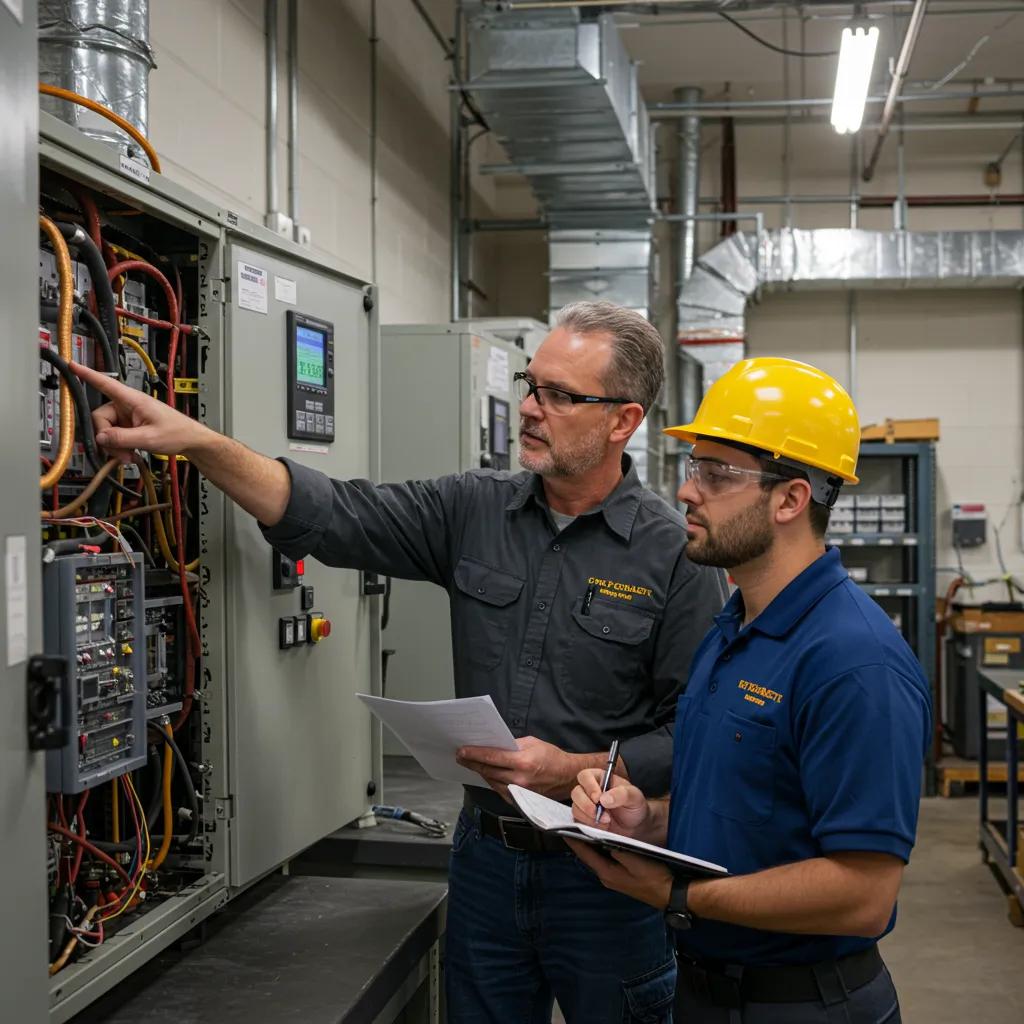
At CCS Mechanical, technician career growth is a clear pathway, typically progressing from apprentice or installer to journeyman-level service technician, and then into senior technician or lead roles that encompass project coordination and mentorship. We foster this growth through robust on-the-job training, dedicated mentorship, and structured competency milestones, empowering technicians to master controls programming, advanced refrigeration, and commissioning expertise essential for larger, more complex projects. Our investment in technicians includes providing access to external courses and supervised project experience, enabling them to qualify for higher-skilled positions and cross-train into specialized system controls or commissioning functions. These clear progression pathways not only help our technicians plan their training and advancement but also significantly enhance retention and technical capacity within our expert mechanical contracting teams.
Advance Your Career: Industrial HVAC Opportunities at CCS Mechanical in Florida
Industrial HVAC careers at CCS Mechanical immerse you in large-scale systems that govern critical process environments, chilled water systems, and high-capacity refrigeration. These roles offer unparalleled technical complexity and stability, distinguishing them from standard commercial maintenance. Success in these positions demands profound systems thinking, expert familiarity with industrial controls, and unwavering adherence to stringent safety and compliance practices that safeguard both operations and personnel. Our engineers and senior technicians in industrial roles frequently lead system design, energy optimization, and coordinated commissioning activities—all directly impacting facility uptime and process reliability. The following sections will highlight the distinctions between industrial and commercial roles and detail how our structured safety and training programs foster long-term career development in demanding industrial environments.
Industrial vs. Commercial HVAC: Key Career Distinctions
Industrial HVAC roles at CCS Mechanical are centered on process-critical systems like large chillers, robust industrial air handlers, and specialized process cooling equipment. In contrast, commercial roles typically involve rooftop units, packaged systems, and comfort ventilation solutions. The sheer scale and intricate integration within industrial environments necessitate advanced control strategies, meticulous redundancy planning, and close coordination with process engineers to prevent costly production interruptions. Work environments also vary significantly: industrial technicians often operate in plant settings, adhering to more rigorous PPE and confined-space protocols, while commercial work prioritizes occupant comfort and strict building code compliance. This fundamental difference in equipment and operational environment shapes career specialization, offering our technicians the unique opportunity to cultivate niche expertise in complex, large-scale mechanical systems.
Our Commitment to Safety & Training in Industrial HVAC
At CCS Mechanical, safety and training in industrial HVAC roles are paramount, built upon rigorously documented procedures, consistent personal protective equipment (PPE) use, and regular competency checks. This ensures safe operations around high-capacity equipment and critical process systems. Our structured training programs comprehensively cover lockout/tagout procedures, advanced electrical safety, and controls programming best practices, all designed to significantly reduce incident risk and enhance troubleshooting efficiency. Through continuous education, regular toolbox talks, and supervised field mentorship, our technicians effectively apply safety knowledge in complex environments while developing the advanced skills required for tasks such as chiller troubleshooting and sophisticated BAS integration. These robust safety and training frameworks not only protect our personnel but also safeguard facility uptime, fostering a reliable environment for both technical growth and professional development.
What Commercial HVAC Services Does CCS Mechanical Provide in Ocala?
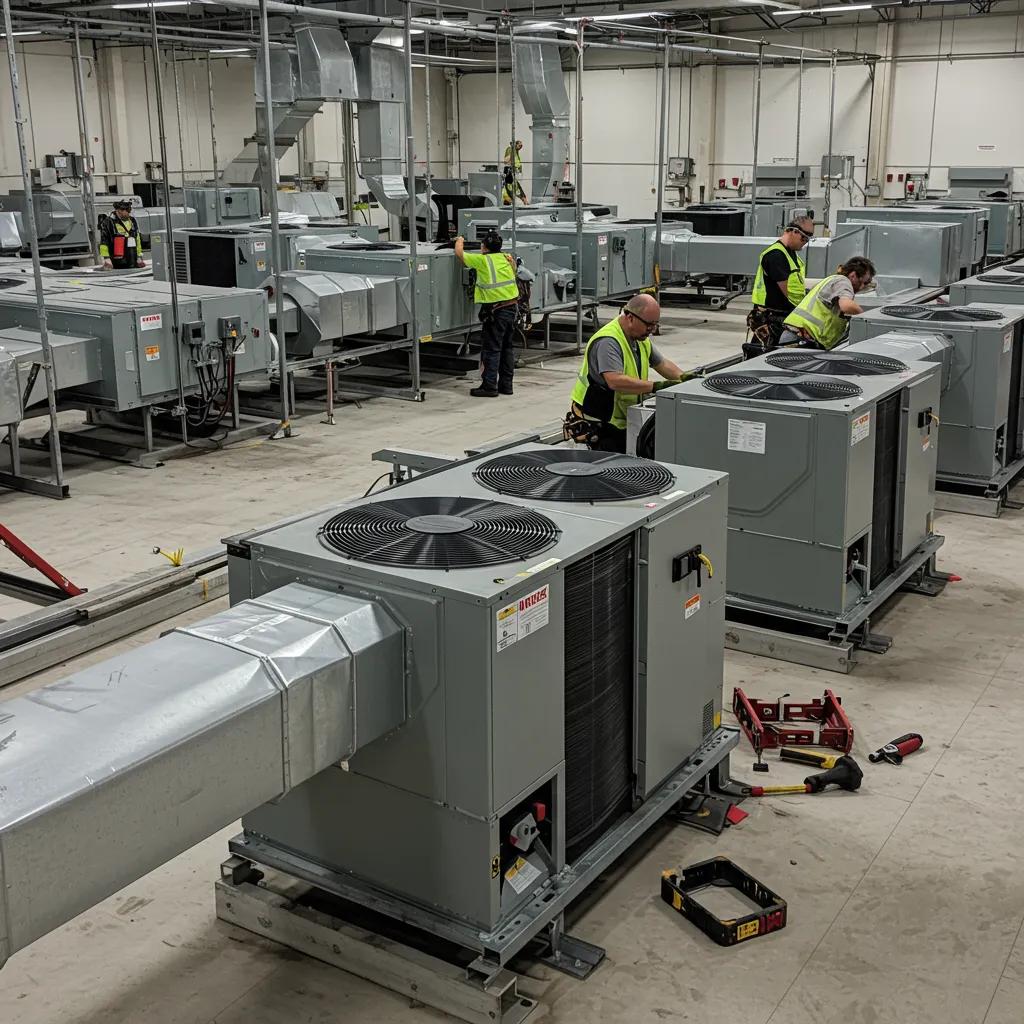
CCS Mechanical delivers comprehensive commercial HVAC services, encompassing preventive maintenance, emergency repairs, system retrofits, new installations, advanced controls integration, and meticulous commissioning. Our goal is to ensure your systems consistently meet peak performance and efficiency objectives. These essential services directly reduce costly downtime, significantly improve energy efficiency, and enhance indoor air quality for businesses, institutions, and commercial properties that rely on predictable HVAC performance. Facility managers consistently choose us based on our extensive service scope, unparalleled technical capacity, and proven ability to deliver measurable benefits, including substantially reduced operating costs and enhanced system reliability.
Our services table below provides a quick overview, helping facility managers compare our offerings before requesting a formal quote.
The Impact of Our Commercial HVAC Services on Local Businesses
Our commercial HVAC services are crucial for maintaining optimal indoor environmental quality, directly influencing occupant comfort, productivity, and compliance with vital health standards in institutions such as schools and healthcare facilities. Regular, proactive maintenance from CCS Mechanical minimizes unexpected failures that can cause costly operational disruptions. Furthermore, our energy-efficiency upgrades significantly reduce monthly utility expenses while actively supporting your sustainability goals. As a trusted provider, we prioritize scheduled preventive care and rapid response to faults, empowering facility managers to effectively plan budgets and ensure critical service continuity—essential for operations where downtime is simply not an option. For managers evaluating contractors, our proven ability to quantify uptime improvements and deliver tangible energy savings stands as a significant differentiator when selecting a premier mechanical contractor.
Advanced Technologies & Equipment in Our Commercial HVAC Projects
In our commercial projects, CCS Mechanical expertly deploys a wide array of equipment, from efficient rooftop units and split systems to powerful large chillers, variable-speed drives, and comprehensive package units. Our selection is always precisely tailored to your facility’s unique load profiles and building design constraints. Building Automation Systems (BAS) and Programmable Logic Controllers (PLCs) are central to our approach, automating sequences, optimizing setpoints, and enabling remote monitoring for proactive predictive maintenance. We integrate cutting-edge technologies such as energy recovery ventilators, Variable Refrigerant Flow (VRF) systems, and advanced controls algorithms to maximize efficiency, enhance responsiveness, and significantly reduce lifecycle costs. Our deep understanding of the intricate interplay between hardware, controls, and commissioning processes empowers facility teams to prioritize investments that yield measurable and lasting operational improvements.
Shape the Future: HVAC Engineering Careers at CCS Mechanical in Florida
At CCS Mechanical, HVAC system engineers are at the forefront of design, system optimization, retrofit planning, and commissioning, delivering highly reliable and efficient mechanical systems for our diverse commercial and industrial clients. Our engineers tackle complex challenges, from precise thermal load calculations and intricate controls integration to seamless coordination with construction teams, ensuring every system performs flawlessly within operational constraints. Engineers specializing in energy optimization and advanced controls integration are instrumental in helping clients significantly reduce operating costs and enhance critical process reliability. The following sections will provide insights into typical engineering challenges and a comprehensive qualifications checklist for aspiring engineering professionals.
Typical Engineering Challenges & Projects at CCS Mechanical
Our engineering challenges at CCS Mechanical frequently involve designing sophisticated chilled water distribution systems for expansive campuses, integrating advanced BAS strategies to precisely sequence multiple plant assets, and expertly retrofitting existing infrastructure to achieve ambitious new efficiency targets. Our projects demand a meticulous balance of optimal equipment sizing, robust control stability, and critical redundancy, all while coordinating seamlessly with facility managers and general contractors to minimize disruptions during installation. Our engineers are adept at evaluating complex constraints such as available space, existing piping networks, and electrical capacity to engineer practical, highly cost-effective solutions. Truly effective engineering at CCS Mechanical combines rigorous analytical design, proactive on-site troubleshooting, and crystal-clear communication with all stakeholders to ensure systems consistently meet both performance and budgetary goals.
Qualifications & Experience for HVAC Engineers at CCS Mechanical
At CCS Mechanical, we seek HVAC engineers with a strong foundation, typically including a degree in mechanical engineering or building services engineering, proven experience in HVAC design and controls, and proficiency with CAD/BIM tools for precise system documentation and coordination. We highly value candidates who possess hands-on exposure to commissioning, energy analysis, and a working knowledge of building automation protocols and advanced refrigeration systems. Equally crucial for successful project delivery are strong communication skills, robust project management ability, and demonstrated experience coordinating effectively with contractors and facility teams. Candidates who exhibit both profound technical depth and practical field experience are exceptionally well-positioned for our engineering roles, leading projects from initial design through meticulous commissioning.
Why CCS Mechanical Stands as Ocala’s Premier Mechanical Contractor
As Ocala’s premier mechanical contractor, CCS Mechanical seamlessly integrates unparalleled local market knowledge, robust technical capacity, and an unwavering focus on safety and system reliability to effectively serve our commercial and industrial clients. Our key differentiators include exceptional responsiveness, innovative engineering-backed solutions, and a proven ability to expertly manage complex institutional projects that demand meticulous coordination and strict compliance. For discerning facility managers, CCS Mechanical consistently demonstrates process-oriented service delivery, transparent documentation, and profound technical depth across new installations, strategic retrofits, and comprehensive long-term maintenance programs. After exploring our distinct advantages and the capabilities of our expert team, we invite facilities to request a detailed proposal or quote tailored to their specific needs.
Our Distinct Advantage: What Sets CCS Mechanical Apart in Ocala
At CCS Mechanical, our distinct advantage in the Ocala market stems from our combination of rapid response for urgent service calls, extensive engineering resources for even the most complex projects, and a dedicated service mindset focused on ensuring seamless operational continuity for our clients. With both profound field expertise and advanced controls competency, we not only address immediate failures but also proactively propose long-term efficiency and reliability improvements that significantly reduce lifecycle costs. Our structured approach to commissioning, meticulous documentation, and rigorous performance verification provides facility teams with complete assurance that every project will meet precise specifications and deliver anticipated benefits. Facility managers evaluating contractors should seek our proven engineering capability and our highly process-driven service model when selecting a trusted partner for their critical systems.
Our Expertise: Types of Mechanical Contracting Projects We Handle
CCS Mechanical expertly delivers a full spectrum of mechanical contracting projects, including turnkey installations, strategic retrofits designed to enhance efficiency, comprehensive long-term service agreements for proactive preventive maintenance, and rapid emergency response services for unexpected failures. Each project type receives our tailored approach: installations emphasize meticulous coordination and precise commissioning; retrofits focus on seamless compatibility and maximizing energy savings; and our service agreements prioritize scheduled maintenance and swift fault correction. For our institutional clients, we consistently incorporate thorough documentation and rigorous performance testing into handover packages, ensuring predictable and reliable operation. Our project success is built upon clear scopes, highly competent field personnel, and unparalleled controls expertise to integrate systems smoothly into your existing facility operations.
Ready to Join Us? Your Application Guide to the CCS Mechanical Team
We invite applicants to follow our clear, stepwise application process, beginning with the submission of your resume and certifications, progressing through a comprehensive skills assessment and interviews, and culminating in an onboarding experience that includes thorough safety orientation and initial training. This process is meticulously designed to verify your technical competence, safety awareness, and ideal fit for our field or engineering roles before you’re assigned to projects. We set clear expectations regarding documentation, certification verification, and initial mentoring to help new hires quickly transition into productive roles while upholding our stringent quality and safety standards.
Our Application Process for HVAC & Mechanical Careers
- Prepare Your Documentation: Compile your resume, all relevant certifications, and any work-order or project summaries that showcase your hands-on experience.
- Submit Your Application: Forward your documentation through our designated recruitment channel; anticipate an initial screening for qualifications and certifications.
- Skills Assessment & Interview: Complete a comprehensive technical assessment and interview, focusing on your troubleshooting abilities, controls knowledge, and commitment to safety practices.
- Onboarding & Training: Should you be selected, you’ll participate in our thorough orientation, essential safety briefings, and initial mentorship to familiarize yourself with company processes and project expectations.
Benefits & Work Culture: What New Hires Experience at CCS Mechanical
While specific benefits are best confirmed directly with CCS Mechanical, new hires can anticipate a vibrant work culture deeply rooted in safety, continuous technical development, and unwavering customer-focused service within our dynamic mechanical contracting environment. Our core cultural pillars include structured training opportunities, invaluable mentorship from our seasoned field staff, and a relentless focus on continuous improvement, guided by meticulously documented procedures. New technicians and engineers typically commence with supervised field assignments, steadily progressing through competency milestones that expertly prepare them for increasingly complex projects. We encourage candidates to confirm precise benefit details and career-support programs with CCS Mechanical during the offer and onboarding process.
Unlock Your Potential: Career Advancement at CCS Mechanical
At CCS Mechanical, career advancement in mechanical contracting is a structured journey, guiding technicians and engineers from hands-on roles into supervisory, project leadership, and specialized technical positions through dedicated training, strategic certification, and proven performance. Our structured programs seamlessly integrate advanced technical training, rigorous safety qualification, and invaluable project experience, empowering individuals to progress from entry-level positions to lead technician, commissioning specialist, or project manager tracks. We provide a clear mapping of programs, expected outcomes, and realistic timeframes, which not only motivates our candidates but also assists our hiring teams in strategic workforce development. The table below outlines typical advancement programs, their skill outcomes, and indicative timeframes, allowing you to envision your potential career paths with us.
Below, explore our common advancement programs and their outcomes.
Our Commitment to Ongoing Training & Certifications
At CCS Mechanical, our support for ongoing training is comprehensive, encompassing a blend of invaluable on-the-job mentorship, structured formal workshops, and facilitated access to external certification programs that rigorously validate technical skills and safety competencies. We actively prioritize cross-training, ensuring our technicians gain broad exposure to refrigeration, advanced controls, and critical commissioning tasks, thereby significantly expanding their career mobility. By strategically linking training milestones to potential role advancements, we foster a culture of continuous learning and ensure that promotions are always aligned with demonstrated capabilities. We encourage candidates to confirm our exact training and reimbursement policies during the application process to effectively plan their professional development strategy with us.
Leadership Opportunities Within the CCS Mechanical Team
Within the CCS Mechanical team, leadership roles commonly include lead technician, foreman, commissioning lead, and project manager—each carrying increased responsibility for meticulous project planning, expert crew supervision, and clear client communication. The transition from a field technician to a supervisory role typically demands demonstrated technical competence, exceptional communication skills, and proven experience coordinating complex jobs or multi-discipline teams. We provide robust leadership training, dedicated mentorship, and incremental responsibility as key mechanisms to prepare individuals for these pivotal positions and ensure consistent project success. By identifying desired leadership trajectories early, our technicians and engineers can strategically target the skills and certifications that will propel their promotion.
Your Questions Answered: FAQs About Careers & Services
What training programs does CCS Mechanical offer HVAC technicians?
CCS Mechanical provides a diverse range of training programs specifically designed to elevate the skills of our HVAC technicians. These comprehensive programs feature invaluable on-the-job mentorship, structured formal workshops, and facilitated access to external certification courses. Technicians can anticipate receiving expert training in critical areas such as advanced refrigeration, sophisticated controls, and rigorous safety procedures. Our structured training pathways are meticulously tailored to guide technicians from entry-level roles to more advanced positions, ensuring they acquire the essential competencies to truly excel in their careers.
How does CCS Mechanical foster work-life balance for its team?
CCS Mechanical deeply values the importance of work-life balance and is committed to cultivating a supportive environment for all our employees. We typically offer flexible scheduling options, empowering our technicians to effectively manage both their personal and professional commitments. Furthermore, CCS Mechanical actively promotes a culture of strong teamwork and open communication, ensuring every employee feels valued and fully supported. By prioritizing work-life balance, we aim to significantly enhance job satisfaction and foster long-term employee retention.
What career paths are available for HVAC engineers at CCS Mechanical?
HVAC engineers at CCS Mechanical can anticipate a dynamic array of career paths, each designed to facilitate significant professional growth and specialization. Beginning in entry-level engineering roles, individuals can advance to positions such as project engineer, lead engineer, or even engineering manager. We also offer abundant opportunities for specialization in cutting-edge areas like energy optimization, advanced controls integration, and innovative system design. CCS Mechanical actively supports career advancement through robust structured training programs and dedicated mentorship, empowering our engineers to cultivate the essential skills required for impactful leadership roles.
What safety protocols protect CCS Mechanical technicians?
At CCS Mechanical, we place an unwavering emphasis on stringent safety protocols to rigorously protect our technicians throughout their work. We implement comprehensive safety training that includes critical lockout/tagout procedures, mandatory personal protective equipment (PPE) usage, and clear emergency response protocols. Regular safety meetings and ongoing competency checks ensure that all our technicians remain fully up-to-date with the latest and most effective safety practices. By fostering a proactive culture of safety, CCS Mechanical is dedicated to minimizing workplace incidents and promoting a secure working environment for every employee.
How does CCS Mechanical value employee feedback?
CCS Mechanical deeply values employee feedback and actively encourages all technicians and engineers to openly share their insights and suggestions. We regularly conduct performance reviews and dedicated feedback sessions, providing a clear platform for employees to voice their opinions on workplace practices and potential improvements. Furthermore, our open-door policy ensures employees can communicate directly with management regarding any concerns or innovative ideas. This collaborative approach not only fosters a highly engaged work environment but also empowers CCS Mechanical to continuously enhance its operations and boost overall employee satisfaction.
What role does technology play in CCS Mechanical’s services?
Technology is absolutely integral to CCS Mechanical’s HVAC services, profoundly enhancing both efficiency and service delivery. We expertly utilize advanced Building Automation Systems (BAS) and Programmable Logic Controllers (PLCs) to meticulously optimize HVAC operations and significantly improve energy efficiency. Our technicians receive comprehensive training to proficiently work with the latest diagnostic tools and cutting-edge software, enabling them to troubleshoot issues effectively and implement solutions with speed and precision. By strategically leveraging technology, CCS Mechanical ensures that our services consistently meet the highest modern standards for performance and reliability, delivering substantial benefits to both our valued clients and our dedicated employees.
]]>