What Is Commercial HVAC Commissioning and Why Is It Essential?
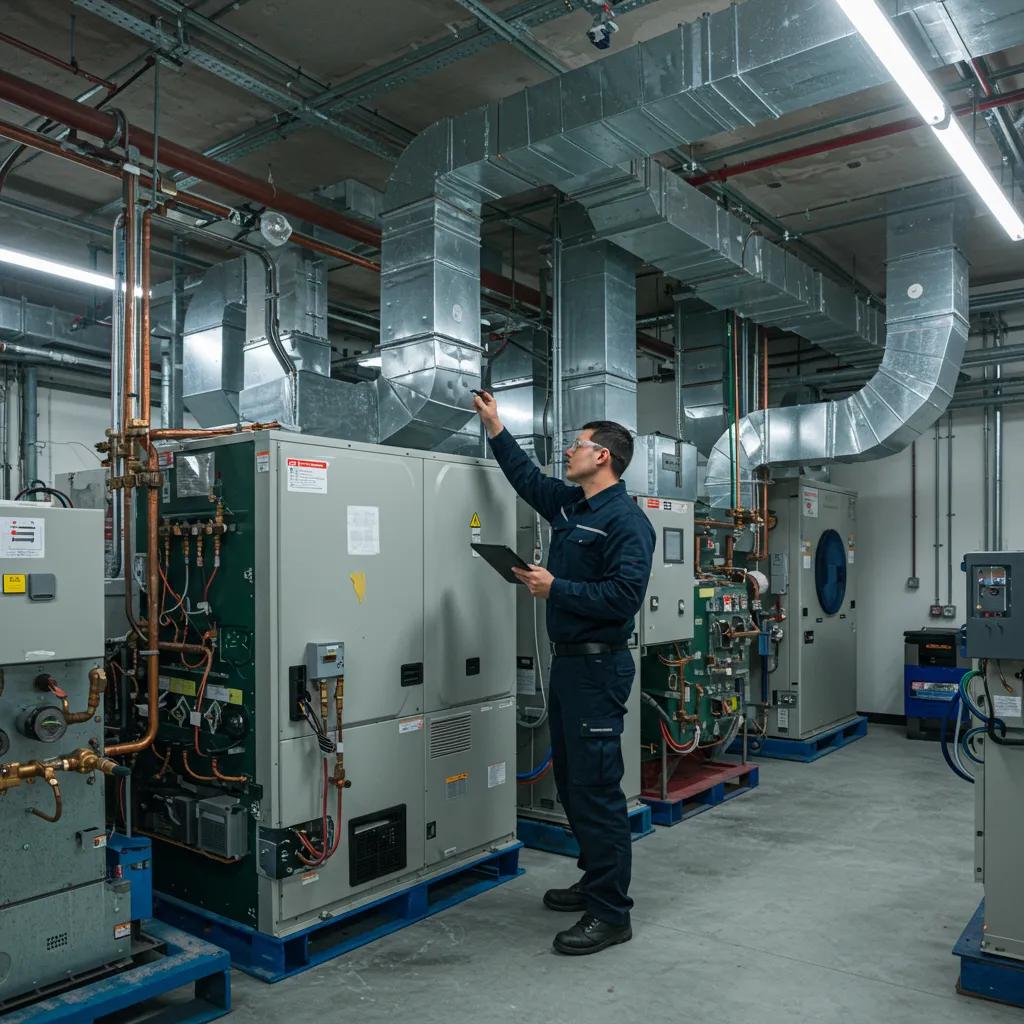
Commercial HVAC commissioning is a systematic process of verifying and validating that all components of a building's heating, ventilation, and air conditioning systems perform according to the owner's project requirements and the design intent. Unlike a simple installation inspection, commissioning spans the entire lifecycle of a project — from initial design review through functional testing and into post-occupancy monitoring.
The commissioning process ensures that every piece of equipment, every control sequence, and every integration point operates as intended. This includes reviewing design documents for compliance with codes and standards, verifying that equipment is installed correctly, conducting rigorous functional performance testing under various load conditions, and establishing ongoing monitoring protocols to sustain peak performance long after the project is complete.
| Commissioning Entity | Attribute | Target Values |
|---|---|---|
| Functional Performance Testing | Equipment operation under all modes | 100% compliance with sequences of operation |
| Sensor Validation | Temperature, humidity, and pressure sensor accuracy | ±1°F temperature, ±3% RH humidity |
| Airflow Balancing | Supply and return CFM at each terminal | ±10% of design airflow per ASHRAE standards |
| Pressure Relationships | Room-to-room and zone-to-zone differentials | Positive/negative as designed (0.01–0.05″ WC typical) |
| BAS Integration | Point-to-point verification of controls | All points read, write, and alarm correctly |
How Commissioning Ensures System Optimization
Functional testing is the cornerstone of commissioning. During this phase, technicians put every system through its paces — cycling start/stop sequences to verify staging and safety interlocks, testing economizer operation across a range of outdoor air conditions, validating variable air volume (VAV) box response to thermostat calls, and confirming that all control loops are properly tuned.
Each piece of equipment is tested not in isolation, but as part of the integrated system. This means verifying that when a VAV box calls for more cooling, the air handler responds appropriately, the chiller ramps up if needed, and the building automation system (BAS) logs the event correctly. This integrated approach catches issues that component-level testing simply cannot.
Economizer testing alone can uncover significant energy waste. A malfunctioning economizer damper — stuck partially open or closed — can increase annual energy consumption by 20% or more without anyone noticing. Commissioning catches these hidden inefficiencies before they become costly problems.
Key Benefits for Commercial Facilities
The return on investment from commissioning is well-documented across thousands of commercial projects. Properly commissioned systems typically achieve 5% to 20% energy savings compared to non-commissioned installations. But energy savings are only the beginning of the story.
- Improved occupant comfort: Verified temperature and humidity control means fewer hot spots, cold spots, and comfort complaints from building occupants.
- Extended equipment life: Systems that operate within their design parameters experience less wear, reducing the frequency and cost of major repairs and replacements.
- Reduced operational costs: Lower energy bills, fewer emergency service calls, and optimized maintenance schedules all contribute to a healthier bottom line.
- Code compliance: Many jurisdictions and green building certifications (LEED, WELL, ENERGY STAR) require or incentivize commissioning as part of the construction process.
- Risk mitigation: Identifying and resolving deficiencies during commissioning prevents costly failures, tenant disputes, and liability issues down the road.
| Metric | Before Commissioning | After Commissioning |
|---|---|---|
| Energy Use (kWh/sq ft/year) | 18–25 | 14–20 |
| Comfort Complaints (per month) | 10–15 | 1–3 |
| Equipment Runtime (hours/day) | 16–20 | 10–14 |
| Unplanned Maintenance Calls (per quarter) | 8–12 | 2–4 |
Indoor Air Quality Improvement
Commissioning plays a critical role in ensuring healthy indoor air quality (IAQ). During the process, engineers verify that ventilation rates meet or exceed ASHRAE 62.1 requirements, ensuring adequate fresh air delivery to every occupied zone in the building.
Filter selection and installation are inspected to confirm the correct MERV ratings are in place and that filter racks are properly sealed — eliminating bypass air that can introduce particulates into conditioned spaces. Humidity control systems are tested across seasonal extremes to maintain relative humidity between 40% and 60%, the range that minimizes microbial growth, static electricity, and occupant discomfort.
For facilities with specialized IAQ requirements — such as laboratories, healthcare environments, or manufacturing clean rooms — commissioning verifies that exhaust systems, pressure cascades, and air change rates all meet the stringent standards required for safe operation.
Commercial HVAC Commissioning Process at CCS Mechanical
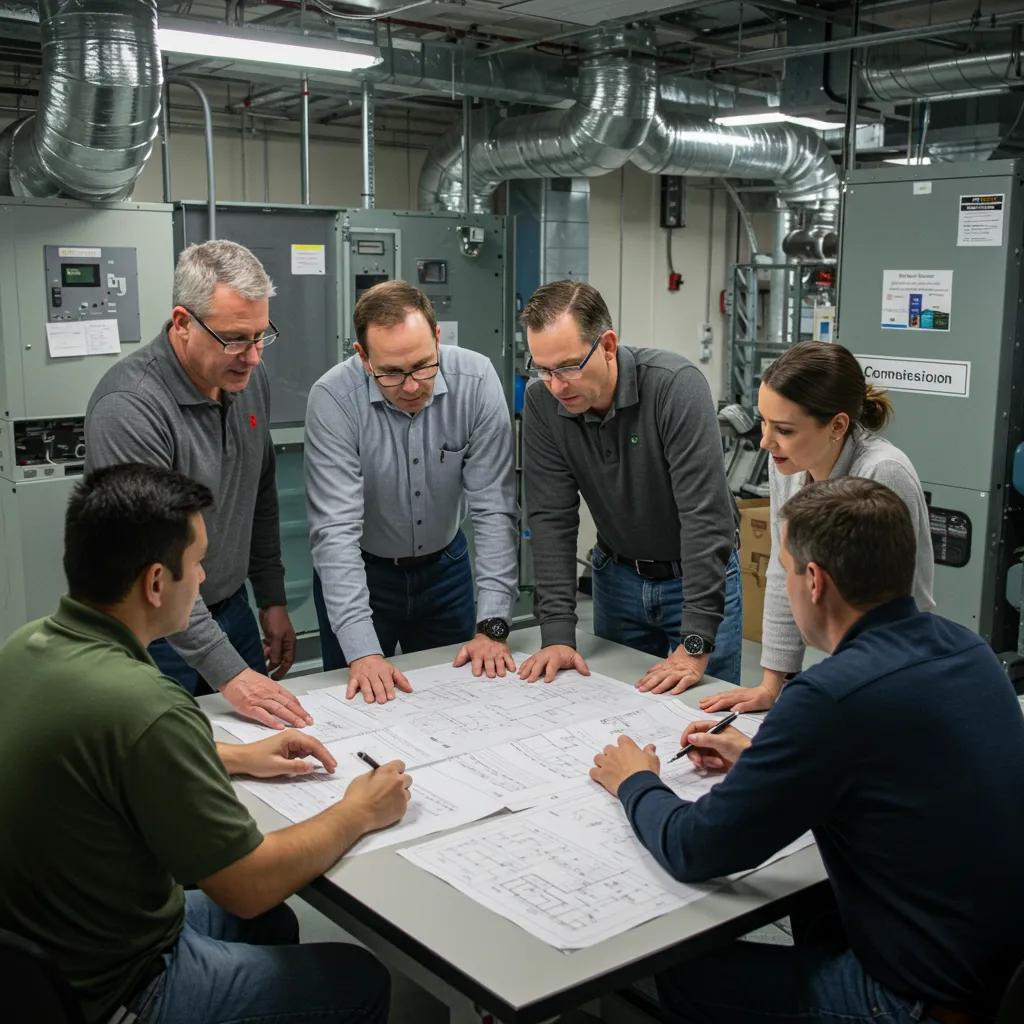
At CCS Mechanical, our commissioning process is built on decades of hands-on experience with commercial and industrial HVAC systems across Florida. We follow a structured, phase-based approach that aligns with ASHRAE Guideline 0 and industry best practices to deliver measurable results for every project.
Step-by-Step Phases
Our commissioning process moves through five distinct phases, each designed to catch issues at the earliest and most cost-effective point:
- Pre-Design Review: Before any equipment is selected, we review the owner's project requirements (OPR) and establish the basis of design (BOD). This ensures the HVAC system is designed to meet the facility's actual needs — not just minimum code requirements.
- Design Phase Coordination: We review mechanical drawings, specifications, and control sequences during the design phase. Catching conflicts between disciplines (mechanical, electrical, controls) at this stage prevents costly change orders during construction.
- Construction Verification: Our commissioning agents perform site inspections throughout construction to verify that equipment is installed per specifications, ductwork is properly sealed, piping is correctly supported, and insulation is complete and undamaged.
- Functional Performance Testing: This is the most intensive phase. We test every system and subsystem under full-load, part-load, and failure-mode conditions. Control sequences are verified point by point. Safety interlocks are tested. Alarms are confirmed.
- Post-Occupancy Monitoring: After the building is occupied, we return to verify that systems perform under real-world conditions. Seasonal testing captures performance across heating and cooling modes, and we provide a final commissioning report with recommendations for ongoing optimization.
Testing, Adjusting, and Balancing (TAB)
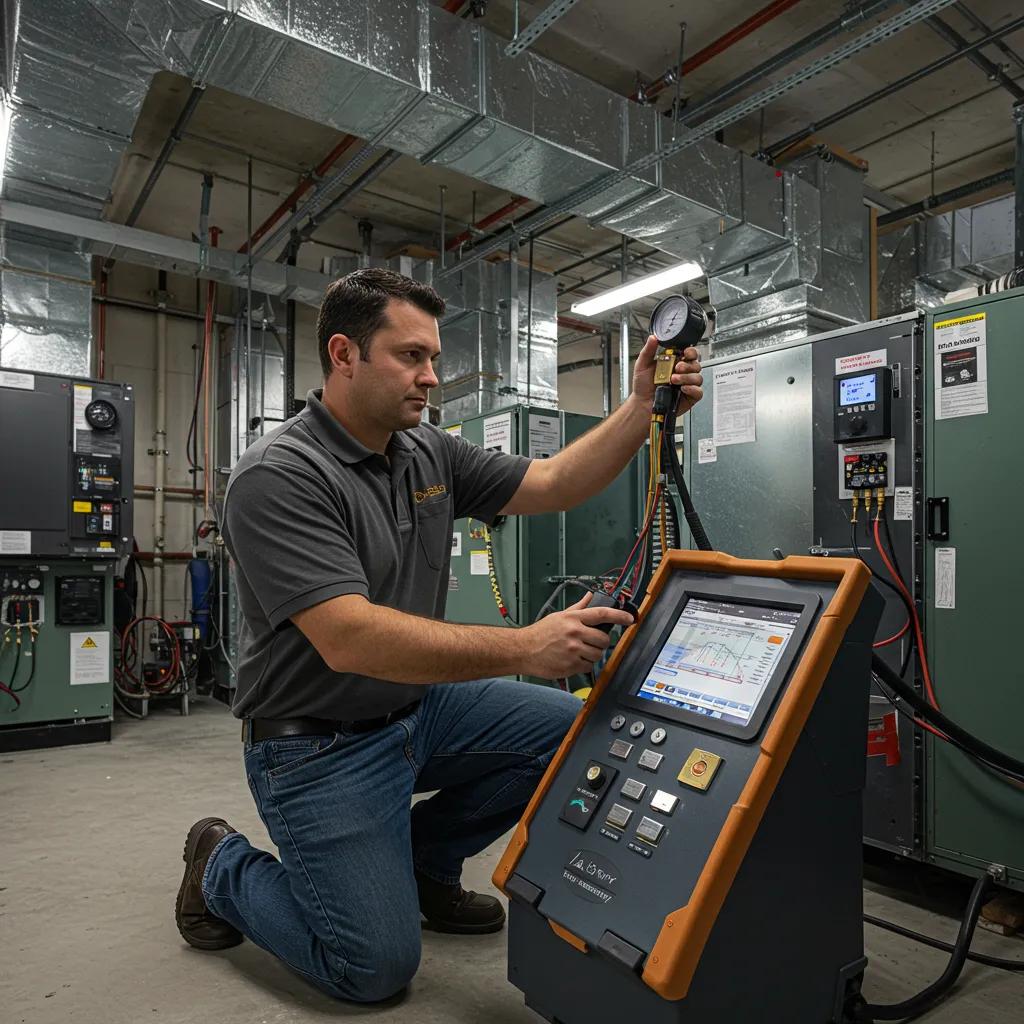
Testing, Adjusting, and Balancing is a critical component of the commissioning process. TAB ensures that the actual airflow and water flow through the HVAC system match the design intent at every terminal, branch, and main.
Our TAB technicians use calibrated instruments — digital manometers, flow hoods, balometers, and ultrasonic flow meters — to measure conditions at every point in the system. Dampers and valves are adjusted methodically to achieve the specified flow rates, and final readings are documented in a comprehensive TAB report.
Proper balancing eliminates the all-too-common scenario where some zones are overcooled while others are underserved. It also prevents excess static pressure in ductwork, which can cause noise issues and accelerate equipment wear.
Documentation and Client Training
A commissioning project is only as valuable as the documentation it produces. CCS Mechanical delivers a complete commissioning report that includes all test results, deficiency logs with resolution records, as-built control sequences, and performance baselines for future comparison.
We also provide hands-on training for your facilities team, covering system operation, maintenance procedures, BAS navigation, and troubleshooting protocols. Our goal is to ensure your team can sustain the performance gains that commissioning delivers — long after our work is complete.
Types of Commissioning Services
| Service Type | Deliverables | Expected Outcomes |
|---|---|---|
| New Construction Commissioning | OPR/BOD review, design review, construction inspection, functional testing, final report | System performs to design intent from day one; reduced warranty claims and punch-list items |
| Retro-Commissioning | Energy audit, system diagnostics, control sequence analysis, optimization plan, implementation | 5–20% energy savings; restored comfort; extended equipment life |
| Re-Commissioning | Performance benchmarking, trend analysis, recalibration, updated sequences, refreshed documentation | Corrected performance drift; maintained efficiency gains; updated operational baselines |
New Construction Commissioning
New construction commissioning is the most comprehensive service, spanning the entire project lifecycle from pre-design through post-occupancy. For new buildings or major renovations, this is the gold standard — and increasingly, it is a code requirement.
By engaging our commissioning team early in the design phase, we can identify potential issues before they become expensive problems. Undersized ductwork, conflicting control sequences, inadequate ventilation provisions — these are all issues that cost exponentially more to fix after construction than during design. Our early involvement protects your investment and ensures a smoother construction process.
Retro-Commissioning for Existing Systems
Retro-commissioning (RCx) brings the benefits of commissioning to existing buildings that were never formally commissioned — or where original commissioning documentation has been lost. This is where the most dramatic savings often occur.
Studies by the Lawrence Berkeley National Laboratory consistently show that retro-commissioning delivers 5% to 20% energy savings with a typical payback period of less than two years. Common findings during RCx include failed economizer dampers, miscalibrated sensors, overridden control sequences, simultaneous heating and cooling, and excessive outside air intake during occupied hours.
Our retro-commissioning process begins with a thorough energy audit and system assessment, followed by a prioritized list of energy conservation measures. We implement the approved measures and verify the results with post-implementation testing and monitoring.
Re-Commissioning
Even properly commissioned systems experience performance drift over time. Equipment degrades, sensors fall out of calibration, control sequences get overridden, and building use patterns change. Re-commissioning restores systems to their original commissioned performance — or better.
We recommend re-commissioning every three to five years, or when triggered by specific events:
- Energy costs trending upward without an obvious cause
- Increasing comfort complaints from occupants
- Major changes in building occupancy or use
- Addition of new equipment or zones
- BAS software upgrades or platform changes
- After a significant weather event or system failure
Sector-Specific Benefits
Industrial Facilities
Industrial environments present unique HVAC challenges that make commissioning especially valuable. Process ventilation systems must maintain precise airflow rates to protect workers, prevent contamination, and comply with OSHA and EPA regulations.
Commissioning verifies that exhaust systems capture and remove airborne contaminants effectively, that make-up air systems maintain proper building pressurization, and that process cooling systems deliver the temperatures and flow rates that production equipment demands. For manufacturing facilities, unplanned HVAC downtime can halt production lines and cost thousands of dollars per hour — commissioning helps prevent those costly disruptions.
Hospitals and Healthcare
Healthcare facilities operate under the most stringent HVAC requirements of any building type. Commissioning is not optional in this sector — it is essential for patient safety and regulatory compliance.
Our healthcare commissioning services verify critical parameters including:
- Pressure relationships: Operating rooms maintain positive pressure relative to corridors; isolation rooms maintain negative pressure to contain airborne pathogens.
- Air change rates: Surgical suites, isolation rooms, and sterile processing areas require specific minimum air changes per hour as defined by ASHRAE 170 and FGI Guidelines.
- HEPA filtration: Critical spaces require HEPA-filtered supply air with verified filter integrity and proper bypass prevention.
- Temperature and humidity control: Surgical suites typically require 68–75°F and 20–60% RH, with precise control to prevent condensation on instruments and equipment.
- Redundancy verification: Backup systems, emergency power connections, and failover sequences are tested to ensure continuous operation during emergencies.
Educational and Commercial Buildings
Schools, universities, and commercial office buildings share a common challenge: maintaining comfortable, healthy environments for large and varying occupant populations while controlling energy costs.
Commissioning optimizes scheduling sequences so that systems ramp down during unoccupied periods and pre-condition spaces efficiently before occupancy. CO2-based demand-controlled ventilation is verified to ensure adequate fresh air during peak occupancy without wasting energy during low-occupancy periods.
For educational facilities, proper commissioning also addresses the well-documented link between IAQ and cognitive performance. Studies consistently show that improved ventilation and temperature control directly correlate with better student test scores and reduced absenteeism.
Why Choose CCS Mechanical
When you choose CCS Mechanical for your commissioning project, you are partnering with a team that brings full-spectrum mechanical capability to every engagement:
- Engineering oversight from design through closeout — Our licensed professional engineers review every aspect of your HVAC system, from initial design documents through final functional testing, ensuring nothing falls through the cracks.
- In-house estimating and CAD capabilities — We provide accurate, detailed proposals backed by precise takeoffs and CAD-generated drawings that clearly communicate scope, specifications, and installation requirements.
- On-site fabrication shop for custom solutions — When your project requires custom ductwork, specialized fittings, or unique mechanical components, our fabrication team delivers precision-manufactured solutions without the delays and markups of third-party vendors.
Engineering Expertise
CCS Mechanical's engineering team brings deep expertise in commercial and industrial HVAC system design, analysis, and optimization. Our engineers hold industry certifications and stay current with evolving codes, standards, and best practices — including ASHRAE guidelines, Florida Building Code, and sector-specific requirements for healthcare, education, and industrial facilities.
This engineering depth means we do not just test your systems — we understand them at a fundamental level. When we identify a deficiency during commissioning, we can diagnose the root cause and recommend the most effective corrective action, saving you time and money.
Local Florida Presence
Based in Ocala, Florida, CCS Mechanical serves commercial and industrial clients throughout the state. Our local presence means faster response times, familiarity with Florida's unique climate challenges — including high humidity, extreme heat loads, and hurricane preparedness requirements — and established relationships with local code officials, inspectors, and equipment suppliers.
We understand the specific demands that Florida's climate places on HVAC systems. From corrosion-resistant equipment selection to humidity control strategies that prevent mold growth, our commissioning process accounts for the real-world conditions your systems face every day.
In-House Fabrication and CAD
Our in-house sheet metal fabrication shop and CAD department give CCS Mechanical a significant advantage in commissioning projects that require modifications or corrective work. When testing reveals that a duct transition needs to be redesigned for better airflow, or a custom fitting is needed to resolve a clearance issue, we can design, fabricate, and install the solution without waiting on outside vendors.
This integrated capability accelerates the commissioning timeline and ensures that every corrective action meets the same quality standards as the original design intent.
Ready to Start? Get a Quote
Whether you are planning a new construction project, looking to optimize an existing facility, or need to verify that your systems are performing as designed, CCS Mechanical is ready to help. Our commissioning services are tailored to your facility's specific needs, budget, and timeline.
Information Needed for a Quote
To provide an accurate commissioning proposal, we typically need the following information:
- Building type, size (square footage), and number of floors
- HVAC system type(s) — rooftop units, chilled water, VRF, split systems, etc.
- Project phase — new construction, existing building, or renovation
- Mechanical drawings and specifications (if available)
- Any specific compliance requirements — LEED, WELL, Joint Commission, etc.
- Desired timeline and any critical milestones
Contact us at 352-237-6272 or visit our contact page to request a detailed proposal.
Tailored Solutions
No two facilities are alike, and our commissioning services reflect that reality. We scale our scope and methodology to match your project — from focused retro-commissioning of a single air handler to full new-construction commissioning of a multi-building campus. Every proposal is customized to deliver maximum value for your specific situation.
Career Opportunities
CCS Mechanical is growing, and we are always looking for talented HVAC technicians and engineers to join our team. If you are a skilled professional with experience in commercial HVAC commissioning, testing and balancing, controls, or system design, we want to hear from you.
We offer competitive compensation, ongoing training and certification support, and the opportunity to work on diverse, challenging projects across Florida. Visit our careers page to view current openings and apply.